

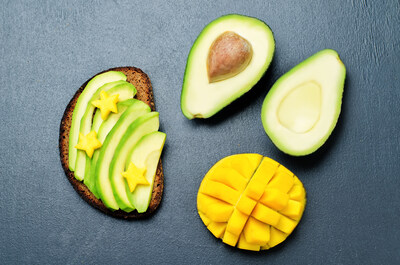
For the one in three (98 million) Americans living with prediabetes, a surprising fresh fruit pairing may hold promise for heart health. A new study published in the Journal of the American Heart Association suggests that adding one avocado and a cup of mango to your daily routine may help support key markers of cardiovascular health.
Adults with prediabetes who enjoyed this combination daily for eight weeks saw improvements in blood vessel function and diastolic blood pressure – two important indicators of cardiovascular wellness.

Conducted by researchers at Illinois Institute of Technology (Illinois Tech), the study asked adults with prediabetes to follow an Avocado-Mango (AM) diet – adding one medium Hass avocado and a cup of fresh mango to their daily meals and snacks for eight weeks. A calorie-matched control group followed a similar diet, with avocado and mango replaced by calorically comparable carbohydrate-based foods. Those on the AM diet saw meaningful improvements in blood vessel function, which supports healthy circulation, and diastolic blood pressure, a key factor in long-term heart health, compared to the control group.

Blood vessel function improved significantly in participants on the AM diet. They experienced a significant increase in flow-mediated dilation (FMD) – a key measure of endothelial function (blood vessel health) – to 6.7%, compared with a decline to 4.6% in the control. This suggests a meaningful improvement.
Diastolic blood pressure also significantly improved, particularly among men. In the control group, men saw an average central blood pressure increase of 5 points (mmHg), while those on the AM diet experienced a reduction of about 1.9 points – a difference that can be clinically significant if sustained. These benefits occurred without changes in calorie intake or body weight, suggesting that nutrient-dense fruits like avocado and mango may support cardiovascular health without major lifestyle changes.
“This research reinforces the power of food-first strategies to help reduce cardiovascular disease risk, particularly in vulnerable populations like those with prediabetes,” said Britt Burton-Freeman, PhD, Principal Investigator and Professor at Illinois Tech. “It’s an encouraging message: small, nutrient-dense additions—like incorporating avocado and mango into meals and snacks—may support heart health without the need for strict rules or major dietary overhauls.”
The Avocado-Mango group also saw increases in fiber, vitamin C, and heart-healthy monounsaturated fat – nutrients tied to cardiovascular wellness – without changes in calorie intake or body weight. Select kidney function markers, such as estimated glomerular filtration rate (eGFR), also improved.
While no significant differences were found in cholesterol, blood sugar, or inflammation, the findings highlight the value of adding nutrient-rich fruits to the diet, especially for those at risk of type 2 diabetes and cardiovascular disease.


, also improved.)