
Kinder Rain imagines vernacular architecture for early learning

Kinder Rain: All images by Alex Shoots Buildings

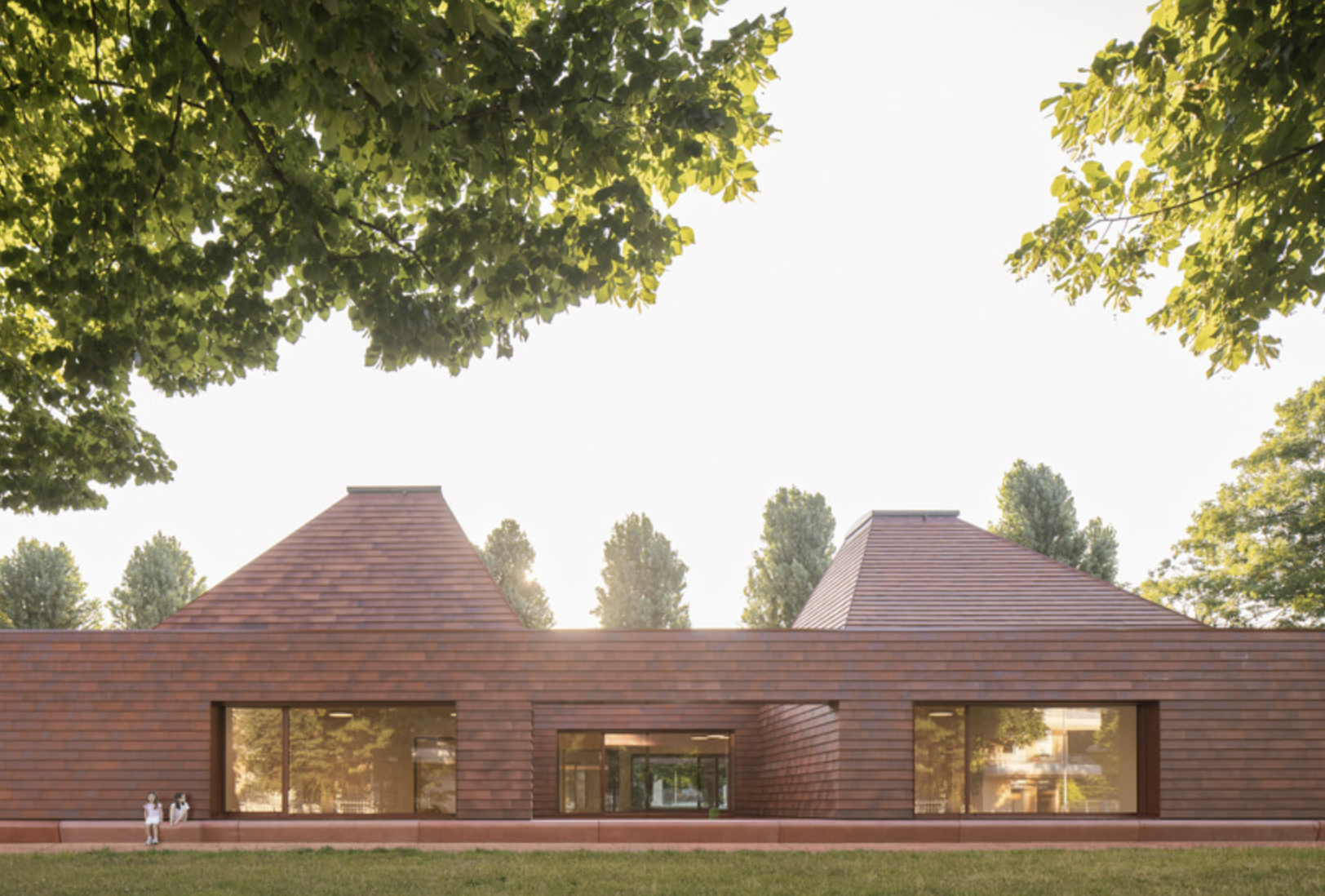
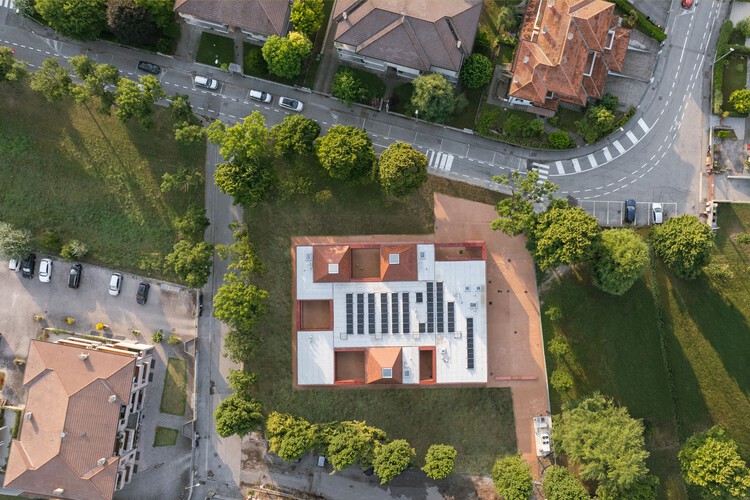
In the Veneto region of northern Italy, a kindergarten rises like a small village from the earth. Its roofs are steep and terracotta-colored, its forms simple and geometric, and its courtyards open to sky and garden. The building is called Kinder Rain, designed by the Italian studio AACM – Atelier Architettura Chinello Morandi, and it feels less like a school and more like a small settlement where children can wander, gather, and grow gardens and themselves.
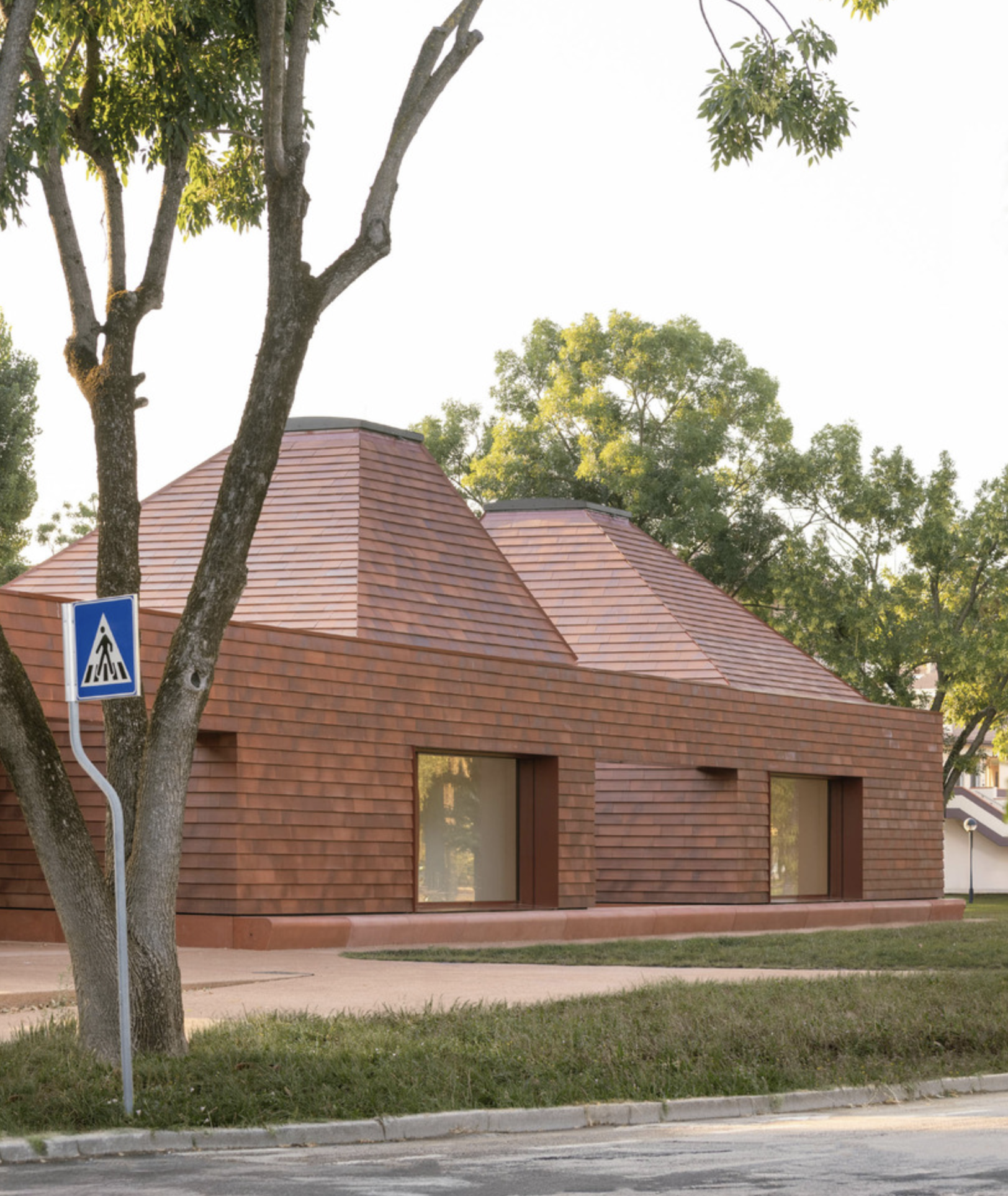
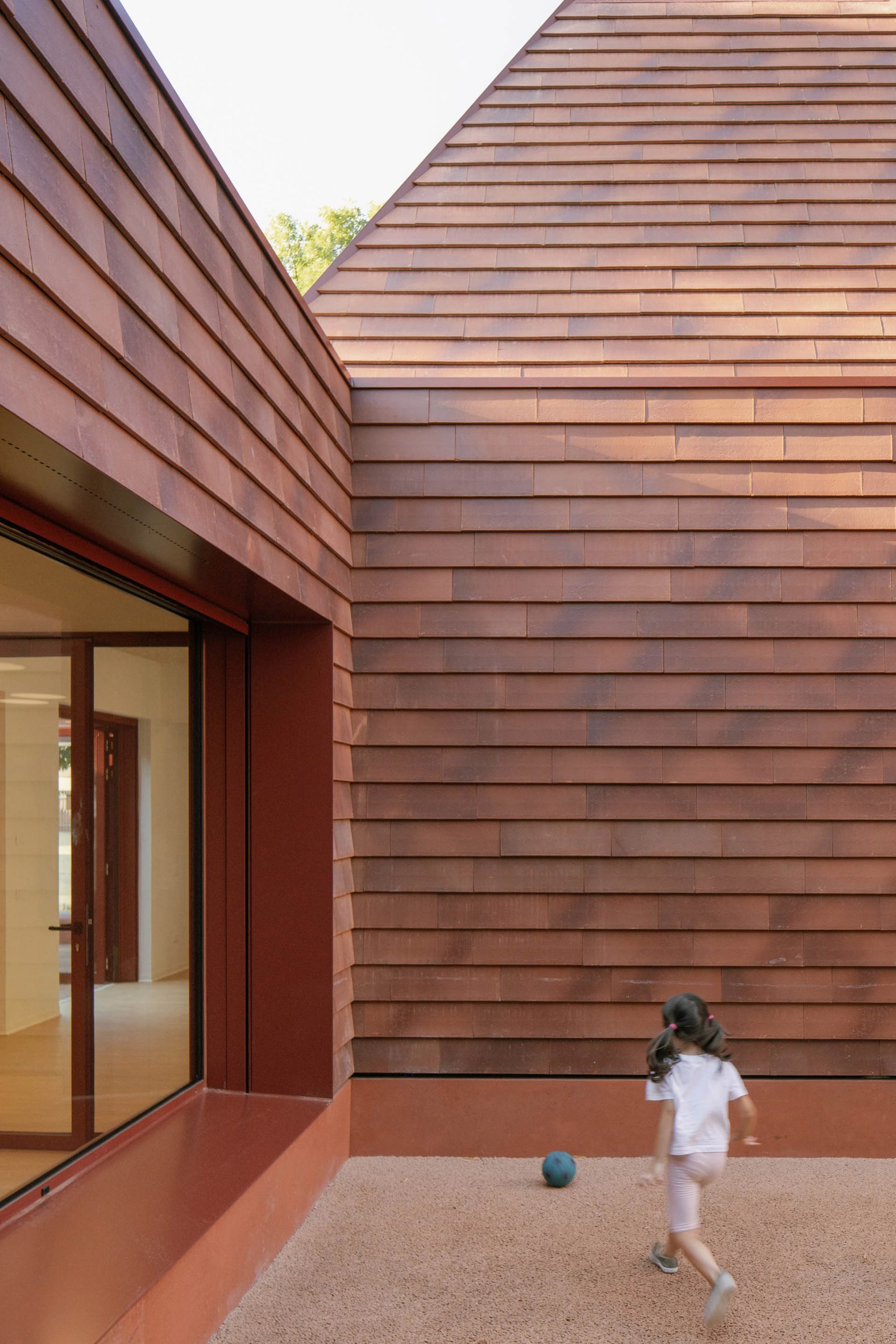
Kinder Rain, a terracotta, vernacular-inspired play space Kinder Rain, a terracotta, vernacular-inspired play space

At a time when many educational buildings resemble efficient boxes of steel and glass, and thankfully container houses are out (read here why container houses can be a health hazard)  Kinder Rain looks backward to move forward in the way our spirits need. Its design draws inspiration from the Casone Veneto, a traditional rural house once used by farmers and fishermen in the surrounding landscape. These structures were humble but deeply rooted in place: thick clay walls, steep roofs, and forms shaped by weather, agriculture, and the rhythms of everyday life.
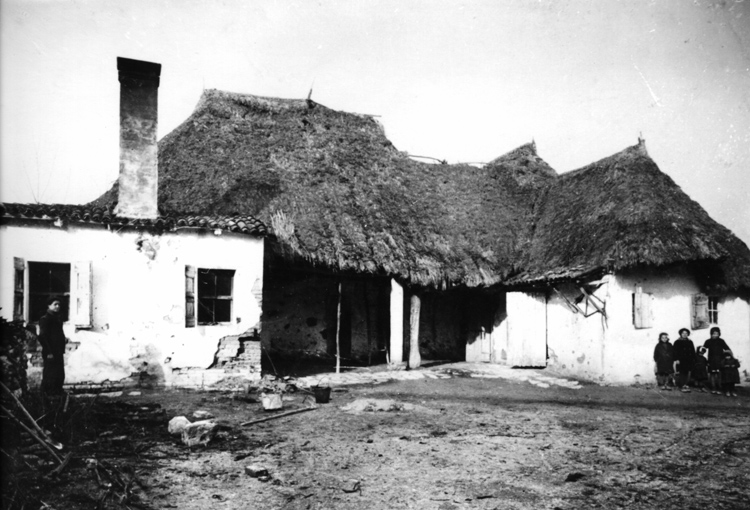
A traditional casone via Wikipedia

Kinder Rain reinterprets this vernacular architecture through a series of pyramidal classroom volumes, clustered together like houses in a tiny town. Instead of corridors and rigid classroom grids, the kindergarten is organized around open courtyards and shared spaces.

These spaces function as an architectural commons, allowing children to move fluidly between indoor learning and outdoor play.
Kinder Rain, a terracotta, vernacular-inspired play space

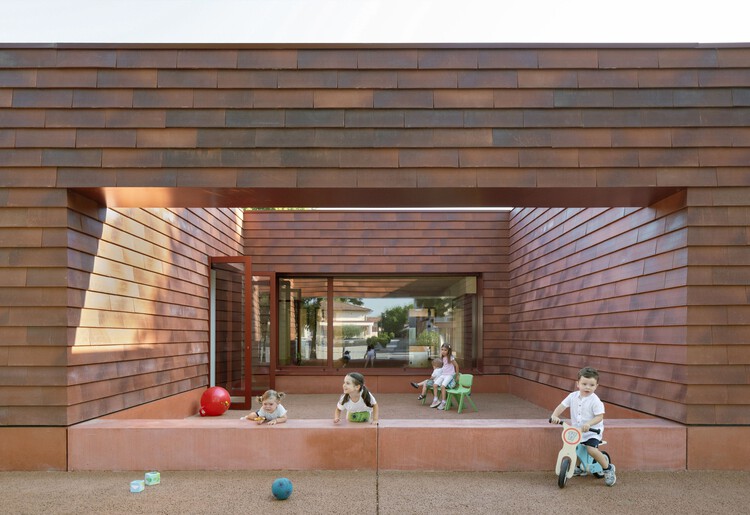
The result feels almost like something from a Waldorf-inspired environment, where architecture becomes part of the educational philosophy. Spaces are tactile and human-scaled, encouraging exploration and imagination rather than control. A pigmented concrete bench traces the base of the building, forming a soft threshold between garden and classroom. Children can sit, climb, gather, or simply watch the world from its edge.

Materials play a central role in this atmosphere. The kindergarten is wrapped in a continuous terracotta envelope, referencing the clay tiles and earthy construction traditions of the Veneto countryside. The tones are warm and grounded, connecting the building visually to the surrounding landscape.

Inside, wooden ceilings echo the texture of traditional thatched roofs. A skylight above the central space lets sunlight pour downward through the structure, quietly marking the passage of time during the day. Morning light spills into classrooms, while afternoon shadows stretch across the courtyards.
Kinder Rain, a terracotta, vernacular-inspired play space

Each classroom opens outward into a protected patio, creating semi-enclosed outdoor rooms where lessons can spill into fresh air. These patios blur the boundary between inside and outside, an important idea in early childhood education where nature and play are inseparable.

The spatial logic of Kinder Rain follows an interplay of solids and voids. Pyramidal classrooms provide shelter and focus, while courtyards provide openness and community. At the center lies a shared internal agorà, a gathering space that allows teachers and children to see one another across the building.

The architecture is simple, but its message is powerful. Kinder Rain suggests that schools do not need to dominate their landscape or overwhelm young minds with scale and complexity. Instead, they can grow organically from local traditions and materials.

TRENDING

Italy’s energy company Eni adds Italian flair for design in industrial fusion reactor

“We have the chance to explore new forms of storytelling about energy,” adds Italo Rota, co-designer of the installation. “We believe that design is a powerful tool to turn a narration into an experience, allowing visitors to sense the energy while being surrounded by a unique atmosphere.”

Afghanistan’s earthquake and mud-brick homes. Can they rebuild safer and more sustainably?

A 6.0-magnitude earthquake in eastern Afghanistan killed over 800 people as mud-brick homes collapsed in rain-soaked landslides. Here’s why traditional earthen houses failed, how human-driven slope damage worsened the disaster, and how sustainable, earthquake-resistant construction can save lives.

How Termites and Ants Built the Tropics’ Best Soil

This is like discovering that the pyramids weren’t built by natural erosion, but by ancient engineers

Sustainability and Crickets Sing in Venice at Venice Biennale

Sustainability isn’t just a theme—it’s a living, breathing force at the 19th International Architecture Exhibition of La Biennale di Venezia, opening Saturday, May 10. Among the standout exhibits this year is “Song of the Cricket”, a groundbreaking fusion of ecological conservation and interactive sound art brought to life by researchers from the University of Melbourne.

Five Innovative Architecture Firms Building with Bamboo

Bamboo, often referred to as the "green steel" of the future, is quickly gaining popularity as a sustainable alternative to traditional building materials. With its fast growth cycle, minimal environmental footprint, and impressive strength, bamboo is emerging as a game-changing material for the construction industry. Not only is it an eco-friendly choice, but its versatility allows it to be used in everything from flooring to scaffolding, and even entire buildings.

Should You Invest in the Private Market?

startustartup Unlike public stock exchanges, which offer daily trading, strict...

How to build a 100-year-company

Kongō Gumi is a Japanese construction company, purportedly founded in 578 A.D., making it the world's oldest documented company. What can we learn about building sustainable businesses from them?

From Pilot Plant to Global Stage: How Aduro Clean Technologies’ 2026 Expansion Signals a Turning Point for Chemical Recycling Investors Like Yazan Al Homsi

The company's Next Generation Process (NGP) Pilot Plant in London, Ontario, has officially moved into initial operating campaigns, generating the kind of structured, repeatable data that separates laboratory promise from commercial viability.

How AI Helps SaaS Companies Reduce Repetitive Customer Support Work

SaaS products are designed for large numbers of users with different levels of experience, and also in renewable energy.

Pulling Water from the Air

Faced with water shortage in Amman, Laurie digs up...

Turning Your Energy Consultancy into an LLC: 4 Legal Steps for Founders in Texas

If you are starting a renewable energy business in Texas, learn how to start an LLC by the books.

Tracking the Impacts of a Hydroelectric Dam Along the Tigris River

For the next two months, I'll be taking a break from my usual Green Prophet posts to report on a transnational environmental issue: the Ilısu Dam currently under construction in Turkey, and the ways it will transform life along the Tigris River.

6 Payment Processors With the Fastest Onboarding for SMBs

Get your SMB up and running fast with these 6 payment processors. Compare the quickest onboarding options to start accepting customer payments without delay.

Related Articles

Popular Categories