
A new female starchitect on the rise? BM Studios is an architectural firm bridging the East and the West. In this article, Balsam Madi shares her approach to climate sensitive design and discusses the role of architects today.
In the UAE, architects often have more influence than they realize, particularly at the early, conceptual stages of a project. How do they weigh that responsibility? How is the role of architects today influencing climate sensitive design? We speak with Balsam Madi from BM Studios to learn more.
Architectural teams are typically structured into distinct roles as concept architects, design development teams, specifiers, and project managers. But these roles frequently operate in silos, especially within large corporations, she tells Green Prophet.
Design managers, who liaise across teams and maintain continuity, are still relatively rare. This hierarchy has a direct impact on sustainability outcomes, notes the young, aspirational architect working between Berlin and Dubai at the firm she founded, BM Studios.
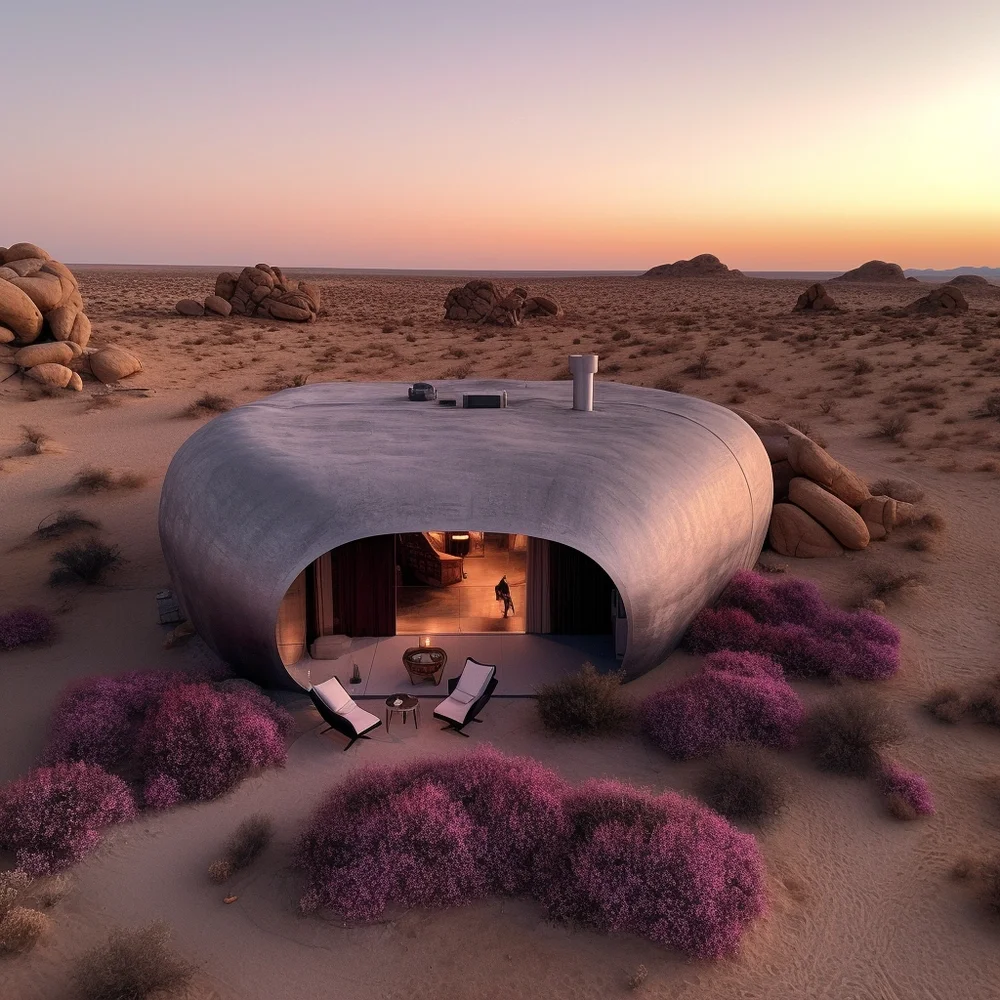

In Balsam’s former role as a senior lead designer at KEO, sustainability was not an add-on, she says, it was embedded in her responsibility. She was expected to introduce cultural research, emerging design trends, sustainable strategies, and even AI-driven methodologies into the workflow. Knowledge transfer was central to her role: staying ahead of global conversations and translating them into locally relevant design decisions.
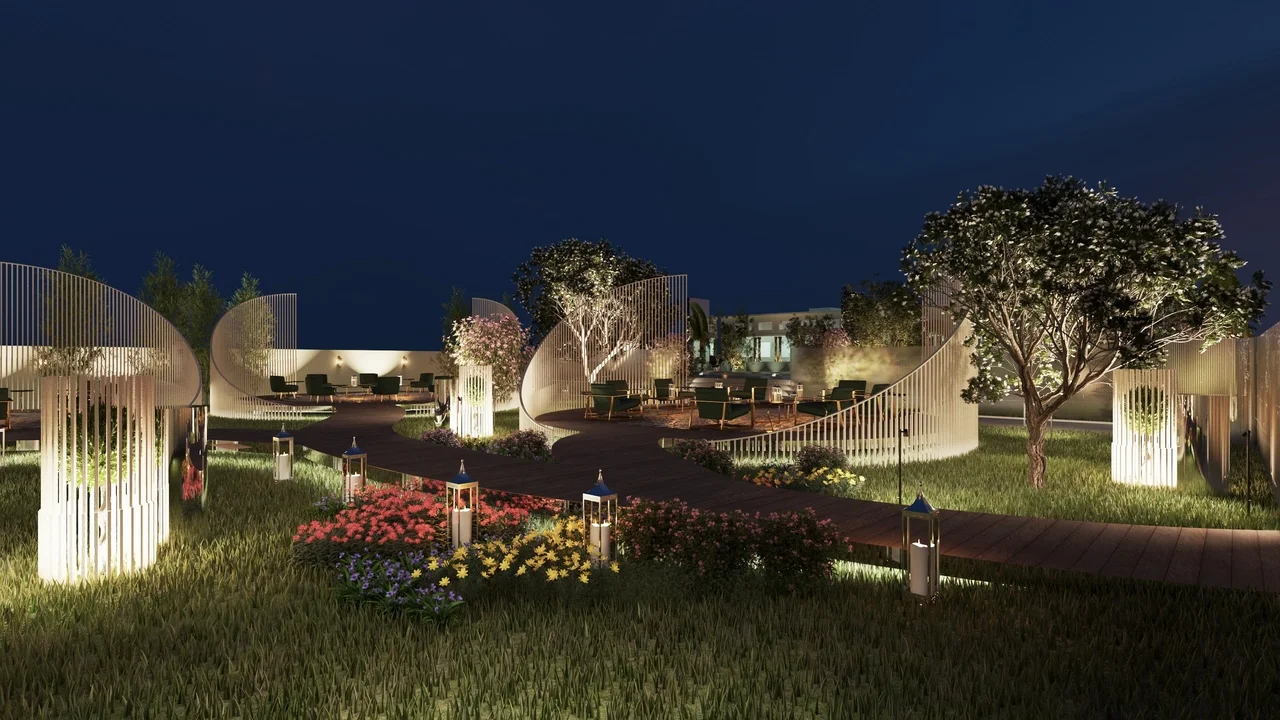
Sustainability entered most powerfully during the concept phase, which she was leading, through storytelling. She reinterpreted vernacular architectural techniques using contemporary aesthetics that clients respond to today, while quietly embedding passive strategies, climate intelligence, and material efficiency. Referencing comparable cities and precedents helped position sustainability not as a risky experiment, but as a proven and aspirational solution.
She also naturally stepped into a design management role, coordinating day-to-day processes, aligning design development teams, specifications, and material research. Early decisions around modularity, prefabrication, and low-impact construction often made the biggest difference, long before sustainability became a checklist. This coordination allowed quality assurance throughout costing and specification stages—precisely where silos often form and opportunities for design integrity and sustainability are lost.
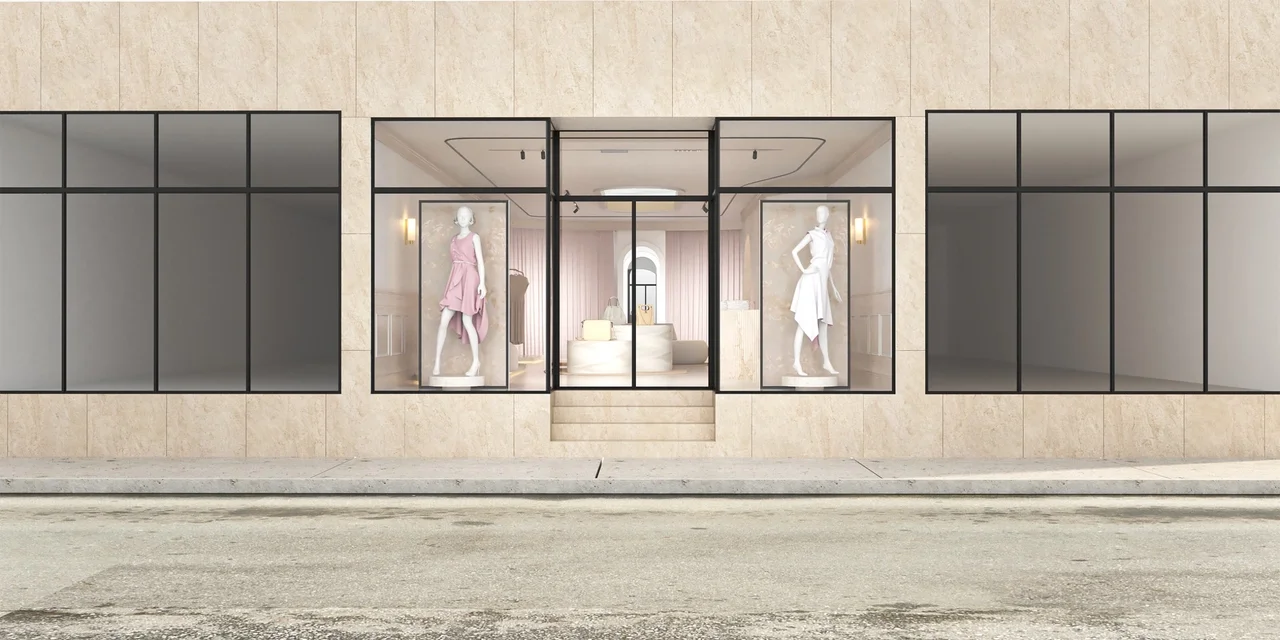
As independent practitioners, architects become translators, strategists, and sometimes marketeers of sustainability, not superficially, but by demonstrating how responsible design enhances value, longevity, and relevance.
After leaving the corporate world and working independently, she found more freedom to advocate for these ideas, she tells Green Prophet. As independent practitioners, architects become translators, strategists, and sometimes marketeers of sustainability, not superficially, but by demonstrating how responsible design enhances value, longevity, and relevance. They are expected to do it all!
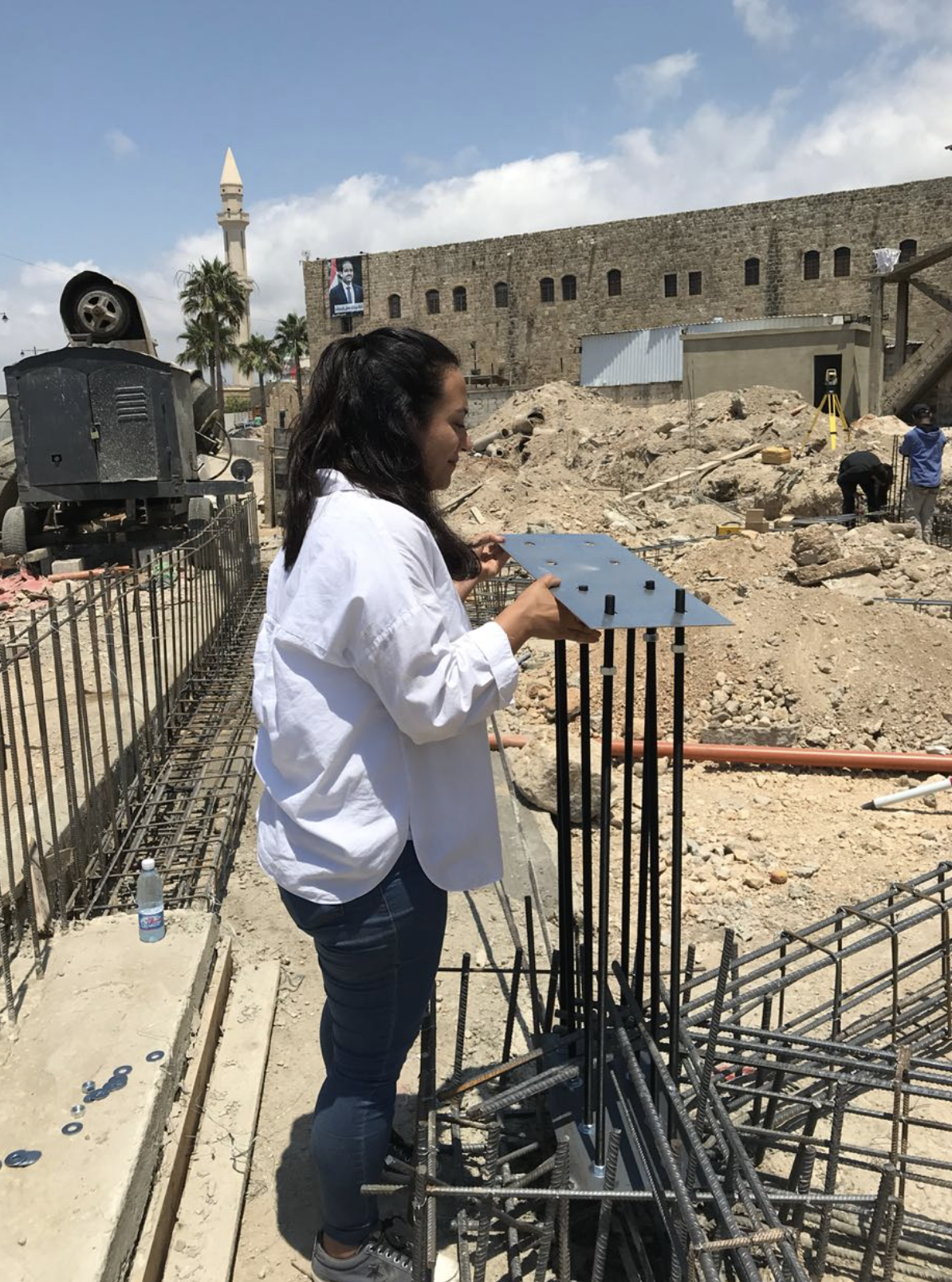
Over the next decade, architects who can bridge vision, systems, and persuasion will shape the industry far more than those focused on form alone, she says. Having knowledge about LEED-building, or Estidama Pearls isn’t enough.
Where Architects Truly Influence Sustainability
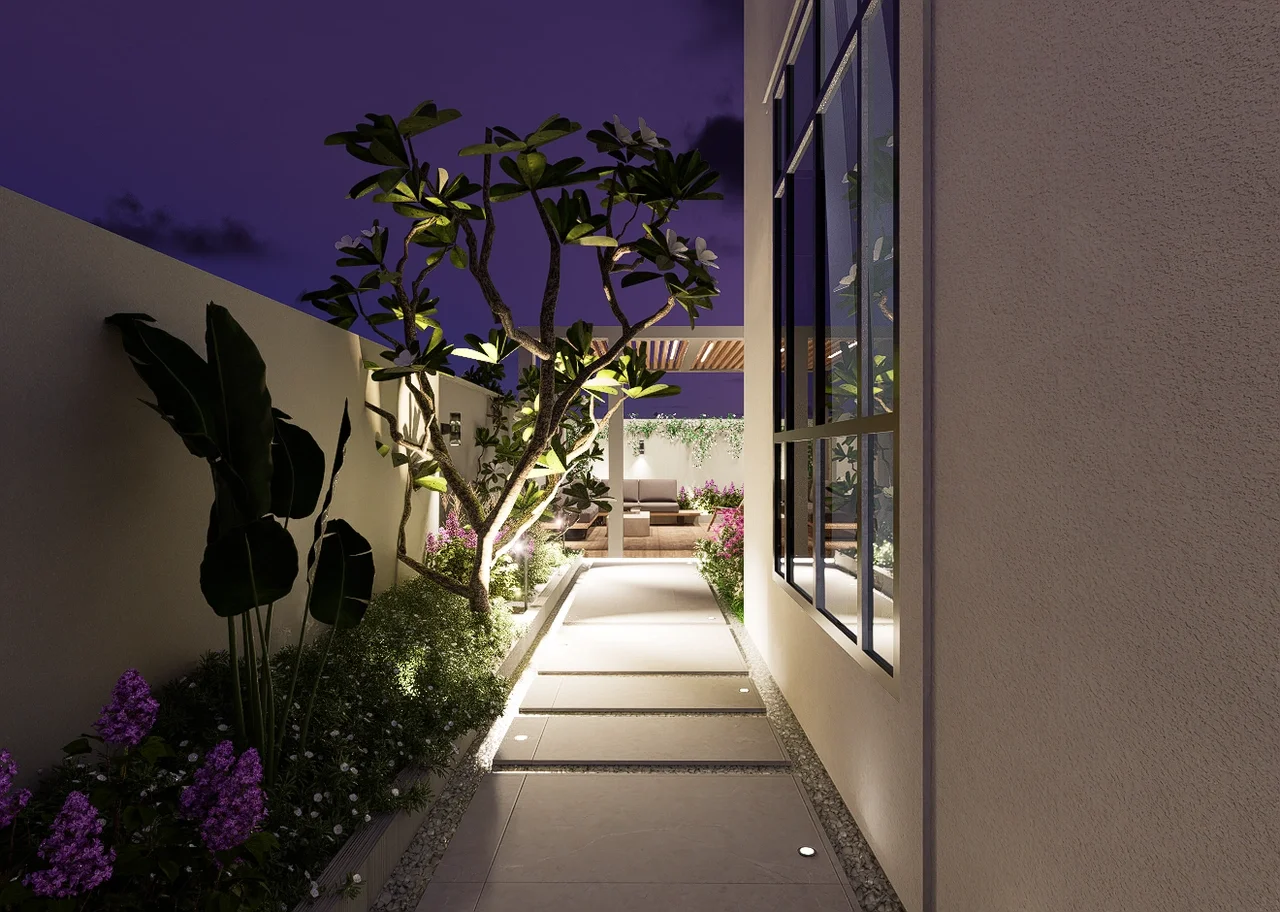 Landscape design for a private Dubai client. Balsam Madi.
Architects genuinely influence sustainability at three critical points: concept design, advisory roles, and spatial intelligence. The greatest constraint, however, remains resistance to change.
Balsam once proposed a flexible housing strategy inspired by open-building principles and early Japanese residential models, homes designed to evolve with families rather than forcing families to adapt to rigid layouts. The concept was profitable, socially progressive, and sustainable, yet it was not well received. The real estate sector, despite its creative veneer, often prefers familiarity over innovation.
Some of her most successful sustainability-driven typologies—projects that doubled developer yields—were led by developers who were architects themselves. Leadership mindset matters. Sustainability is not just about trees or technology; it’s about designing spaces that perform socially, economically, and environmentally over decades.
Cultural constraints also play a role. Ambition in the Middle East region is high, but often paired with impatience. Limited time for research, testing, and long-term planning undermines sustainable outcomes. Developers who have truly excelled invested in R&D and allowed innovation to mature, positioning themselves with distinct value propositions.
Architects also influence sustainability through advisory work: optimizing layouts for waste management, connecting developers with recycling or composting partners, and improving operational efficiency through better planning. These opportunities are frequently missed, often due to a narrow procurement mindset focused on either lowest cost or premium solutions, with little space in between.
Quality is another issue. First-time developers sometimes hire very young firms to reduce costs, resulting in poor layouts and dysfunctional living spaces. Sustainability, at its core, is systems thinking. When treated as isolated gestures rather than an integrated framework, it loses both meaning and impact.
From Designing Form to Designing Systems
Balsam says she loves concept design, “the iterative process, the moment when an idea clicks and demands to be built. That creative spark is sacred. But today, AI can generate iterations faster than entire teams once could. This raises an important question: if machines can explore form, what is the architect’s true value?
“For me, the answer is systems thinking and orchestration. Architecture is no longer about isolated objects; it’s about aligning structure, MEP, HVAC, materials, construction sequencing, and long-term operation from day one. Certifications like LEED touch on this, but the principle runs deeper. Designing holistically from the start avoids waste, redesign, and inefficiency later.
“One of my engineering management professors once said architects are ‘artists with rulers’ and ‘conductors of the construction orchestra.’ We don’t play every instrument, but we understand how they work together. That ability to coordinate, adapt, and guide is irreplaceable.
“This is why my practice spans architecture, interiors, landscape, and product design. Design is a universal language. If you can take an idea from concept to execution in one medium, you can do it in many. The future architect is a systems leader, strategist, and coach—someone who maintains the big picture while navigating complexity with clarity,” she tells Green Prophet.
“As a result, I developed a sustainability arm within my practice that connects businesses, end users, and service providers working on sustainable products. This includes integrating sustainable MEP systems and sensors into high-end heritage spaces—design work that is less conceptual and more coordination-driven, yet increasingly in demand as architecture moves beyond a unilateral definition.
Climate, Materials, and the UAE Context
If you are developing a dream in the UAE, “the biggest challenges in the UAE are climate and infrastructure, particularly mobility,” says Balsam. “While Dubai’s metro is efficient, many communities lack shaded walkways, green corridors, and pedestrian-friendly design. This disproportionately affects lower-income areas and creates daily stress.”
Materially, many buildings are not designed for long-term exposure to heat and humidity, she notes. “Façades and systems often deteriorate within 20 years, reducing value and increasing vacancy. Rather than resisting the region’s appetite for renovation, we should specify materials with strong life-cycle performance, recyclability, and adaptability. Outdoor construction, in particular, needs stricter material guidelines. Initiatives like Colab in D3 advocate for sustainable material use, but ultimately this requires leadership-level commitment.
“Too often, sustainability manifests as confusion at the operational level and box-ticking at the corporate level. When it becomes jargon detached from empathy and responsibility, it loses credibility. Real change starts with environmental literacy and a shared sense of stewardship for place.”
Beyond Ratings: An Ethical Foundation
Balsam tells us, that there is a growing disconnect between global sustainability agendas and on-the-ground impact. While conferences consume enormous budgets, grassroots sustainability startups, the true innovators, often struggle to survive without access to capital.
Certifications and data have their place, she says, but when sustainability becomes bookkeeping rather than belief, skepticism follows, particularly around topics like Net Zero. “An ethical, zero-harm intention recenters sustainability around empathy—toward nature, communities, and future generations.
“When intention leads, capital can be distributed more holistically, allowing ecosystems to thrive across all roles, from change-makers to policymakers.”
About Balsam Madi, Founder of BM Studios
 Some say curiosity killed the cat; for Balsam Madi, it shaped her life. Driven by a compulsive need to understand systems rather than spectacle, she consistently chose inquiry over allure and human-centered design over trend-driven form.
Trained at the American University of Beirut, her thesis questioned who truly shapes the home: architects, developers, or inhabitants. This inquiry led her to a double MSc in Integrated Urbanism and Sustainable Design at the University of Stuttgart and Ain Shams University in Cairo, where she mapped the cultural, political, and territorial forces shaping cities, with a focus on Lebanon’s hinterland. She continued this research as a university lecturer, combining formal design with strategic intent.
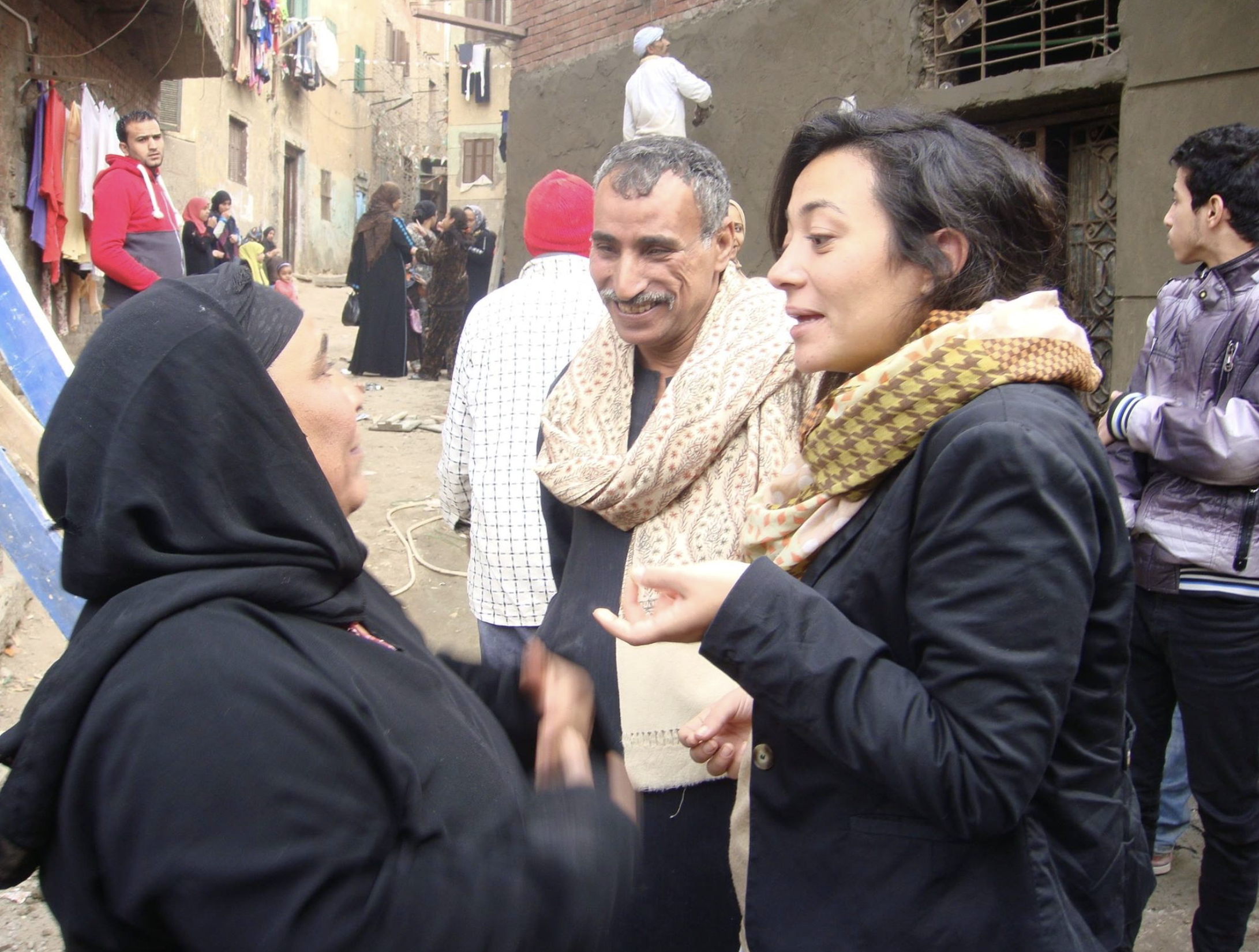
Her formative years included work in Cairo’s informal settlements, public space upgrades in Saida’s historic district, and academic collaborations with AUB and Columbia University. In 2016, she founded BM Studios, exploring hospitality typologies through projects such as a boutique hotel in Athens designed for emerging “digital nomad” users.
Today, BM Studios is a multidisciplinary practice spanning architecture, interiors, landscape, and product design, marking a decade of independent practice in 2026. Having worked across MENA, Europe, and Japan, Balsam is recognized for her depth of cultural groundwork and has served as a trusted concept architect for royal accounts in Saudi Arabia and Qatar, as well as key Abu Dhabi public sector projects.
Often described as a “client whisperer,” she is attuned to unspoken expectations and cultural nuance. Working between Dubai and Berlin with an international team, she leads a digitally agile, culturally rooted studio that prioritizes novelty, sensitivity, and environmental integrity. When selecting interns, she chooses curiosity every time.
::BM Studios (based in Dubai and Berlin)