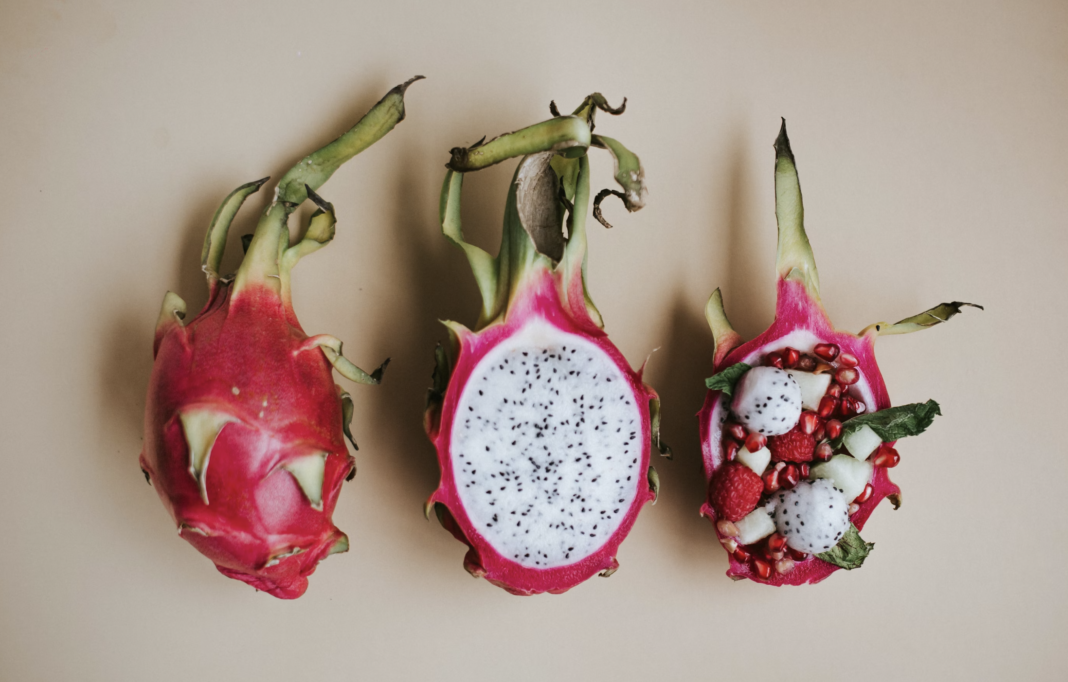

Dragon fruit used to feel like a traveler’s fruit, something you’d find in a far east market that sells Pad Thai and bags of pickled grasshoppers, eaten with a stick. Now it’s turning up everywhere. I see it stacked neatly in Canadian and American supermarkets, tucked into smoothies in California cafés, and increasingly in Eastern Mediterranean markets where it once felt exotic and rare. It has been turning up in our weekly CSA box and my daughter asks for them now as much as my son wants apples.
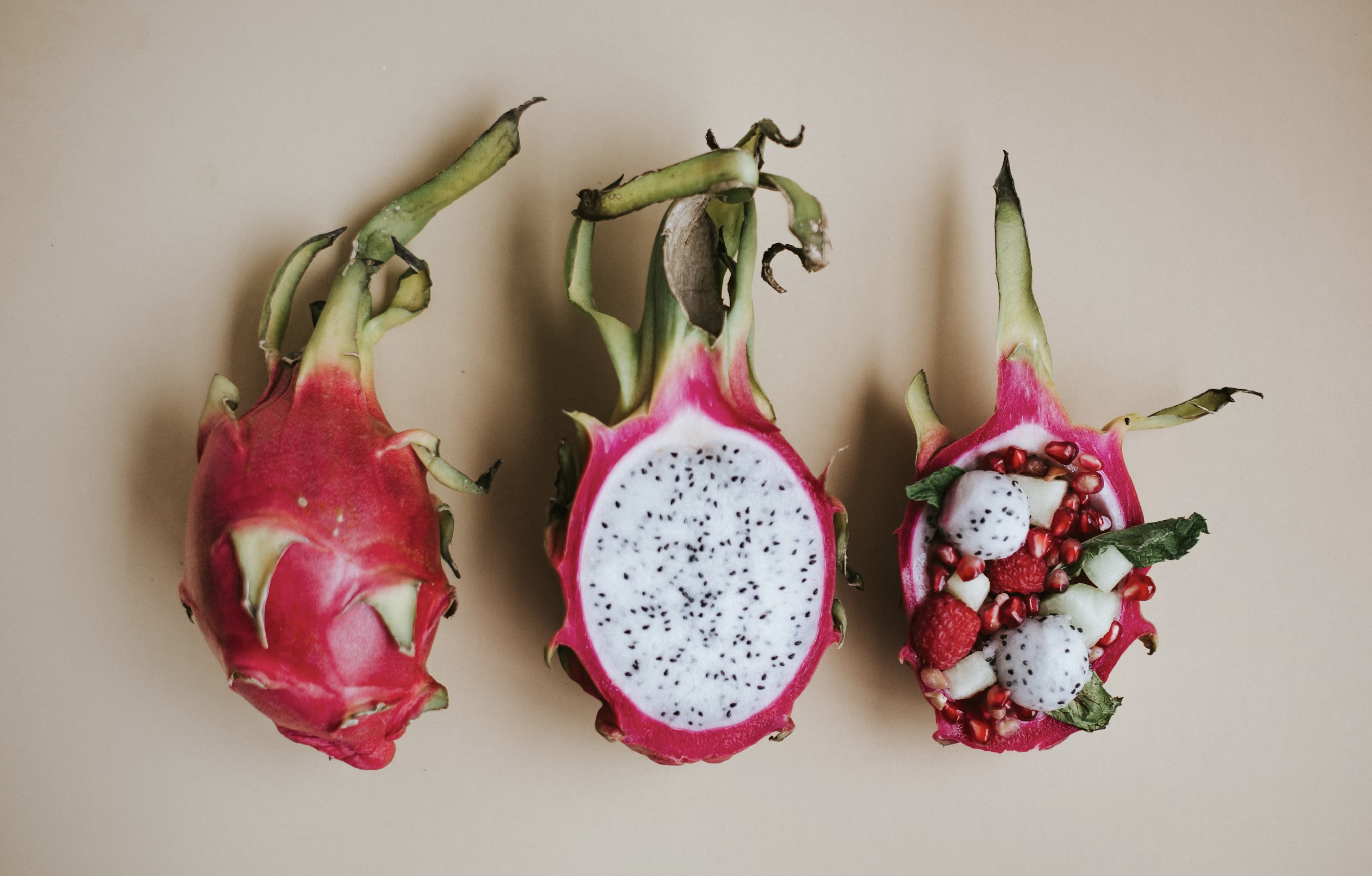
It looks beautiful, with tiny kiwi-like seeds on the inside, its taste somewhat bland in comparison. You’ll find the insides in a shocking hot pink, white or yellow. So yeah –– part of its appeal is visual. Dragon fruit looks like it was designed by a poet with a sense of humor. But it’s the inside that matters, and that’s where this fruit earns its place as a superfruit.
Dragon fruit is also known by several other names depending on where you encounter it. In much of the US and Latin America it’s commonly called pitaya or pitahaya, terms you’ll often see used interchangeably with dragon fruit on market labels. Botanically, the fruit comes from a cactus sometimes referred to as night-blooming cereus, a nod to the plant’s dramatic flowers that open after dark. Older or poetic names like strawberry pear, belle of the night, or queen of the night still appear occasionally, though today dragon fruit and pitaya are the names most shoppers recognize.
Dragon fruit is rich in antioxidants, fiber, vitamins, and minerals, while staying low in calories. It’s one of those foods that manages to feel indulgent while doing something genuinely useful for the body. Like cucumbers.
The deep red and pink varieties contain healthful betalains and flavonoids, compounds that help neutralize free radicals and reduce inflammation. These antioxidants are linked to lower risks of chronic diseases, including heart disease and certain cancers. Vitamin C adds another layer of immune support, especially welcome in winter months when fresh fruit choices can feel limited.
Fiber is where dragon fruit really shines. It contains both soluble and insoluble fiber, which means it helps digestion in more than one way. Insoluble fiber keeps things moving, while soluble fiber feeds beneficial gut bacteria, strengthening digestion and immunity from the inside out. People watching blood sugar levels often appreciate dragon fruit for the same reason; fiber slows sugar absorption and may help reduce insulin resistance over time.
There’s also a quiet mineral richness here. Magnesium supports muscle function and sleep. Calcium and phosphorus contribute to bone health. Iron, especially when paired with vitamin C, supports oxygen flow in the body. None of this is flashy, but together it makes dragon fruit feel like a thoughtful food, one that supports the body without demanding attention.
I like dragon fruit most when it’s not overworked. Fresh slices in half with a squeeze of lime and a spoon to dig it out are enough. But one recipe surprised me, and it’s now become a favorite way to serve it to guests who think they already know this fruit.
Can you cook dragon fruit?
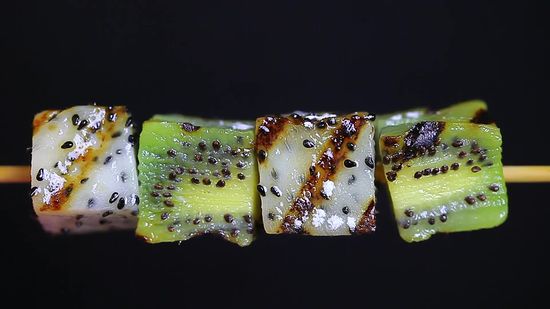
Take ripe red dragon fruit and cut it into thick cubes. Toss gently with a drizzle of olive oil, a pinch of flaky salt, and a squeeze of lemon. Roast it briefly in a hot oven, just until the edges caramelize slightly. Let it cool, then scatter over labneh or thick Greek yogurt. Finish with cracked black pepper, fresh mint, and a few toasted pumpkin seeds. The heat deepens the fruit’s sweetness, the salt pulls it into savory territory, and suddenly dragon fruit feels less like a smoothie ingredient and more like a grown-up dish.
Perhaps that’s why it’s showing up more often now. As markets globalize and palates mature, we’re learning to see familiar foods in new ways. Dragon fruit no longer feels like a novelty.