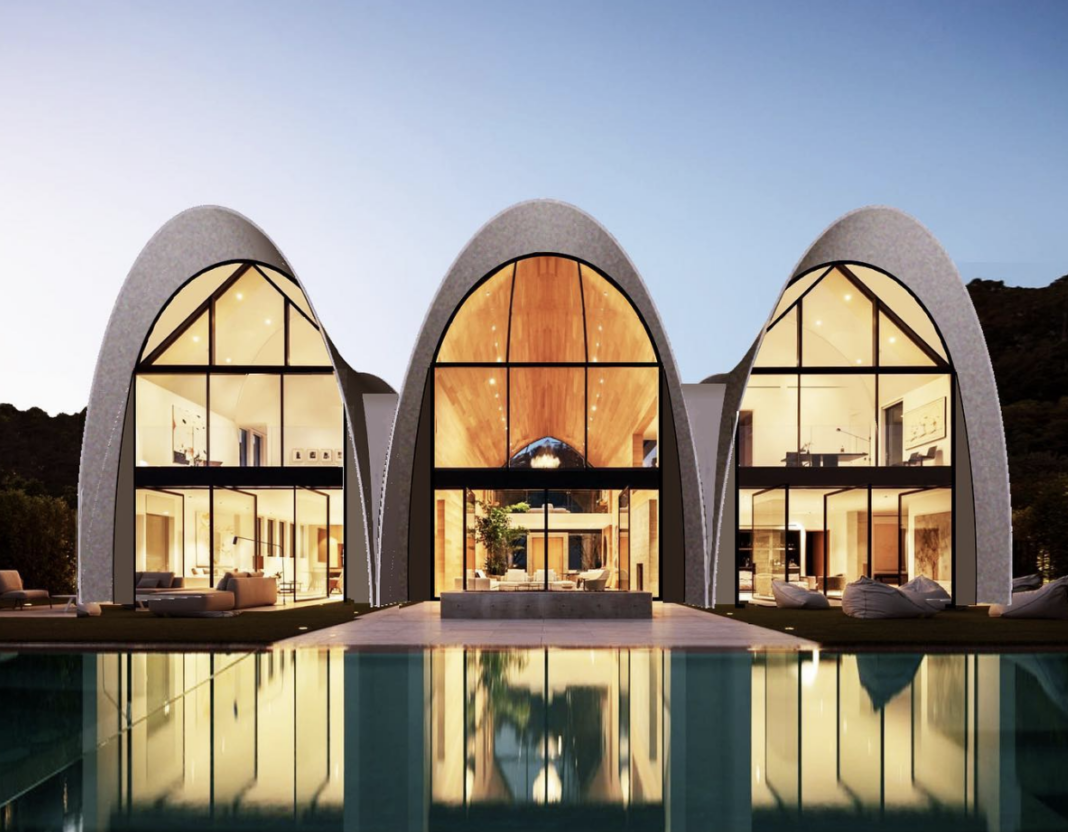


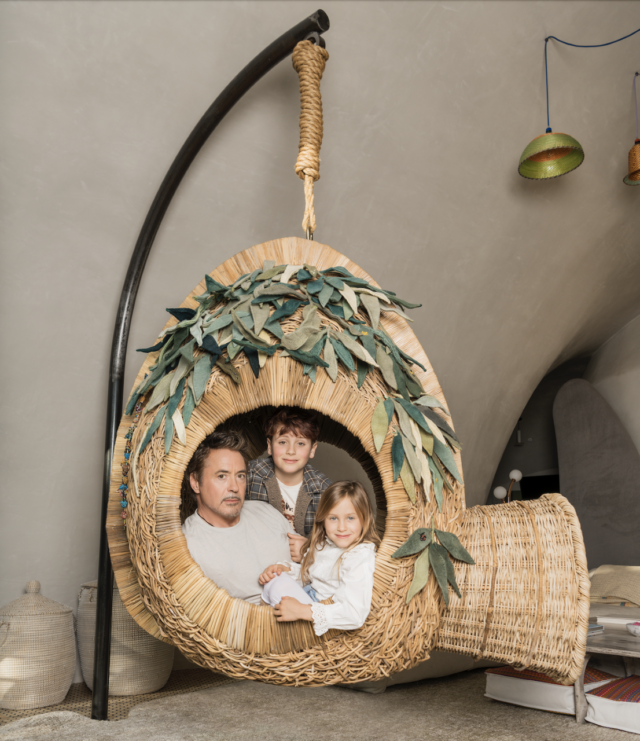
If you’ve seen “binishell homes” popping up across architecture feeds this year, you’re not imagining it. The iconic inflatable concrete house—originally invented in the 1960s by architect Dante Bini—is suddenly back in global headlines. And there’s one big reason: climate resilience. And hey, Robert Downey Junior lives in one.
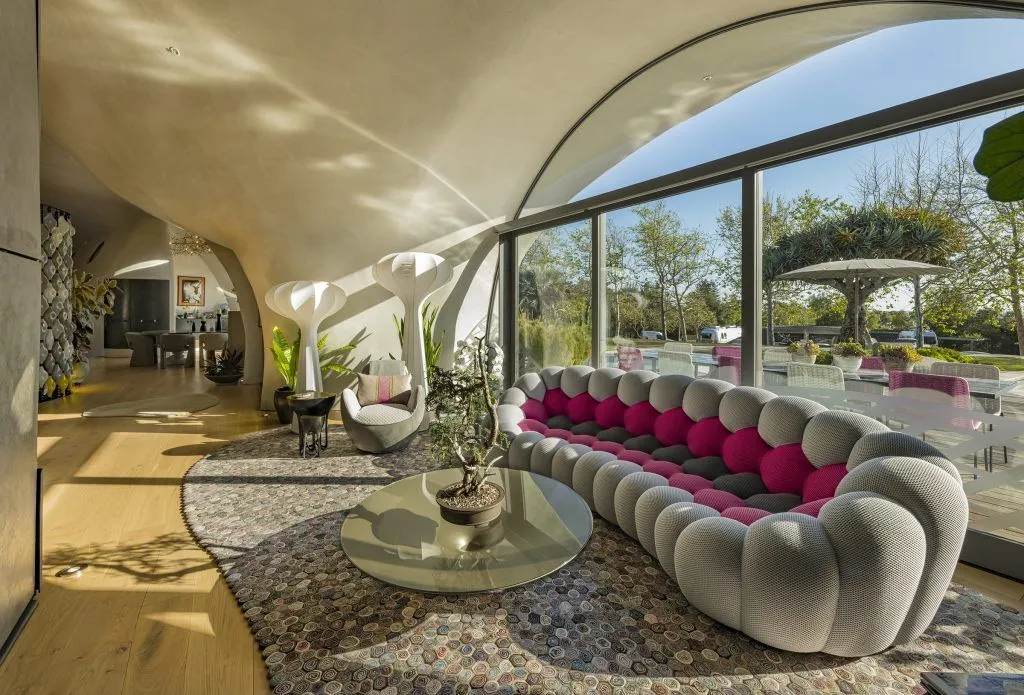
As heatwaves intensify and disasters become more frequent, governments and aid agencies are searching for housing solutions that are fast, affordable, low-carbon, and structurally strong. In California you can use hemp concrete and they are fire retardant.
Binishell is a dome-shaped building created by inflating a giant balloon and spraying reinforced concrete around it. The technique delivers astonishing speed—often under an hour per unit once the form is in place—and excellent durability, especially against earthquakes, cyclones, fires, and possibly even floods.
Search interest for binishell cost, binishell homes, and inflatable concrete house cost has jumped as engineers look for alternatives to slow, expensive, and carbon-heavy conventional construction. While full pricing varies by size, reinforcement type, and location, Binishells consistently reduce materials, labor hours, and waste.

Their air-form method uses up to 30–50% less concrete than a traditional box-shaped building and requires fewer skilled trades—an increasingly critical factor during emergency rebuilds when the local workforce is strained.
Inflatable concrete homes excel where disasters hit hardest. Their aerodynamic shape resists wind uplift, their monolithic shell minimizes weak points, and their thermal mass keeps interiors cool in summer and warm in winter—essential in regions struggling with both heat stress and energy scarcity. Concrete itself is not sustainable but new innovations using materials like hemp can make it so.
A growing number of countries and regions such as Gaza, Yemen, Somalia, Sudan, Afghanistan are Muslim and are naturally attracted to dome-shaped building, making Binishells an excellent idea if some company can actually make it happen.
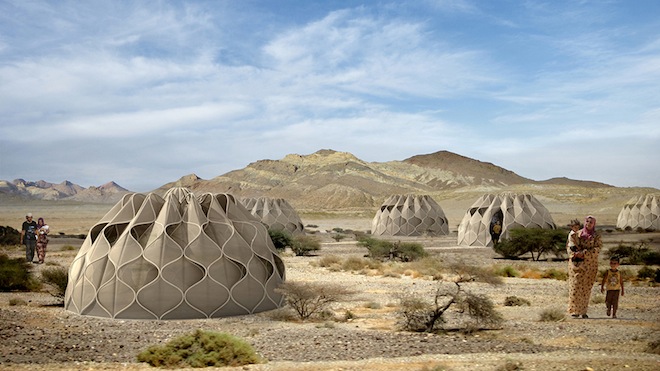
What makes this approach especially valuable is reusability: once the crisis passes, these strong, permanent structures can transition seamlessly into long-term public assets. They could be used as housing units for boarding schools or facilities where small businesses or artisans can work. If made moveable, they could function as a second space for homes in the region.
Turkey, for example, repurposed post-earthquake emergency housing built years ago with the help of Israel into into student dormitories. Binishells fit perfectly into this model: fast when needed, durable for decades, and flexible enough to become schools, healthcare posts, or creative workshops once families are resettled.