
Who gave the first kiss?

The origins of kissing, many people kissing
The origins of kissing goes back millions of years

Despite kissing carrying cultural and emotional significance in many human societies, up to now researchers have paid little attention to its evolutionary history.

In a new study from Oxford researchers carried out the first attempt to reconstruct the evolutionary history of kissing based on the primate family tree. The results indicate that kissing is an ancient trait in the large apes, evolving in the ancestor to that group 21.5 – 16.9 million years ago. Kissing was retained over the course of evolution and is still present in most of the large apes.

Related: Watch 20 Saudi Arabian men kiss for the first time
mother kiss child herpes
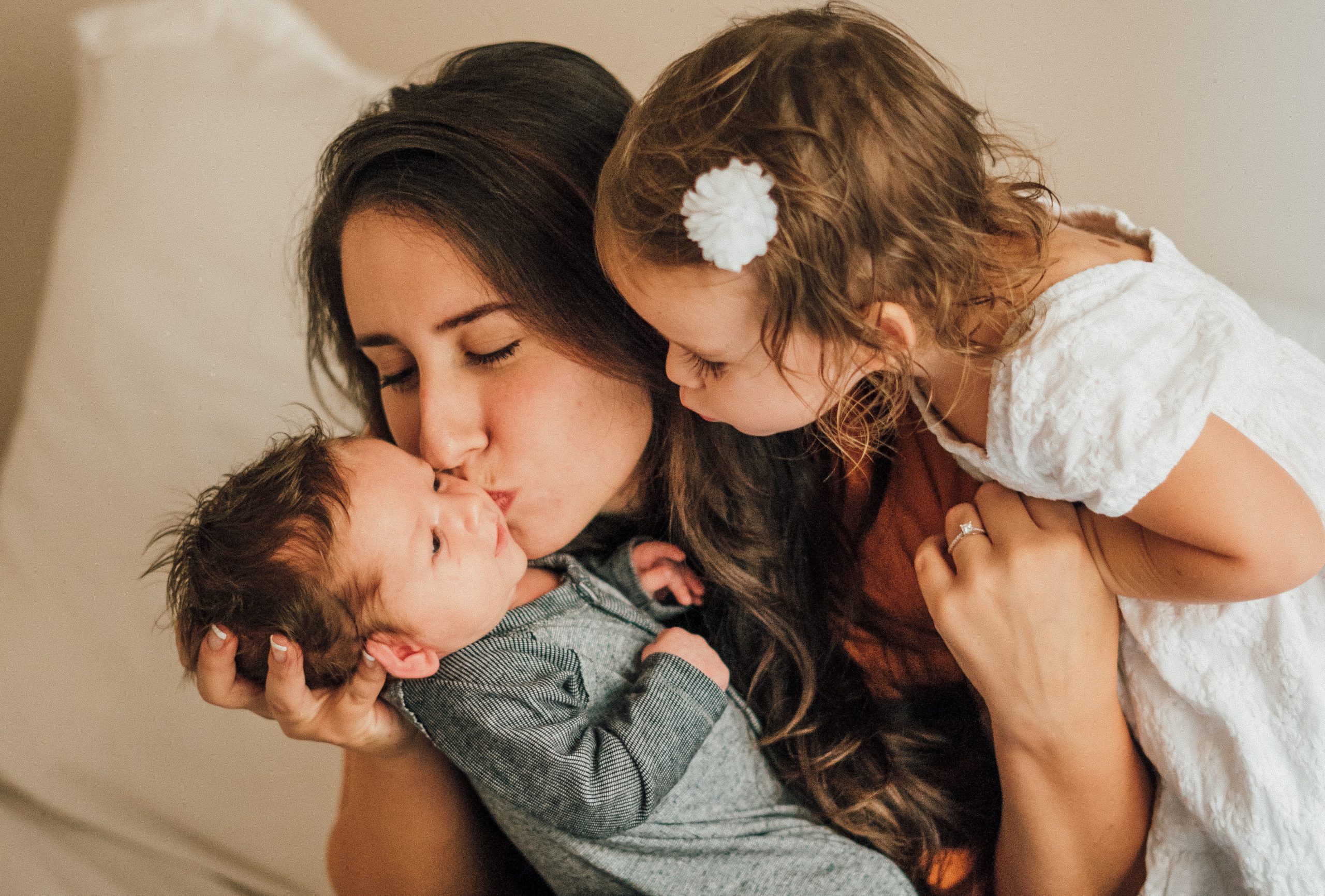
Kissing can transmit the herpes virus to our children, yet we kiss them

The team also found that our extinct human relatives, Neanderthals, were likely to have engaged in kissing too. This finding, together with previous studies showing that humans and Neanderthals shared oral microbes (via saliva transfer) and genetic material (via interbreeding), strongly suggests that humans and Neanderthals kissed one another.

“This is the first time anyone has taken a broad evolutionary lens to examine kissing. Our findings add to a growing body of work highlighting the remarkable diversity of sexual behaviors exhibited by our primate cousins,” says Dr Matilda Brindle, an evolutionary biologist at Oxford’s Department of Biology.

To run the analyses, the team first defined what constitutes a kiss. This was challenging, because many mouth-to-mouth behaviors look like kissing. Since the researchers were exploring kissing across different species, the definition also needed to be applicable to a wide range of animals. They therefore defined kissing as non-aggressive, mouth-to-mouth contact that did not involve food transfer.
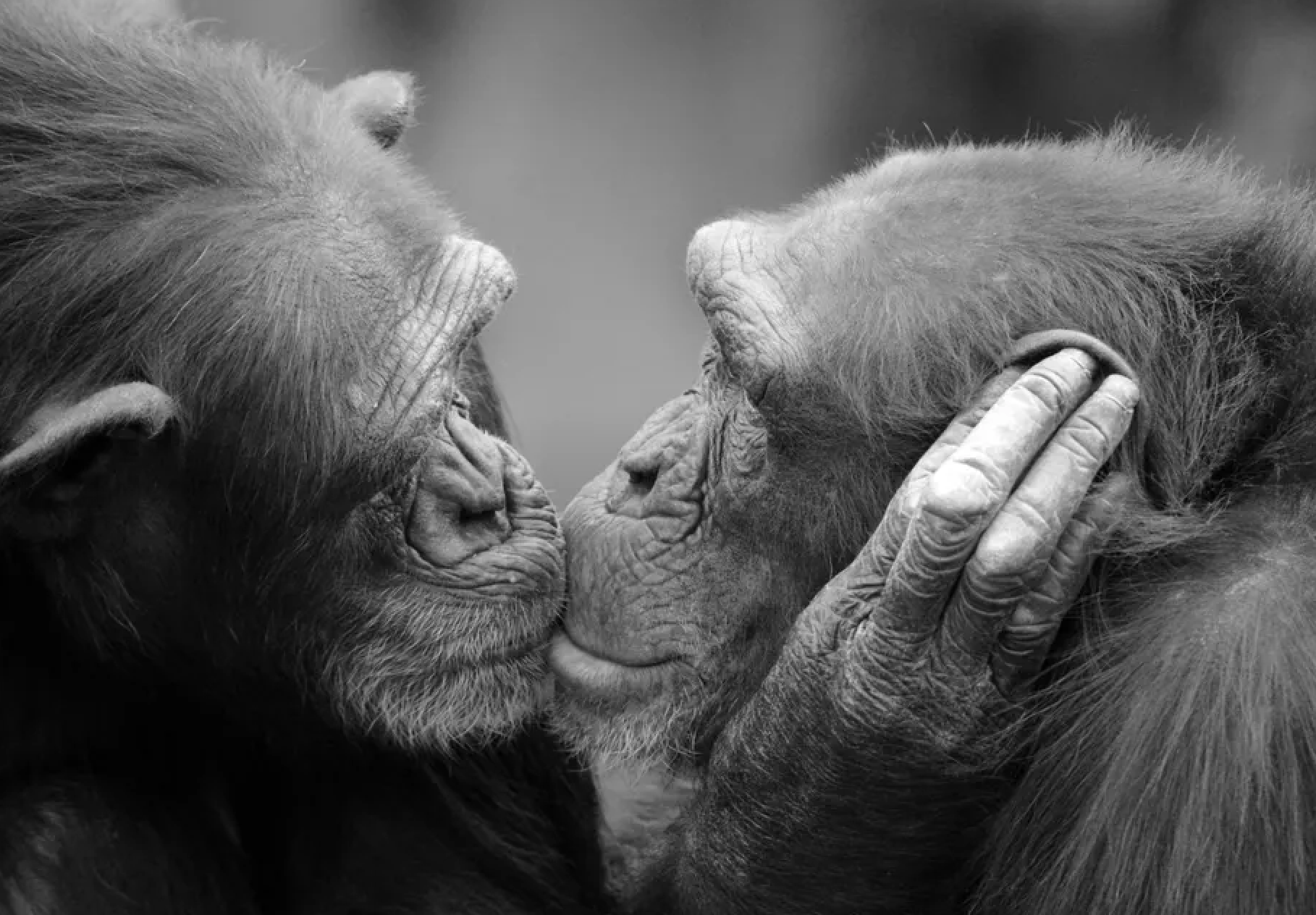
Kissing chimps

Having established this definition, the researchers collected data from the literature on which modern primate species have been observed kissing, focusing on the group of monkeys and apes that evolved in Africa, Europe and Asia. This included chimpanzees, bonobos, and orangutans, all of which have been observed kissing. By integrating evolutionary biology with behavioral data, “we’re able to make informed inferences about traits that don’t fossilise – like kissing. This lets us study social behavior in both modern and extinct species,” says Brindle.

They then ran a phylogenetic analysis; treating kissing as a ‘trait’ and mapping this to the family tree of primates. They used a statistical approach (called Bayesian modeling) to simulate different evolution scenarios along the branches of the tree, to estimate the probability that different ancestors also engaged in kissing. The model was run 10 million times to give robust statistical estimates.

While the researchers caution that existing data are limited – particularly outside the large apes – the study offers a framework for future work, and provides a way for primatologists to record kissing behaviors in nonhuman animals using a consistent definition.

“While kissing may seem like an ordinary or universal behavior, it is only documented in 46% of human cultures,’ said  Catherine Talbot, co-author of the study who works at the Florida Institute of Technology. “The social norms and context vary widely across societies, raising the question of whether kissing is an evolved behavior or cultural invention. This is the first step in addressing that question.”

Now that you are primed for kissing, make those chapped lips ready with a chemical free lip balm from Dr. Bronners.

Karin Kloosterman
Karin Kloostermanhttp://www.greenprophet.com
Karin Kloosterman is an award-winning journalist, innovation strategist, and founder of Green Prophet, one of the Middle East’s pioneering sustainability platforms. She has ranked in the Top 10 of Verizon innovation competitions, participated in NASA-linked challenges, and spoken worldwide on climate, food security, and future resilience. With an IoT technology patent, features in Canada’s National Post, and leadership inside teams building next-generation agricultural and planetary systems — including Mars-farming concepts — Karin operates at the intersection of storytelling, science, and systems change. She doesn’t report on the future – she helps design it. Reach out directly to [email protected]

LEAVE A REPLY

Please enter your comment!
Please enter your name here

TRENDING

Microplastics Are Becoming Superbug Highways — New Study Warns Beachgoers to Wear Gloves

Prof. Pennie Lindeque added that microplastics “act as carriers for antimicrobial-resistant bacteria, enhancing their survival and spread… each particle becomes a tiny vehicle capable of transporting pathogens from sewage works to beaches, swimming areas and shellfish-growing sites.”

Biodiversity Blueprint Set for 2026

If we seize this moment, the 2026 review can catalyse a new wave of finance (see Green Finance mechanisms in the UAE), innovation and policy coherence — and move us closer to the vision of a nature-positive world by 2050. If not, the checkpoint risks becoming another missed opportunity while ecosystems, livelihoods and economies continue to degrade.

Tonka Bean Trees Attract Lightning to Win the Rainforest Arms Race—And Science Thinks That’s Electrifying

Lightning is one of the leading natural causes of tree death in tropical forests. The raw voltage and heat from a strike can instantly boil sap, splinter wood, and reduce a once-living organism to charcoal. But not tonka trees.

Six “Green” Reasons To Drink Camel’s Milk

With 5 times the amount of Vitamin C in camel's milk, and full of iron, camel's milk needs no nutritional help. It has a shelf life of 5 days before pasteurization, after which it will survive for up to 3 weeks. Camel's milk is just as versatile as other milk, used as it is to produce low-fat varieties of cheese, chocolate, and a fermented delicacy that is used in areas that lack refrigeration.

Chicago coyotes live longer around people. You can stop feeling guilty now

As suburbs grow and cottage country expands, how do mammals fare with humans encroaching on wild spaces?  Tracking coyote movement in metropolitan areas shows the animals spend lots of time in natural settings, but a new study suggests the human element of city life has a bigger impact than the environment on urban coyote survival. 

Qatar’s climate hypocrisy rides the London Underground

Qatar remains a master of doublethink—burning gas by the megaton while selling “sustainability” to a world desperate for clean air. Wake up from your slumber people.

How Quality of Hire Shapes Modern Recruitment

A 2024 survey by Deloitte found that 76% of talent leaders now consider long-term retention and workforce contribution among their most important hiring success metrics—far surpassing time-to-fill or cost-per-hire. As the expectations for new hires deepen, companies must also confront the inherent challenges in redefining and accurately measuring hiring quality.

8 Team-Building Exercises to Start the Week Off 

Team building to change the world! The best renewable energy companies are ones that function.

Thank you, LinkedIn — and what your Jobs on the Rise report means for sustainable careers

While “green jobs” aren’t always labeled as such, many of the fastest-growing roles are directly enabling the energy transition, climate resilience, and lower-carbon systems: Number one on their list is Artificial Intelligence engineers. But what does that mean? Vibe coding Claude? 

Somali pirates steal oil tankers

The pirates often stage their heists out of Somalia, a lawless country, with a weak central government that is grappling with a violent Islamist insurgency. Using speedboats that swarm the targets, the machine-gun-toting pirates take control of merchant ships and then hold the vessels, crew and cargo for ransom.

Leopoldo Alejandro Betancourt López Turned Ocean Plastic Into Profitable Sunglasses

Few fashion accessories carry the environmental burden of sunglasses. Most frames are constructed from petroleum-based plastics and acrylic polymers that linger in landfills for centuries, shedding microplastics into soil and waterways long after they've been discarded. Leopoldo Alejandro Betancourt López, president of the Spanish eyewear brand Hawkers, saw this problem differently than most industry executives.

Why Dr. Tony Jacob Sees Texas Business Egos as Warning Signs

Everything's bigger in Texas. Except business egos.  Dr. Tony Jacob figured...

Israel and America Sign Renewable Energy Cooperation Deal

Other announcements made at the conference include the Timna Renewable Energy Park, which will be a center for R&D, and the AORA Solar Thermal Module at Kibbutz Samar, the world's first commercial hybrid solar gas-turbine power plant that is already nearing completion. Solel Solar Systems announced it was beginning construction of a 50 MW solar field in Lebrija, Spain, and Brightsource Energy made a pre-conference announcement that it had inked the world's largest solar deal to date with Southern California Edison (SCE).

Related Articles

Popular Categories