
Qatar builds its own oversight mechanism to monitor itself on climate — what could go wrong?

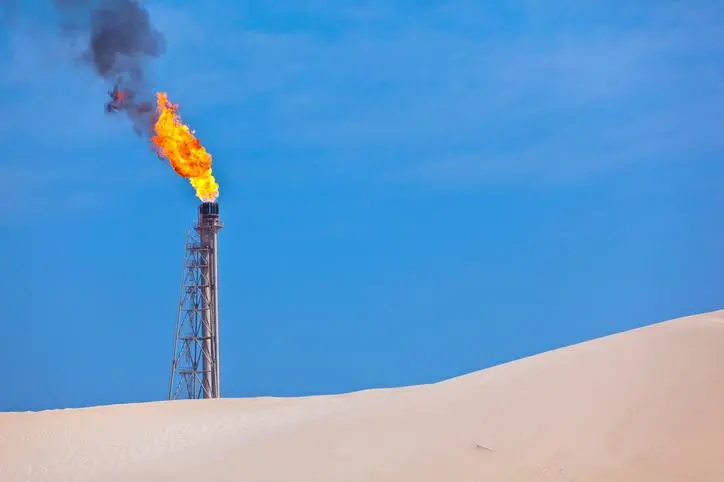
Qatari LNG gas flare

Qatar, the world’s richest per-capita nation and the planet’s largest exporter of liquefied natural gas (LNG), has announced an ambitious set of “environmental sustainability goals” for 2030. On paper, the Gulf state pledges to cut emissions by 25 percent, generate 4 GW of renewable power, and protect 30 percent of its land and marine areas.

It’s a vision wrapped in the language of decarbonization, resilience, and “global cooperation.”
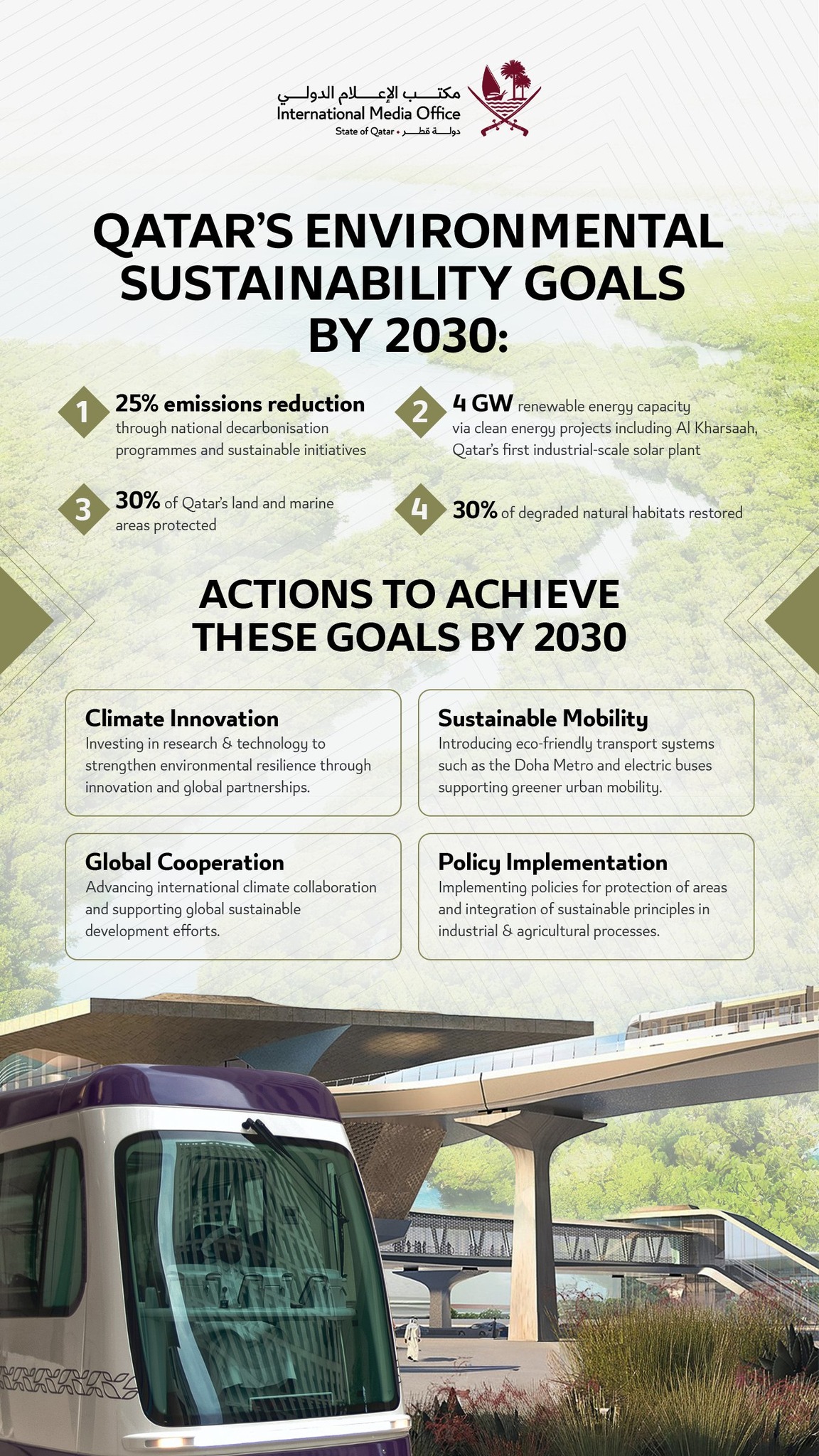
But who’s keeping score? The answer, it turns out, is Qatar itself. The same petrostate that fuels the global gas market has quietly built its own “oversight” mechanism to monitor, verify, and approve its climate progress. The Global Accreditation Bureau (GAB)—a Doha-based body established by the government—recently became the first Middle East entity to sign an international agreement allowing it to accredit greenhouse gas verifiers.

On paper, this gives Qatar international recognition for tracking emissions. In practice, it means the fox is now in charge of the henhouse.

Qatar’s self-styled climate governance system includes a national MRV framework (Measurement, Reporting and Verification) designed to track carbon output across sectors. The country touts it as a transparent, UN-aligned process developed in partnership with the Global Green Growth Institute. Yet the data pipeline, the audit process, and the publication of results all sit under the Qatar Ministry of Environment and Climate Change. There is no independent audit, no investigative press to scrutinize numbers, and no civil society oversight. No free press can criticise Qatar. No one person or NGO can hold it accountable.

In theory, “international alignment” sounds good. But in the absence of true independence, it’s little more than bureaucratic choreography. A climate governance façade, built for export. The GAB may tick ISO and IPCC boxes, but it remains accountable to the same state apparatus responsible for expanding LNG exports well into 2050.

Qatar calls this sustainability; the rest of the world might call it self-certification.

Qatar’s contradictions are stunning. The country burns vast amounts of fossil fuel to desalinate water and cool indoor stadiums, then advertises solar plants and metro lines as symbols of green progress. It finances one of the most powerful propaganda networks, Al Jazeera; reporters who work there cannot investigate environmental issues at home. The same “news outlet” runs climate-awareness campaigns on the London Underground.

It’s a nation that sells gas by night and lectures the world by day on carbon offsetting.

Building one’s own watchdog is the natural next step in that narrative. With no freedom of the press, no parliamentary opposition, and no public-access climate data, Qatar’s self-auditing system ensures that the only emissions counted are the ones convenient to count.

In the end, Doha may not just be exporting LNG. It’s exporting a new model of green authoritarianism — where the state burns, monitors, and praises itself, all in the same breath.

Karin Kloosterman
Karin Kloostermanhttp://www.greenprophet.com
Karin Kloosterman is an award-winning journalist, innovation strategist, and founder of Green Prophet, one of the Middle East’s pioneering sustainability platforms. She has ranked in the Top 10 of Verizon innovation competitions, participated in NASA-linked challenges, and spoken worldwide on climate, food security, and future resilience. With an IoT technology patent, features in Canada’s National Post, and leadership inside teams building next-generation agricultural and planetary systems — including Mars-farming concepts — Karin operates at the intersection of storytelling, science, and systems change. She doesn’t report on the future – she helps design it. Reach out directly to [email protected]

LEAVE A REPLY

Please enter your comment!
Please enter your name here

TRENDING

Huge Fish Nursery Discovered Under Freezing Arctic Seas

In 2019, an underwater robot camera exploring the seabed...

Remilk makes cloned milk so cows don’t need to suffer and it’s hormone-free

This week, Israel’s precision-fermentation milk from Remilk is finally appearing on supermarket shelves. Staff members have been posting photos in Hebrew, smiling, tasting, and clearly enjoying the moment — not because it’s science fiction, but because it tastes like the real thing.

The US leaves 66 United Nations organizations to “put America first”

The world needs a reset and to restart well intentioned cooperation projects from start. Because right now the UN and EU projects look like software built on code from the 80s, rickety, patched, slow to adapt, and prone to crashing under the weight of outdated assumptions.

What Renewable Energy Means for Long-Term Environmental Planning

In the context of American energy policy (setting the stage for the world as oil prices are in USD), the relevance of renewable energy planning is increasingly evident. Federal agencies are preparing final biofuel blending mandates under the Renewable Fuel Standard, with decisions expected early in 2026 after delays that have left investors and producers in limbo.

EU Ports Still Power Russia’s Arctic Gas Exports Despite Phase-Out Pledge

The findings suggest that rather than declining, Europe’s reliance on Yamal LNG intensified in 2025. Yamal cargoes accounted for 14.3% of the EU’s total LNG imports, equivalent to roughly one in every seven LNG ships arriving at European terminals.The findings suggest that rather than declining, Europe’s reliance on Yamal LNG intensified in 2025. Yamal cargoes accounted for 14.3% of the EU’s total LNG imports, equivalent to roughly one in every seven LNG ships arriving at European terminals.

Qatar’s climate hypocrisy rides the London Underground

Qatar remains a master of doublethink—burning gas by the megaton while selling “sustainability” to a world desperate for clean air. Wake up from your slumber people.

How Quality of Hire Shapes Modern Recruitment

A 2024 survey by Deloitte found that 76% of talent leaders now consider long-term retention and workforce contribution among their most important hiring success metrics—far surpassing time-to-fill or cost-per-hire. As the expectations for new hires deepen, companies must also confront the inherent challenges in redefining and accurately measuring hiring quality.

8 Team-Building Exercises to Start the Week Off 

Team building to change the world! The best renewable energy companies are ones that function.

Thank you, LinkedIn — and what your Jobs on the Rise report means for sustainable careers

While “green jobs” aren’t always labeled as such, many of the fastest-growing roles are directly enabling the energy transition, climate resilience, and lower-carbon systems: Number one on their list is Artificial Intelligence engineers. But what does that mean? Vibe coding Claude? 

Somali pirates steal oil tankers

The pirates often stage their heists out of Somalia, a lawless country, with a weak central government that is grappling with a violent Islamist insurgency. Using speedboats that swarm the targets, the machine-gun-toting pirates take control of merchant ships and then hold the vessels, crew and cargo for ransom.

Leopoldo Alejandro Betancourt López Turned Ocean Plastic Into Profitable Sunglasses

Few fashion accessories carry the environmental burden of sunglasses. Most frames are constructed from petroleum-based plastics and acrylic polymers that linger in landfills for centuries, shedding microplastics into soil and waterways long after they've been discarded. Leopoldo Alejandro Betancourt López, president of the Spanish eyewear brand Hawkers, saw this problem differently than most industry executives.

Why Dr. Tony Jacob Sees Texas Business Egos as Warning Signs

Everything's bigger in Texas. Except business egos.  Dr. Tony Jacob figured...

Israel and America Sign Renewable Energy Cooperation Deal

Other announcements made at the conference include the Timna Renewable Energy Park, which will be a center for R&D, and the AORA Solar Thermal Module at Kibbutz Samar, the world's first commercial hybrid solar gas-turbine power plant that is already nearing completion. Solel Solar Systems announced it was beginning construction of a 50 MW solar field in Lebrija, Spain, and Brightsource Energy made a pre-conference announcement that it had inked the world's largest solar deal to date with Southern California Edison (SCE).

Related Articles

Popular Categories