The global energy transition isn’t only about solar panels, electrolyzers, or the glamorous green-hydrogen whispers in Dubai conference halls. The revolutions come from the places the public hasn’t heard about, like an industrial campus outside Salt Lake City, where a company called Torus just secured $200 million to build a different kind of battery future.
Years ago when I interviewed the late David Anthony from 21Ventures, he told me his secrets to deal finding: hang out in laboratories and find the innovation before it gets to the tech transfer office. (Tech transfer offices have already done the due diligence and you’ll find deals there too, but they are no longer secret).
This story here isn’t lithium mining in the Andes or sodium-ion chemistry in Shanghai. This is physics, spooling at thousands of revolutions per minute and it started at a company called Torus.
Torus combines flywheels — ancient devices (think pottery kick wheel) that store energy mechanically by spinning at high speed — with traditional batteries. The result is a hybrid system that can absorb and release power instantly, smoothing the chaos of electrons on a stressed electrical grid. A flywheel is like a spinning prayer wheel for the grid, storing kinetic intention, and releasing it stably when everything around it shakes.
In engineering-speak: “A flywheel comprises a rotating mass that stores kinetic energy. When charging, a torque applied in the direction of rotation accelerates the rotor, increasing its speed and stored energy,” explains Sandia National Laboratory. “When discharging, a braking torque decelerates the rotor, extracting energy while performing useful work.”
Flywheels are already powering parts of modern life. In big cities like London and Philadelphia, transit systems use flywheels to capture braking energy from trains and feed it back into the grid. In data centers at Microsoft and major telecom hubs, flywheel UPS units provide instant backup power before generators kick in.
Utilities from New York to Ontario use flywheel farms to stabilize the grid when wind and solar fluctuate. In space, satellites use flywheel “reaction wheels” to orient themselves without fuel. Even race cars like Porsche hybrids have used flywheels for rapid energy recovery and boost. This is proven tech, now scaling to the grid.
Why the world needs a stable grid?
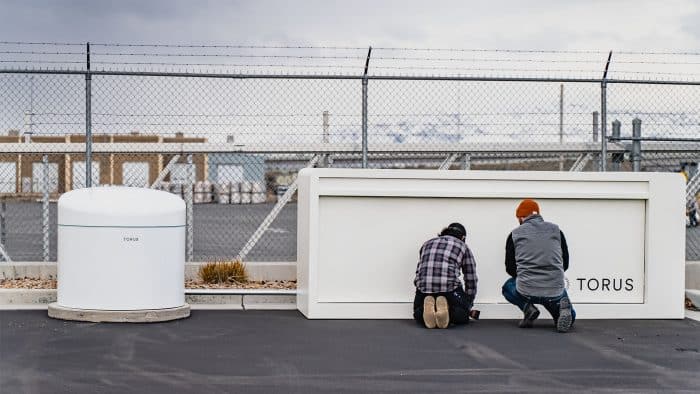
AI and token-mining data centers are consuming city-scale power. The US grid is aging making it difficult to absorb new energy sources even when they become relevant. Extreme heat and cold events are becoming the new normal. And these factors influence whether or not the heating will go in Texas or Canada in the winter.
Torus’ new financing, led by Chicago-based Magnetar Capital, will scale a Utah manufacturing facility called GigaOne and push capacity beyond 1 gigawatt of storage within three years. Letters of intent are already on the table from PacifiCorp and Portland General Electric, both utilities managing real-world wildfire risk, winter storms, and transformer-meltdown summers.
Michael Cooper, our trusted in-house investment researcher from 36North says that Warren Buffet is the model for all investment students of the world to follow. So this latest round and interest in Torus by PacifiCorp caught his attention.
“As an investor, I am most excited by the potentially lower risk environment whereby industry is combining disciplines and technologies from physics to chemistry to build products and solutions. This stage is more rewarding than exploring theoretical physics or pure chemistry,” he says.
Though still private, Torus has already attracted major utility interest, including letters of intent from PacifiCorp and Portland General Electric—early signals that its technology is transitioning from promising pilot to grid-relevant infrastructure. Berkshire Hathaway (Warren Buffett’s conglomerate) via its subsidiary Berkshire Hathaway Energy (formerly MidAmerican Energy Holdings) owns PacifiCorp.
In a blog post on September 9, Torus CEO and co-founder Nate Walkingshaw described the company’s “modular power plant” technology in somewhat flowing terms, though the basic point is the key point. Flywheels are more responsive than conventional batteries, and batteries support the duration factor.
“The magical combination of flywheels, batteries, chipsets and cyber security appliances allows us to respond in milliseconds, and stay online with 99.9% uptime,” Walkingshaw said. “This year we have been deployed by our utility partners nearly every day to assist them with frequency and voltage support plus assisting our customers with peak shaving, emergency back-up and power quality concerns,” he added.
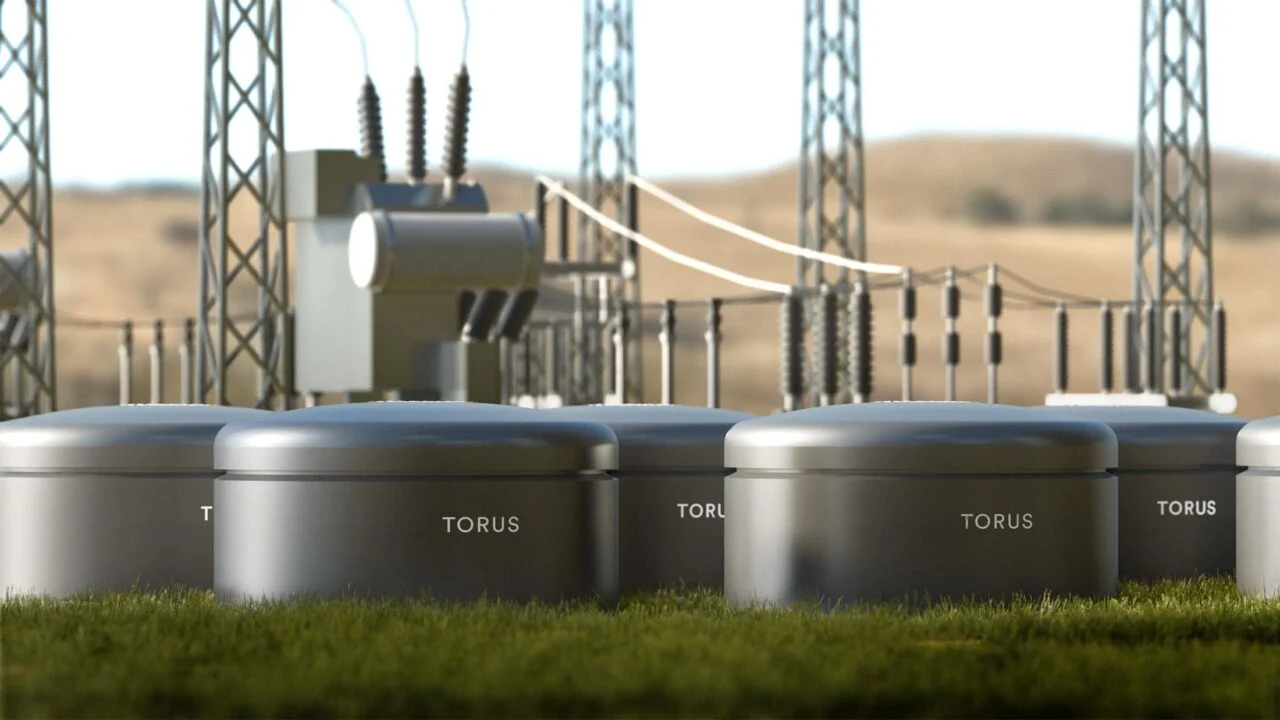
Lithium batteries are miracles we use every day and they are in our phones, laptops, Teslas. But lithium alone isn’t enough to stabilize a renewable grid. Batteries degrade. But flywheels don’t degrade the same way. They don’t catch fire. They don’t care if it’s −20°C or +50°C. They can discharge and recharge millions of times.
This isn’t a moonshot investment but one that Warren Buffett could get behind. Torus already runs a 400-MW manufacturing facility and it has purchase orders in the pipeline and has signed a memorandum of understanding (MOU) with Rocky Mountain Power (a division of PacifiCorp) to deploy up to 70 MW of its hybrid flywheel + battery storage solutions in Utah, Wyoming and Idaho.
“This partnership highlights our commitment to exploring new technologies and optimizing infrastructure as we work to meet the energy demands and challenges over the next decade,” said Dick Garlish, President of Rocky Mountain Power.
How flywheels work to store free energy
The opportunity is enabled through Rocky Mountain Power’s industry leading virtual power plan, specifically the Wattsmart Battery program. The partnership will deploy Torus’s cutting-edge Nova Spin and Nova Pulse technologies across multiple sites. These innovations allow for real-time response and deliver twice the lifespan of traditional batteries.
“Working with Rocky Mountain Power at this scale demonstrates the growing recognition of demand response as a crucial tool for modern utilities,” said Walkingshaw. “As Utah attracts more data centers, manufacturing facilities, and technology companies, reliable and affordable energy becomes even more critical. Our technology improves grid resilience and efficiency while supporting Utah’s vision for energy abundance that will power the next generation of economic growth.”
The story here isn’t that flywheels will replace lithium batteries but that the energy future will be stacked, layered, and hybrid.

Torus Inc., based in South Salt Lake City, Utah, was co-founded in 2021 by systems-engineer-turned-entrepreneur Nate Walkingshaw and energy technologist Gilbert Lee, with a vision to build a grid-storage platform that blends the physics reliability of flywheels with the flexibility of batteries.
The company has grown to roughly 70 employees as it scales its “GigaOne” manufacturing campus and deploys hybrid storage systems for utilities and data centers. Torus recently secured $200 million in growth capital from Magnetar Capital to boost production capacity beyond 1 GW within three years, following earlier funding that valued the company at approximately $535 million.