EU Funds for Academic Bias? Why the “Aula Mediterrània” Lecture Series Undermines Democracy and Dialogue

Aula Mediterrània, Aula Mediterrània lecture series, Euro-Mediterranean programme, IEMed Barcelona event, Mediterranean studies conference, inter-university Mediterranean dialogues, Mediterranean geopolitics seminar, Mediterranean sustainability research, IBEI Barcelona Aula Mediterrània
A conference “for peace” in the Mediterranean, funded by the EU and which demonizes Israel in its core

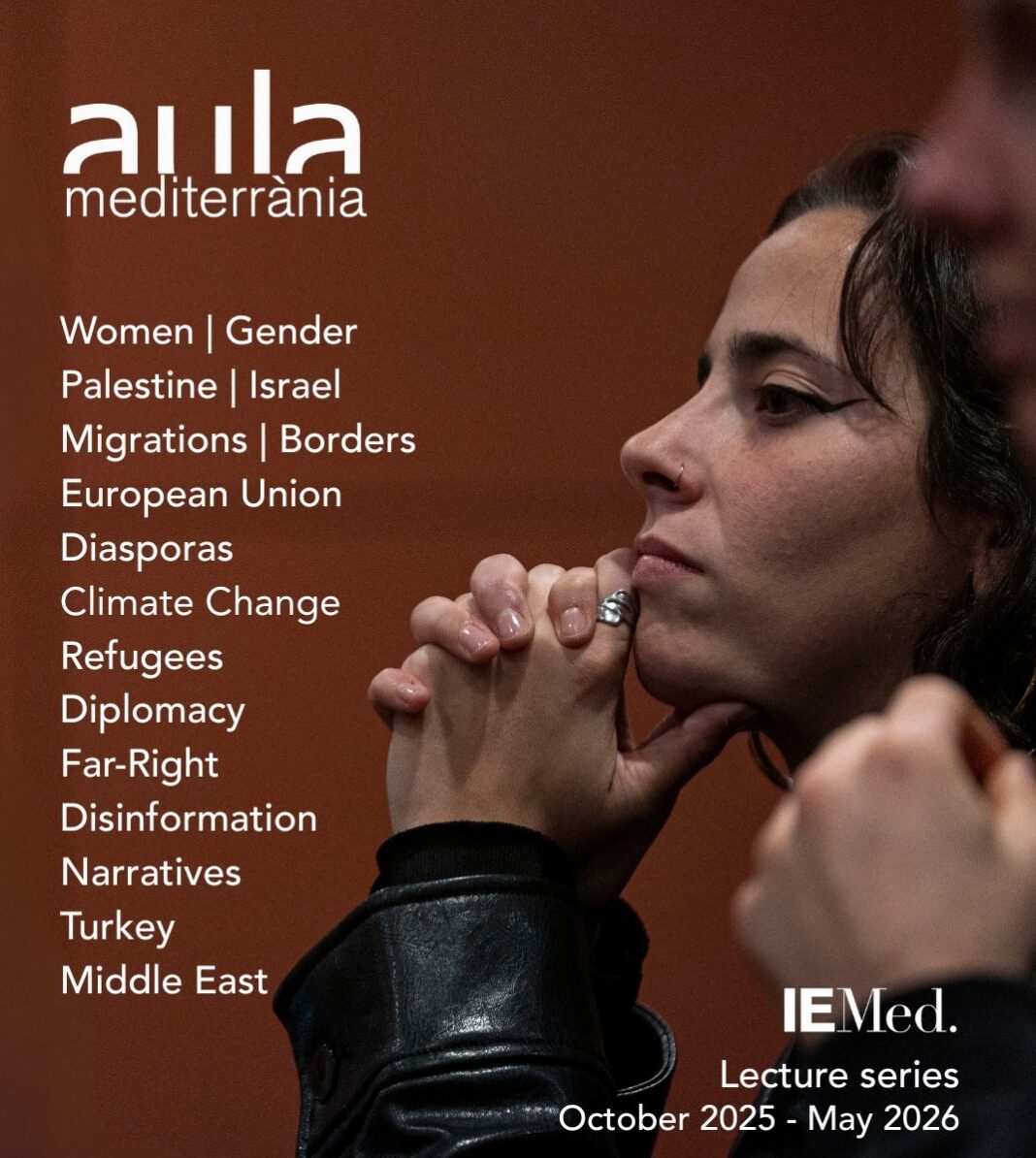
The European Institute of the Mediterranean (IEMed) in Barcelona, a so-called peace making think tank for the Mediterranean Region, is hosting the twelfth edition of its Aula Mediterrània lecture series—27 talks spanning politics, migration, and culture under the banner of “Thinking about the Mediterranean of the 21st Century.”

At first glance, it looks like a celebration of regional dialogue and academic exchange. But beneath the polished program lies a troubling current of politicized bias that calls into question the values the European Union claims to uphold: fairness, democracy, and balanced dialogue.

This year’s series devotes significant attention to the Israeli–Palestinian conflict—yet the framing of that attention is anything but balanced. One talk is titled “Palestine’s Maritime Rights vs Israel’s Bully Take Over: An Exit Path.” Another accuses the European Union of “Complicity, Silence and Double Standards.” Later in the schedule comes “The Fifteen Wars of Israel against Gaza,” a phrase that reads more like an activist slogan than a scholarly topic.

Not a single lecture explores Israel’s security concerns, democratic institutions, or peace efforts. Or how the Arab world works to combat terror. There are no Israeli speakers, no balance, and no nuance—just repetition of a single narrative that paints one country, and one people, as the villain of the Mediterranean story.

The Union for the Mediterranean, funded by the EU and the UN engages in the same flavor of dialogue when it comes to environmental issues and climate change. See the women on stage in keffiahs meant to virtue signal and intimidate Israelis and Jews. I have written to their directors, and spokesperson multiple times about exclusionary policies against Israelis and Israel data in the Mediterranean. No reply.
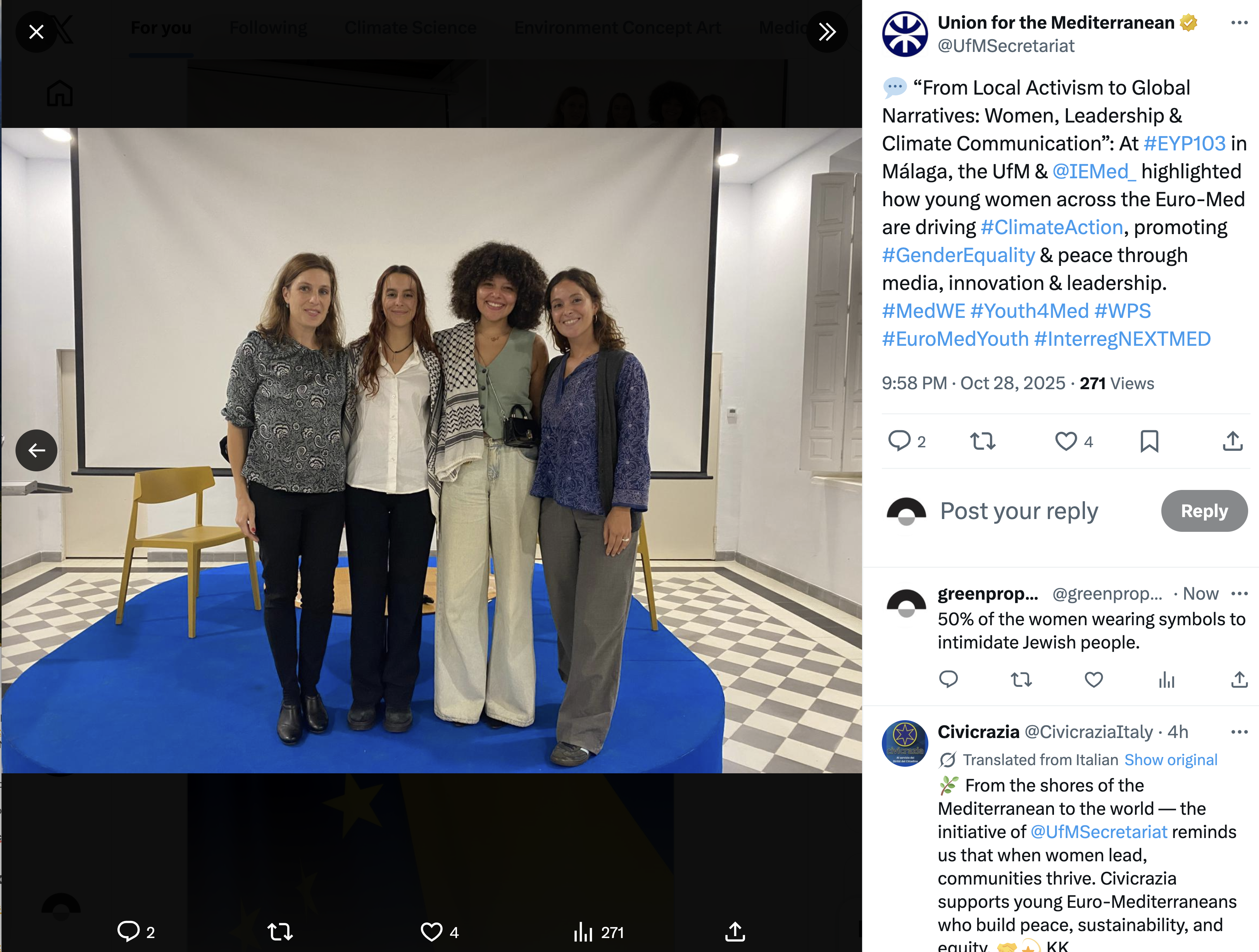
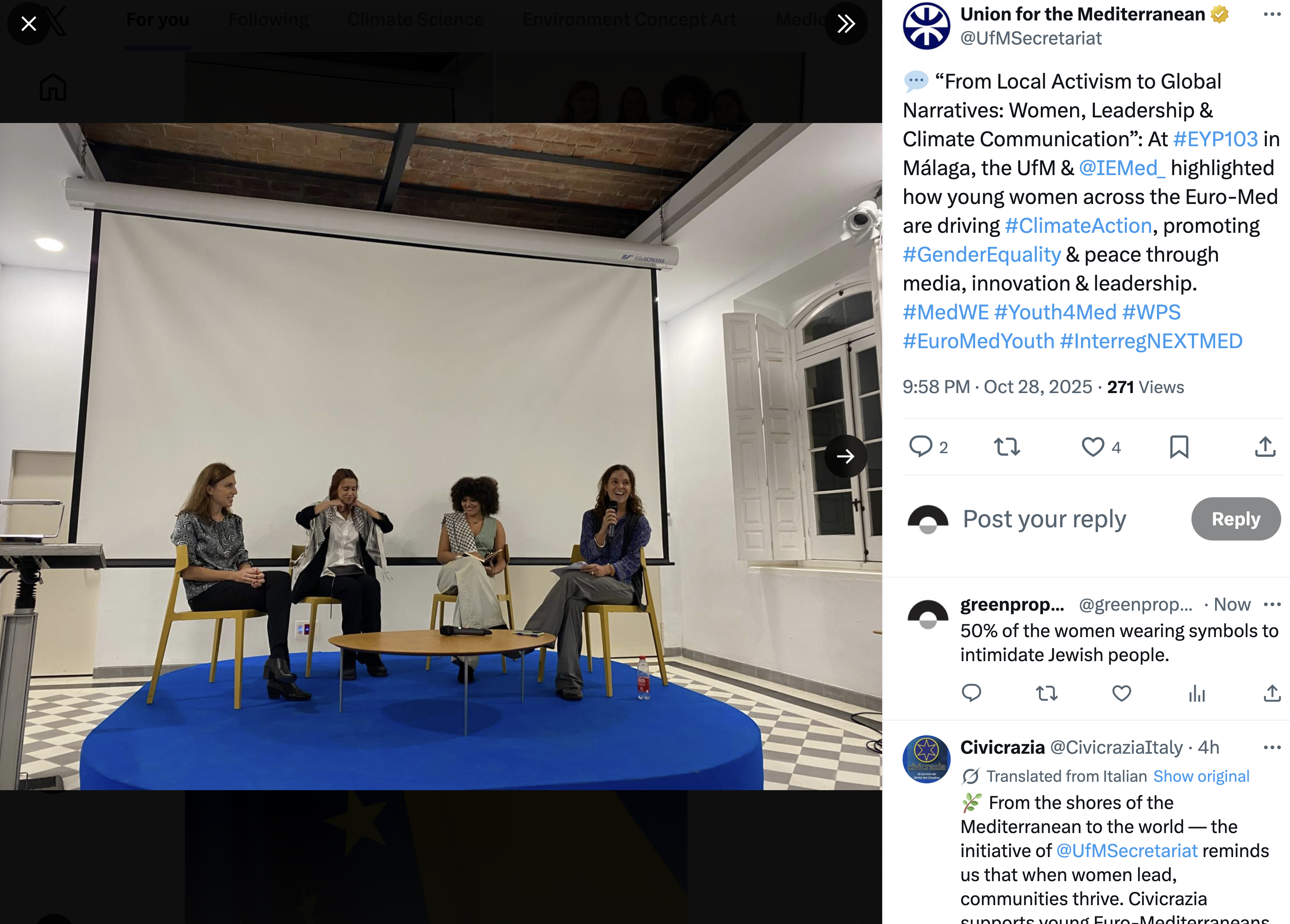
Union for the Mediterranean hosts climate events but turns them into a political spectacle.

That is not dialogue. It’s dogma.

When European taxpayers fund programs through institutions like IEMed, they do so under the promise of promoting mutual understanding and academic rigor.

Instead, Aula Mediterrània has become a platform for the normalization of anti-Israel bias wrapped in academic legitimacy –- and offers credit when you attend these lectures online. By platforming speakers who describe Israel’s policies in loaded, accusatory terms—without offering countervailing voices—the event risks turning the European lecture hall into an echo chamber for politicized grievance.

The EU’s own policies call for cultural initiatives that strengthen democratic debate, not replace it with monolithic thinking. How does a lecture that calls Israel a “bully” advance understanding between “both shores of the Mediterranean,” as the program claims? How can we speak of inclusion when the only Jewish and Israeli perspectives are erased from the conversation?

There is a dangerous irony in a publicly funded institution promoting exclusion under the guise of inclusion. Europe’s academic landscape is increasingly shaped by the politics of one-sided empathy—solidarity for some victims, silence for others. This is not just unfair; it is anti-democratic. True scholarship depends on the freedom to debate, to test ideas against evidence, to listen even when it is uncomfortable. By indulging in moral absolutism, Aula Mediterrània abandons the very foundations of intellectual democracy.

If the EU wishes to preserve credibility as a defender of democracy and dialogue, and the Arab world aspires to become a democracy in any shape and form, it must ensure that the institutions they fund and support reflect those principles. Supporting events that vilify one democratic state while romanticizing its enemies sends a message of hypocrisy, not harmony.

The Mediterranean deserves better—an academic space where truth, complexity, and compassion coexist. Until Aula Mediterrània embraces genuine pluralism, European taxpayers should ask a simple question: why are they paying for propaganda?


Karin Kloosterman
Karin Kloostermanhttp://www.greenprophet.com
Karin Kloosterman is an award-winning journalist, innovation strategist, and founder of Green Prophet, one of the Middle East’s pioneering sustainability platforms. She has ranked in the Top 10 of Verizon innovation competitions, participated in NASA-linked challenges, and spoken worldwide on climate, food security, and future resilience. With an IoT technology patent, features in Canada’s National Post, and leadership inside teams building next-generation agricultural and planetary systems — including Mars-farming concepts — Karin operates at the intersection of storytelling, science, and systems change. She doesn’t report on the future – she helps design it. Reach out directly to [email protected]

LEAVE A REPLY

Please enter your comment!
Please enter your name here

TRENDING

Astro uses AI to help procure land for renewable energy

For oil-rich, environmentally vigilant Gulf states, Astro isn’t just another startup story. It is a blueprint for accelerating an energy transition that is now existential, not optional.

The Science Behind How Elite Marathon Runners Train

Discover the science behind elite marathon training. Explore techniques, nutrition, and mental strategies that propel top runners to success.

Earth building with Dead Sea salt bricks

Researchers develop a brick made largely from recycled Dead Sea salt—offering a potential alternative to carbon-intensive cement.

The Christ’s thorn (sidr tree) is also a well-known folk medicine

Christ’s thorn jujube (Ziziphus spina-christi) also known as the sidr tree is a real, identifiable tree native to the Middle East, and it appears—directly or indirectly—in Islam, Judaism, and later Christian tradition. The connections between the three faiths are not theological agreements but overlapping uses, names, and symbolic associations rooted in the same landscape.

Farm To Table Israel Connects People To The Land

Farm To Table Israel is transforming the traditional dining experience into a hands-on journey.

Qatar’s climate hypocrisy rides the London Underground

Qatar remains a master of doublethink—burning gas by the megaton while selling “sustainability” to a world desperate for clean air. Wake up from your slumber people.

How Quality of Hire Shapes Modern Recruitment

A 2024 survey by Deloitte found that 76% of talent leaders now consider long-term retention and workforce contribution among their most important hiring success metrics—far surpassing time-to-fill or cost-per-hire. As the expectations for new hires deepen, companies must also confront the inherent challenges in redefining and accurately measuring hiring quality.

8 Team-Building Exercises to Start the Week Off 

Team building to change the world! The best renewable energy companies are ones that function.

Thank you, LinkedIn — and what your Jobs on the Rise report means for sustainable careers

While “green jobs” aren’t always labeled as such, many of the fastest-growing roles are directly enabling the energy transition, climate resilience, and lower-carbon systems: Number one on their list is Artificial Intelligence engineers. But what does that mean? Vibe coding Claude? 

Somali pirates steal oil tankers

The pirates often stage their heists out of Somalia, a lawless country, with a weak central government that is grappling with a violent Islamist insurgency. Using speedboats that swarm the targets, the machine-gun-toting pirates take control of merchant ships and then hold the vessels, crew and cargo for ransom.

Leopoldo Alejandro Betancourt López Turned Ocean Plastic Into Profitable Sunglasses

Few fashion accessories carry the environmental burden of sunglasses. Most frames are constructed from petroleum-based plastics and acrylic polymers that linger in landfills for centuries, shedding microplastics into soil and waterways long after they've been discarded. Leopoldo Alejandro Betancourt López, president of the Spanish eyewear brand Hawkers, saw this problem differently than most industry executives.

Why Dr. Tony Jacob Sees Texas Business Egos as Warning Signs

Everything's bigger in Texas. Except business egos.  Dr. Tony Jacob figured...

Israel and America Sign Renewable Energy Cooperation Deal

Other announcements made at the conference include the Timna Renewable Energy Park, which will be a center for R&D, and the AORA Solar Thermal Module at Kibbutz Samar, the world's first commercial hybrid solar gas-turbine power plant that is already nearing completion. Solel Solar Systems announced it was beginning construction of a 50 MW solar field in Lebrija, Spain, and Brightsource Energy made a pre-conference announcement that it had inked the world's largest solar deal to date with Southern California Edison (SCE).

Related Articles

Popular Categories