In the black depths of the northwest Pacific Ocean, between 6,000 and 9,500 metres beneath the surface, scientists have discovered what is now considered the deepest complex chemosynthetic ecosystem ever recorded. This remarkable find, located in the Kuril-Kamchatka and Aleutian trenches, is composed of tubeworms, clams, snails, sea cucumbers, and other invertebrates — all thriving without sunlight by feeding on energy from methane and hydrogen sulfide seeping from the seafloor.
The discovery, led by a team from the Institute of Deep-sea Science and Engineering of the Chinese Academy of Sciences, was detailed in a study published in PNAS (Proceedings of the National Academy of Sciences) on July 29, 2025. Using submersibles and remote-sensing technology, the researchers identified methane seeps supporting densely packed animal communities in the hadal zone, which begins at 6,000 metres and is among the least explored regions of the planet.
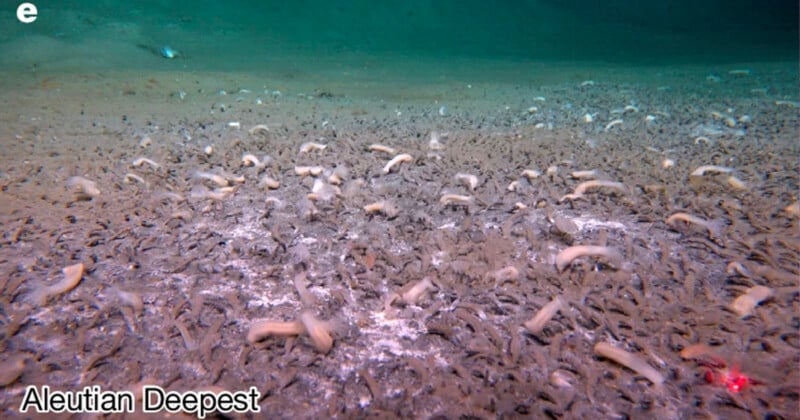
“What makes our discovery groundbreaking is not just its greater depth – it’s the astonishing abundance and diversity of chemosynthetic life we observed,” said Mengran Du, a marine geochemist with the Chinese Academy of Sciences, in an interview with Reuters. Du added that descending into the trench was like “traveling through time,” as the ecosystem was so isolated and unfamiliar.
Study co-author Xiaotong Peng, program leader for the hadal exploration project, described the environment as one of “cold, total darkness and active tectonic activities,” emphasizing the global significance of the find: “These are the deepest and the most extensive chemosynthetic communities known to exist on our planet.”
Previously, cold-seep ecosystems had been documented at depths of up to approximately 7,700 metres — such as those in the Japan Trench. But this new discovery extends known biological limits by nearly 2,000 metres, with seep communities observed as deep as 9,533 metres — nearly twice the depth of the Titanic wreck.
These ecosystems function without photosynthesis, instead relying on bacteria that convert methane and hydrogen sulfide into organic material. This process, chemosynthesis, forms the foundation of the food web at such depths and allows life to thrive in some of the harshest conditions on Earth.
Why It Matters: Implications for Earth, and Beyond
1. Ecology at the Edge of Habitability
The discovery underscores life’s resilience in environments of immense pressure, zero sunlight, and low temperatures. It also highlights the adaptability of microbial and macro-organisms to extreme conditions, offering a glimpse into biological possibilities once thought implausible.
2. Conservation in the Deep
The hadal zone, once considered barren, is now recognized as an ecologically rich frontier. With growing commercial interest in deep-sea mining for rare-earth minerals and polymetallic nodules, this research emphasizes the need for conservation frameworks to protect fragile deep-ocean ecosystems from irreversible harm.
3. Deep-Sea Mining: A Warning Sign
Areas like the Clarion-Clipperton Fracture Zone — a current mining target — could harbor similar ecosystems. Previous studies have shown that seabed disturbances can last decades or longer, making environmental safeguards critical before exploration or extraction efforts proceed.
4. Methane and Climate Models
Understanding how these deep ecosystems metabolize methane could enhance our models of carbon and methane cycling — especially as methane is a potent greenhouse gas. Studying these systems may reveal new sinks or sources in the global methane budget.
5. Clues to Life Beyond Earth
Organisms that live entirely off chemical energy in pitch-black, high-pressure environments are potential analogues to life that might exist on other worlds. Moons like Europa and Enceladus, with their icy shells and suspected subsurface oceans, may host similar chemosynthetic life forms if geothermal or tectonic activity provides the right conditions.
6. Microplastics and Human Reach
While microplastics were not part of this particular discovery, their documented presence in deep-ocean trenches highlights human influence on even the most remote environments. Understanding how pollutants interact with such ecosystems is vital to assess long-term ecological risk.
What Comes Next?
This discovery prompts urgent scientific and ethical questions: How widespread are similar ecosystems across global trench systems? Can these systems withstand anthropogenic impacts like mining or pollution? What unknown species or biochemical pathways might still be hiding in the hadal depths?
To answer these, scientists call for expanded international deep-sea exploration, integrated with policy frameworks to protect vulnerable zones. The study authors have urged that hadal research should not only advance science but also guide ocean governance, ensuring that exploitation does not outpace understanding.