

In the prestigious halls of biogerontology—where scientists untangle the mysteries of human aging—a curious silence persists when it comes to discussing timeframes. Ask most aging researchers when we might defeat aging, and they’ll quickly pivot to discussing incremental progress or the complexity of their work. This isn’t mere scientific caution; it’s a carefully calculated strategy shaped by the brutal realities of research funding.
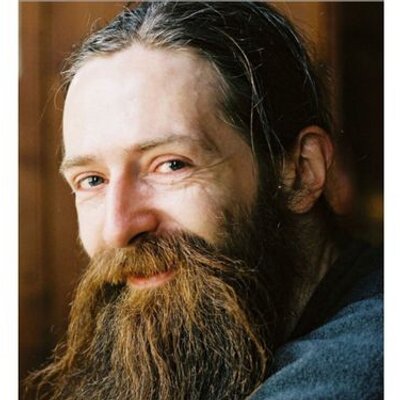
“I actually wrote a paper on this called “The duty of biogerontologists to discuss time frames publicly”, and I wrote it in 2004,” says Dr. Aubrey de Grey, founder and Chief Science Officer of LEV Foundation. “So it’s been a real problem.”
While remarkable progress continues in labs worldwide, the culture of avoiding predictions has created what de Grey considers a dangerous disconnect between scientific potential and public awareness. This strategic silence might be protecting individual careers, but at what cost to humanity’s battle against its oldest enemy?
The Politics of Prediction in Scientific Funding
The reluctance to make predictions isn’t unique to aging research, but it’s particularly pronounced in this field. At a 2010 NIH meeting, the consensus among senior researchers crystallized around a simple concept: “principled researchers cannot stoop to discussing time frames, because research is intrinsically so unpredictable.” [Woah, where did you find this?]
When de Grey first proposed that biogerontologists have a duty to discuss timeframes publicly, the reaction from leading scientists was “thoroughly lukewarm.” In academic culture, making concrete predictions is viewed as a career-limiting move.
The reason? Self-preservation within a hyper-competitive funding landscape.
“The reason they don’t is because they think that it will endanger their funding,” de Grey states bluntly. Unlike de Grey, who has navigated primarily through philanthropic channels, most aging researchers “get their funding from the government through a process of peer review, where other scientists are forced to make choices between their colleagues’ grant applications and they never have anything like enough money to divvy up.”
This creates a brutally efficient system where scientists are “constantly looking for reasons to say no” to their colleagues’ grant applications. One reliable justification for rejection is claiming a researcher made irresponsible public statements.
“A great ass-covering way to say no is to say, ‘Well, this person said something irresponsible on television,'” de Grey explains. “Whether or not the thing they said on television actually was irresponsible, if it could be characterized as irresponsible, like over-promising and under-delivering or getting the public’s hopes up or whatever, then that’s good enough.”
The Reputation Risk That Silences Scientists
Many researchers claim that their real reason for silence is that “over-selling and under-delivering” is irresponsible. They’ve witnessed the swift and merciless backlash that comes when a researcher becomes too optimistic in public.
A cautionary tale emerged recently involving Harvard scientist David Sinclair, who faced “a barrage of rebukes from fellow longevity researchers” after making headlines with claims about “age reversal” in animal studies. The professional consequences were severe—Sinclair ultimately stepped down from a prominent research leadership position.
This public execution sends a clear message to other scientists: make bold claims at your peril.
But predictions are not the same as claims. Historical disappointments—like the “War on Cancer” in the 1970s failing to deliver promised cures—have not made funding bodies hypersensitive to ambitious timelines: the budget of the National Cancer Institute has never once been cut year-on-year. But this has failed to reassure a research community that has mastered the art of promising incremental progress while carefully avoiding any specific commitments about when breakthroughs might occur.
The Vicious Cycle of Funding and Progress
De Grey points out that this caution creates a destructive catch-22: without articulating timeframes, researchers struggle to convey urgency to policymakers and funders. While scientists only “dangle the carrot” of curing aging but “without mentioning time frames,” public and political enthusiasm will remain weak.
“Political will to support biogerontology research depends utterly on… perception of how likely it is that this research will succeed,” de Grey notes. If that perceived likelihood is zero, “funding will be zero.” This creates a self-fulfilling prophecy where insufficient resources slow progress, confirming the pessimistic outlook.
The stakes could hardly be higher. As de Grey explains, “Every day that I bring forward the defeat of aging, it’s 30 World Trade Centers. It’s 110,000 people, and it’s very easy to get out of bed for that.”
Yet the funding pitch often stumbles at the moment of truth:
“If you come to somebody and you say, ‘Hello, I’d like some money, please,’ and they say, ‘What are you going to use it on?’ And you say, ‘I’m going to do this research,'” de Grey explains, “And they’re going to say, ‘Yeah, and what will that achieve?’ And you say, ‘Oh, it’s going to achieve this greater understanding and greater progress, and keeping people healthy for a long time.’ And then the person says, ‘Right, how soon is that going to happen?'”
The critical moment comes next: “And if you say, ‘Oh, I have no idea, it’s research,’ and you run away very fast from the idea of actually putting a number on how soon you think you’re probably (not even certainly!) going to make this all [happen], then they will say, ‘Fuck off.’ They will basically say, ‘You’re just trying to swindle me. You know perfectly well this research is basically going to be futile and you just enjoy doing it, and you want my money.’ And so they won’t write you a check.”
The Hidden Costs of Conservatism
De Grey argues that the “no predictions” norm actively harms biomedical progress and, by extension, public health. In his view, scientists’ reluctance to discuss timelines puts “self-interest (reputation protection) over humanity’s collective interest in medical progress,” which he considers “reprehensible.”
The field faces a delicate balancing act. On one hand, credibility with funders and the public requires honest assessment. On the other hand, excessive conservatism can hamper progress by failing to attract sufficient investment.
As one observer noted regarding de Grey’s approach, “People don’t donate to Aubrey de Grey because they want the work they fund to be timid.” His bold messaging attracts donors who want revolutionary progress, whereas traditional grant agencies prefer more measured claims.
Finding a Path Forward in the Funding Maze
De Grey calls for scientists to “say what they actually think” about timelines, arguing that transparency could accelerate progress. The key challenge is navigating what he describes as the strategic dilemma between “money now versus reputation later.”
Whether individual scientists choose caution or boldness in their predictions, de Grey’s central argument remains powerful: aging research’s impact on human welfare is too significant to let funding politics dictate its pace.
He contends that predictions, even probabilistic ones, demonstrate belief and credibility: “If you do put a number on it, even though the number has to be probabilistic, you have to say there’s a 50% chance that I’ll reach this amount of progress in this amount of time if you give me this amount of money, then you’re showing self-belief. You’re making a prediction… if you don’t make a prediction at all, you have no credibility at all.”
In this high-stakes game of scientific funding, the reluctance to make timeline predictions may be protecting individual careers, but it’s also potentially slowing the most important medical revolution in human history. As millions continue to suffer and die from age-related diseases, de Grey’s challenge to the scientific establishment becomes more urgent. The politics of prediction in aging research isn’t just an academic debate—it’s a matter of life and death on an unprecedented scale.