Ancient Clay Jug with Camel Art Unearthed in Israel’s Yatir Forest

ancient history, archaeology, Israel, Yatir Forest, clay jug, camels, Abbasid period, Byzantine period, Islamic history, trade routes, historical artifacts, Jewish National Fund, Israel Antiquities Authority, Negev region, heritage preservation, ancient olive press, historical discoveries, Middle Eastern history, Ben-Gurion University, mosaic floors, ancient synagogue, ship of the desert, historical conservation, excavation sites

They say history repeats itself—but sometimes, it just hides underground, waiting to be rediscovered. Archaeologists digging in Israel’s Yatir Forest have unearthed a rare 1,200-year-old clay jug adorned with images of camels, a reminder of the animal’s central role in trade and transportation centuries ago.

ancient history, archaeology, Israel, Yatir Forest, clay jug, camels, Abbasid period, Byzantine period, Islamic history, trade routes, historical artifacts, Jewish National Fund, Israel Antiquities Authority, Negev region, heritage preservation, ancient olive press, historical discoveries, Middle Eastern history, Ben-Gurion University, mosaic floors, ancient synagogue, ship of the desert, historical conservation, excavation sites

“The depiction of camels on the vessel highlights the importance of the animal, which was a primary means of land transportation around 1,200 years ago,” said researchers from the Israel Antiquities Authority (IAA), who led the excavation.

The discovery was made as part of an effort to make the site more accessible to the public, in an initiative led by the Jewish National Fund-KKL. It’s being presented today (March 27) at the 20th Annual Southern Research Conference at Ben-Gurion University, offering the public a firsthand look at the latest archaeological findings from Israel’s Negev region.

A Window into the Past

ancient history, archaeology, Israel, Yatir Forest, clay jug, camels, Abbasid period, Byzantine period, Islamic history, trade routes, historical artifacts, Jewish National Fund, Israel Antiquities Authority, Negev region, heritage preservation, ancient olive press, historical discoveries, Middle Eastern history, Ben-Gurion University, mosaic floors, ancient synagogue, ship of the desert, historical conservation, excavation sites

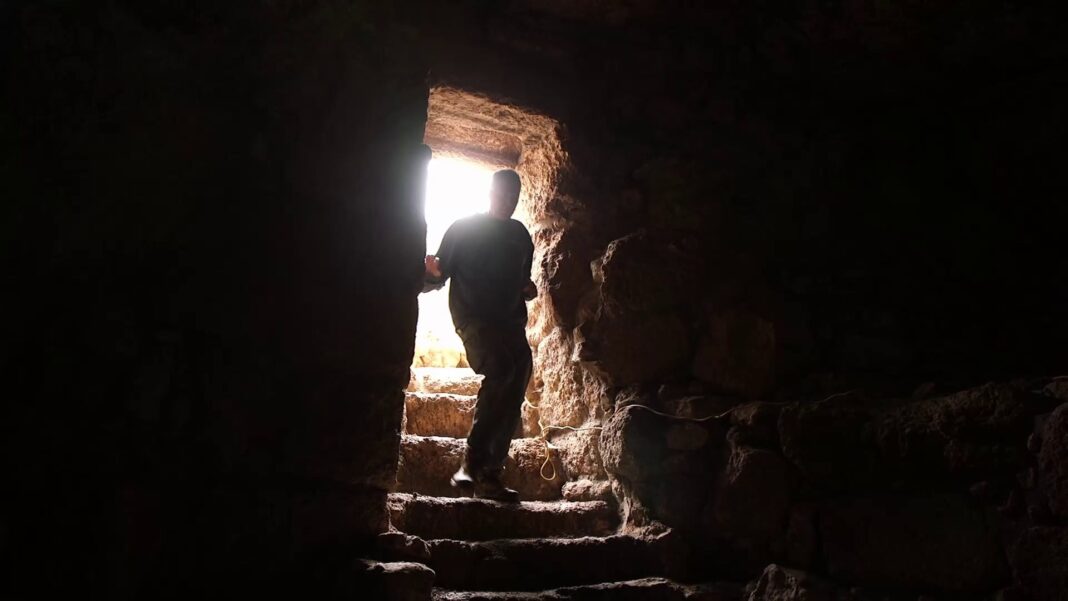
The striking red-painted jug was found in a cave that had once been an underground olive press before being repurposed as a dwelling. Researchers believe the cave was in use during the Abbasid period (9th-10th centuries CE), when camels dominated trade routes, helping to move goods across vast distances.

“The fact that the artists chose to depict two camels on the jug underscores their significance during this time. Camels were the backbone of land transport, much like trucks and trains are today,” said Oren Shmueli of the Israel Antiquities Authority.

The site itself, Horvat ‘Anim, is a treasure trove of history. Nearby, archaeologists have uncovered an ancient synagogue from the Byzantine period, complete with mosaic floors, as well as an olive press dating back some 1,300 years. The conservation efforts, spearheaded by the Israel Antiquities Authority, aim to preserve these finds for future generations.

Ancient olive press, ancient history, archaeology, Israel, Yatir Forest, clay jug, camels, Abbasid period, Byzantine period, Islamic history, trade routes, historical artifacts, Jewish National Fund, Israel Antiquities Authority, Negev region, heritage preservation, ancient olive press, historical discoveries, Middle Eastern history, Ben-Gurion University, mosaic floors, ancient synagogue, ship of the desert, historical conservation, excavation sites
Ancient underground olive press

The ‘Ship of the Desert’ Takes Center Stage

The jug’s illustrations tell a fascinating story. It features geometric patterns and depictions of a camel caravan—possibly even an ostrich or donkey—bringing to life a time when the camel was the undisputed king of the road. Unlike earlier Roman and Byzantine periods, when goods were primarily transported by sea, the Islamic era saw camels take center stage as the “ships of the desert.”

ancient history, archaeology, Israel, Yatir Forest, clay jug, camels, Abbasid period, Byzantine period, Islamic history, trade routes, historical artifacts, Jewish National Fund, Israel Antiquities Authority, Negev region, heritage preservation, ancient olive press, historical discoveries, Middle Eastern history, Ben-Gurion University, mosaic floors, ancient synagogue, ship of the desert, historical conservation, excavation sites
Illustration of how the ancient technology worked

“In the Early Islamic period, camels were essential for trade across the empire,” Shmueli explained. “The artwork on this jug reflects their dominant role in everyday life.”

This discovery is more than just an ancient artifact—it’s a link to the past, a piece of the puzzle that helps us understand the lives of those who came before us. Heritage Minister Rabbi Amichai Eliyahu highlighted the importance of such finds, saying, “The Negev holds many layers of history, and each discovery sheds light on another aspect of our past.”

For history buffs, archaeology enthusiasts, and anyone curious about the past, today’s conference at Ben-Gurion University offers a rare chance to hear directly from leading researchers about this and other recent discoveries. As Eli Escusido, Director of the Israel Antiquities Authority, put it: “This is an excellent opportunity to deepen one’s knowledge of the southern region’s past and hear about the latest finds firsthand.”

One thing is certain—whether it’s 1,200 years ago or today, history still has plenty of stories to tell.


LEAVE A REPLY

Please enter your comment!
Please enter your name here

TRENDING

Mysterious Minoan palace found on Greek island hilltop

Archaeologists have unearthed a unique and mysterious Minoan monument on a hilltop on the island of Crete and which is overlooking the newly planned airport, the Greek Culture Ministry announced recently. The new discovery in Crete may be legendary Minotaur labyrinth, from the time of King Minos.

Are black olives safe to eat?

The store bought olives are often made with lye and other chemicals you might not want to eat.

Problems with olive trees in pots

The ultimate guide to potting and growing olive trees in a container or pot indoors or out.

Christian olive farmers caught in Hezbollah’s crossfire

Iran's terror group proxy, the Hezbollah in Lebanon, are hoping to create more global chaos by repeatedly firing at Israel across its northern border. Christian olive farmers are caught in the crosshairs.

Ancient mosque found in the Holy Land

A luxurious estate and a rare rural mosque – among the earliest known worldwide (over 1200 years old) - was recently discovered outside the Bedouin city of Rahat in the Negev Desert, Israel. 

Qatar’s climate hypocrisy rides the London Underground

Qatar remains a master of doublethink—burning gas by the megaton while selling “sustainability” to a world desperate for clean air. Wake up from your slumber people.

How Quality of Hire Shapes Modern Recruitment

A 2024 survey by Deloitte found that 76% of talent leaders now consider long-term retention and workforce contribution among their most important hiring success metrics—far surpassing time-to-fill or cost-per-hire. As the expectations for new hires deepen, companies must also confront the inherent challenges in redefining and accurately measuring hiring quality.

8 Team-Building Exercises to Start the Week Off 

Team building to change the world! The best renewable energy companies are ones that function.

Thank you, LinkedIn — and what your Jobs on the Rise report means for sustainable careers

While “green jobs” aren’t always labeled as such, many of the fastest-growing roles are directly enabling the energy transition, climate resilience, and lower-carbon systems: Number one on their list is Artificial Intelligence engineers. But what does that mean? Vibe coding Claude? 

Somali pirates steal oil tankers

The pirates often stage their heists out of Somalia, a lawless country, with a weak central government that is grappling with a violent Islamist insurgency. Using speedboats that swarm the targets, the machine-gun-toting pirates take control of merchant ships and then hold the vessels, crew and cargo for ransom.

Leopoldo Alejandro Betancourt López Turned Ocean Plastic Into Profitable Sunglasses

Few fashion accessories carry the environmental burden of sunglasses. Most frames are constructed from petroleum-based plastics and acrylic polymers that linger in landfills for centuries, shedding microplastics into soil and waterways long after they've been discarded. Leopoldo Alejandro Betancourt López, president of the Spanish eyewear brand Hawkers, saw this problem differently than most industry executives.

Why Dr. Tony Jacob Sees Texas Business Egos as Warning Signs

Everything's bigger in Texas. Except business egos.  Dr. Tony Jacob figured...

Israel and America Sign Renewable Energy Cooperation Deal

Other announcements made at the conference include the Timna Renewable Energy Park, which will be a center for R&D, and the AORA Solar Thermal Module at Kibbutz Samar, the world's first commercial hybrid solar gas-turbine power plant that is already nearing completion. Solel Solar Systems announced it was beginning construction of a 50 MW solar field in Lebrija, Spain, and Brightsource Energy made a pre-conference announcement that it had inked the world's largest solar deal to date with Southern California Edison (SCE).

Related Articles

Popular Categories