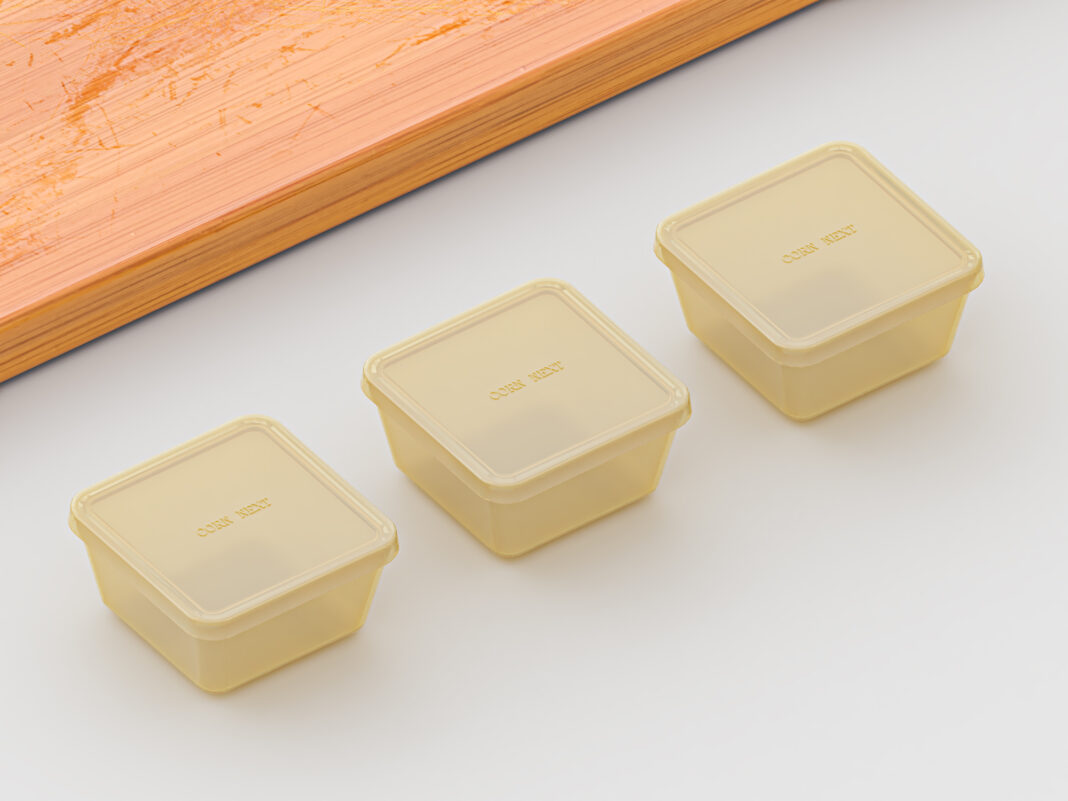
This plastic is made from corn

Corn Next
Corn Next can hold wet and dry products safely

Michael Pollan, in Defence of Food, once called Americans “corn people” for the amount of corn products in their diet. As the world fights to find viable alternatives to plastics, the people may have found the best bio-polymer, made from… corn.

Michael Pollan food rules
Michael Pollan

Corn Next has officially launched CornNext-17, a game-changing bio-based material designed to combat the global plastic pollution crisis. CornNext-17 says it can replace traditional plastics. Derived from renewable corn starch, CornNext-17 utilizes a patented fermentation-based process to create a fully biodegradable material with superior versatility and performance.

Related: this edibles company uses Tipa’s biodegradable plastics

Unlike traditional plastics and bio-plastics such as PLA and PHA, CornNext-17 retains its natural polysaccharide structure, enabling rapid decomposition within 30 days in natural environments while maintaining the mechanical properties necessary for diverse applications. We all know that most plastics are never really recycled and when they are the process is toxic. The only solution to the plastic problem is a bio-based plastic. One that can fully decompose and degrade, not just break down into littler bits of plastic.

“CornNext-17 represents a significant leap forward in sustainable materials,” said Randy Yongzhong Zhang, Founder and CEO of Corn Next. “We are proud to offer a solution that addresses the urgent need for environmentally friendly alternatives to conventional plastics. The development of CornNext-17 is guided by our vision to revolutionize how materials are used and discarded. As a fully natural biodegradable innovation, it marks not just a breakthrough in material science, but a significant milestone in humanity’s pursuit of a greener, more sustainable future.”

Key Features of CornNext-17

  • Fully Biodegradable: Decomposes naturally within 30 days, leaving no harmful residues.
  • Versatile: Suitable for a wide range of applications, including packaging, consumer goods, and industrial components.
  • Cost-Effective: Produced through an efficient manufacturing process, offering competitive pricing.
  • High Performance: Exhibits excellent mechanical properties, including strength, flexibility, and heat resistance.
  • Eco-Friendly: Derived from renewable corn starch and produced without harmful chemicals.

Market Potential and Industrial Applications

CornNext-17 has the potential to transform multiple industries by replacing traditional plastics with a sustainable alternative:

  • Consumer Goods: CornNext-17 is ideal for creating compostable tableware, single-use products, food containers, and eco-friendly packaging solutions that cater to environmentally conscious consumers.
  • Packaging Industry: The material’s strength, flexibility, and resistance to heat and moisture make it a superior choice for biodegradable packaging, including retail, food, and industrial applications.
  • Agriculture: CornNext-17 can be used to manufacture biodegradable mulch films, seedling trays, and irrigation components, reducing waste and enhancing soil health.
  • Medical and Healthcare: With its ability to decompose fully, CornNext-17 is well-suited for disposable medical supplies such as gloves, syringes, and packaging, ensuring environmental safety.
  • Automotive: Lightweight and durable, CornNext-17 can be utilized in creating automotive components such as panels, trim, and interior parts, contributing to vehicle sustainability and fuel efficiency.
  • Electronics: As a biodegradable alternative, CornNext-17 can replace certain plastic components in electronics, helping reduce electronic waste.

The global push for environmentally sustainable materials positions CornNext-17 to capitalize on increasing regulatory support and consumer demand for green products. Its adaptability, cost-effectiveness, and eco-friendly properties provide a competitive edge in addressing the growing plastic pollution crisis.

Corn Next (or Y & J World Inc.) is a biotech company based in Irvine, California and is dedicated to eliminating plastic pollution. Their bio-based material CornNext-17 is a patented, 100% natural, biodegradable material derived from renewable corn starch.

Unlike traditional plastics, CornNext-17 fully decomposes within 30 days without leaving toxins or requiring costly recycling. After eight years of R&D, the company transformed CornNext-17 into a granular form, securing our proprietary technology and expanding its applications. This innovation led to the world’s first corn-based drinking straw, protein spoon, dinner knife, and forks, with future uses in utensils, dental floss, packaging and more

Corn-based plastics for packaging is a market which reached a market size valued at USD 0.56 Billion in 2022 and is projected to reach USD 1.20 Billion by 2030. 

Balena Stella McCartney
A Stella McCartney decomposing shoe

Bioplastics are derived from renewable biomass sources such as vegetable fats and oils, corn starch, straw, woodchips, sawdust, algae and recycled food waste. Fashion designers like Stella McCartney use bioplastics in fashion, thanks to companies like Balena, which develop a bio-based raw material that looks and acts like rubber but which decomposes at the end of its life.

::Corn Next

Karin Kloosterman
Karin Kloostermanhttp://www.greenprophet.com
Karin Kloosterman is an award-winning journalist, innovation strategist, and founder of Green Prophet, one of the Middle East’s pioneering sustainability platforms. She has ranked in the Top 10 of Verizon innovation competitions, participated in NASA-linked challenges, and spoken worldwide on climate, food security, and future resilience. With an IoT technology patent, features in Canada’s National Post, and leadership inside teams building next-generation agricultural and planetary systems — including Mars-farming concepts — Karin operates at the intersection of storytelling, science, and systems change. She doesn’t report on the future – she helps design it. Reach out directly to [email protected]

Hot this week

How Renewable Energy is Revolutionizing the Way We Power Our World

Solar has become the star of the transition thanks to modular hardware and straightforward installation. It fits dense cities and remote towns alike. Many companies are turning to rooftop arrays and carport systems - and exploring commercial solar installation as a practical way to lock in future savings.

How does one start prepping?

Faced with an extreme winter storm this year, Americans wonder how to be prepared for catastrophe. Miriam has lived through wars in the Middle East - so she's prepared on giving you a guide to prepping.

Fishermen sue tire manufacturers on behalf of the salmon

A federal trial in San Francisco has brought US tire manufacturers, fishing groups, and environmental scientists into court over a chemical most drivers have never heard of — but which scientists say may be silently reshaping aquatic ecosystems.

Listening to Water: Tarek Atoui’s Next Work for Tate Modern

Born in Beirut, Lebanon in 1980 and now living in Paris, Atoui has spent years building instruments that don’t sit comfortably in concert halls. Many of them involve water, glass, and ceramics — materials that react to sound instead of simply producing it.

Leading Through a Dual-Energy Transition: Balancing Decarbonisation with Energy Security

Experience in one area of the energy industry isn't enough to guarantee readiness across all the others. That's where a structured program like an MBA in energy can come in. Today's advanced curricula explore energy economics, finance, policy, and strategic management alongside the technical subjects. And when pursuing an energy MBA online, professionals can skill up and retrain without having to step out of the labor market -- an important perk at a time when skilled professionals are already in short supply.

Topics

How Renewable Energy is Revolutionizing the Way We Power Our World

Solar has become the star of the transition thanks to modular hardware and straightforward installation. It fits dense cities and remote towns alike. Many companies are turning to rooftop arrays and carport systems - and exploring commercial solar installation as a practical way to lock in future savings.

How does one start prepping?

Faced with an extreme winter storm this year, Americans wonder how to be prepared for catastrophe. Miriam has lived through wars in the Middle East - so she's prepared on giving you a guide to prepping.

Fishermen sue tire manufacturers on behalf of the salmon

A federal trial in San Francisco has brought US tire manufacturers, fishing groups, and environmental scientists into court over a chemical most drivers have never heard of — but which scientists say may be silently reshaping aquatic ecosystems.

Listening to Water: Tarek Atoui’s Next Work for Tate Modern

Born in Beirut, Lebanon in 1980 and now living in Paris, Atoui has spent years building instruments that don’t sit comfortably in concert halls. Many of them involve water, glass, and ceramics — materials that react to sound instead of simply producing it.

Leading Through a Dual-Energy Transition: Balancing Decarbonisation with Energy Security

Experience in one area of the energy industry isn't enough to guarantee readiness across all the others. That's where a structured program like an MBA in energy can come in. Today's advanced curricula explore energy economics, finance, policy, and strategic management alongside the technical subjects. And when pursuing an energy MBA online, professionals can skill up and retrain without having to step out of the labor market -- an important perk at a time when skilled professionals are already in short supply.

From Green Energy to Healthy Societies: Why old systems thinking is becoming relevant again

Across the Middle East and North Africa, large investments are being made in green hydrogen, renewable energy, water infrastructure and sustainability. Most of these efforts are discussed in the context of climate change, decarbonization and economic diversification. That framing is important, but it may not capture their full value.

We saw peace – an interreligious encounter deep in our eyes

They came from Israel, Palestine, Jordan, Iraq, Yemen, Morocco, Tunisia, Lebanon, Egypt… There are Sunni Muslims, Shiite Muslims, Jews (Orthodox and Reform), Orthodox Christians, Coptic Christians, Protestant Christians, Druze, Baha'is, a Scientologist.

Can biochar reduce ‘Forever Chemicals’ in food if it’s used in farms?

Biochar is produced by heating organic material in a low-oxygen environment so it does not burn. This process, known as pyrolysis, transforms plant matter into a stable, carbon-rich material.

Related Articles

Popular Categories