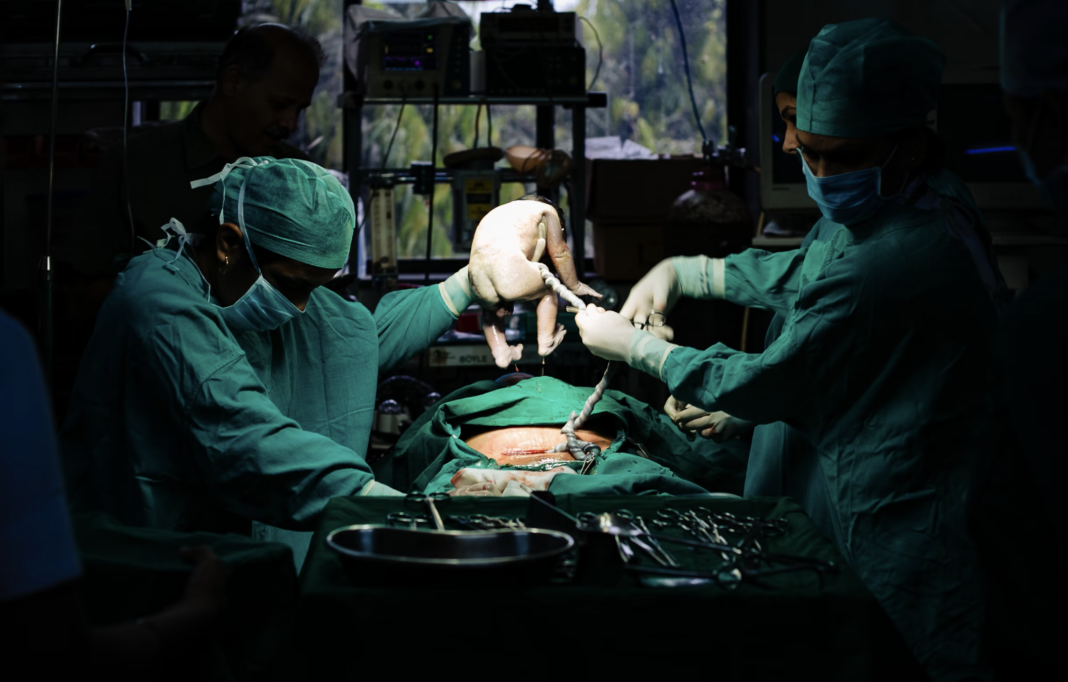


If you have ever given birth vaginally there is an unspoken reality. Labor feels like you need to go to the toilet and it’s common for women to poop when the baby is being born. If we think nature knows best, it seems counter-intuitive that a brand new baby would be exposed to faeces while being born, but new clinical research suggests there is an immunity benefit.
Otto Helve, a paediatrician and researcher has found that giving a baby born by C-section a tiny bit of their mother’s poo in their milk gives the babies beneficial gut micro-organisms. Nestle has already launched a poo-based pill for gut health and research from 10 years ago suggests that other people’s poop can help restore a broken microbiome.
In early results of a clinical trial, Helve found that babies fed 3.5 mg of poo versus those that were given a placebo, showed an obvious increase in microbial diversity.
While the results are positive, researchers emphasize that this method should not be replicated at home, says Helve from the University of Helsinki: “You have to be certain that the faecal matter that you give to the newborn doesn’t include pathogens that could cause a disease.”
Researchers are asking these questions because birth by C-section is associated with an increased risk of many immune-related diseases, suggesting that the lack of maternal microbes in early life may have long-term health consequences for children. With women afraid of the pain of birth, and doctors afraid of lawsuits, more and more women opt for C-section.
Over the years global caesarian section rates have significantly increased from around 7% in 1990 to 21% today surpassing the ideal acceptable CS rate which is around 10% to 15% according to the WHO.
Vaginally born infants receive healthy gut bacteria from the mother at birth through the vaginal canal, and from around the mother’s anus. But C-section babies are not exposed to maternal faecal microbes and this prevents the natural transfer of microbes from mother to baby, the researchers say.
The children in the study were followed for 24 months during which time, stool and blood samples were collected from the child and mother and analysed for changes in the bacterial diversity in the microbiome between groups, and to assess immunological changes associated with the transfer such as response to vaccinations and function and interaction of immune cells in vitro. The trial has recruited 90 healthy pregnant women scheduled for elective C-section since 2019.
All of the mothers were asymptomatic (no diarrhoea or abnormal bowel functions) and none had been prescribed antibiotics or travelled outside of Europe in the three months prior to screening. Some mothers had pathogens in their bodies and they were screened out for the procedure.