War stressful for geckos and reptiles

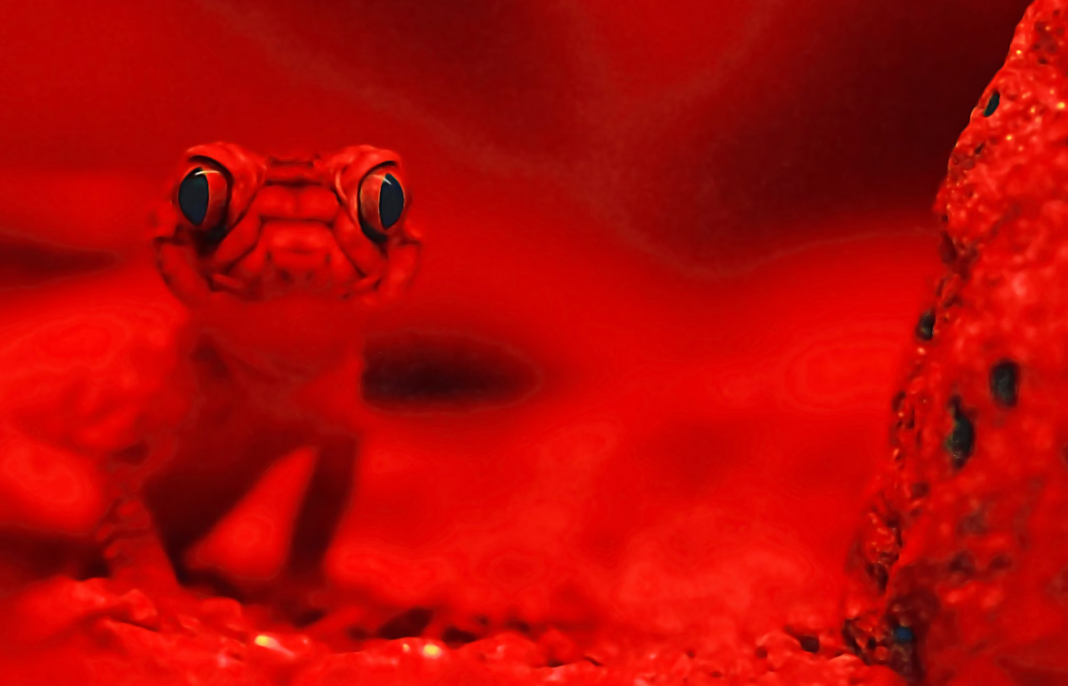
Geckos don't like the Hamas Israel War
Geckos don’t like the Hamas Israel War.

What is the taste of honey from bees collecting pollen durin a war? Do snakes feel stress? A new study shows that war impacts the least expected creatures

Animals too feel the effects from the stress of war, finds a new study conducted at Tel Aviv University’s School of Zoology. Researchers reveal that the Israel-Hamas war has had a severe impact on animals.

The study, which focused on geckos, found that the sound of explosions from fired rockets induces stress and anxiety in these creatures, leading to a sharp increase in their metabolic rates — an energy cost that, if chronic, may be life-threatening. The researchers hypothesize that these stress responses characterize many other animals, especially those who live in the conflict zones in northern and southern Israel.

Related: Field notes from a Sharjah summer trek

Shahar Dubiner, one of the researchers said: “Our research was conducted in a laboratory at Tel Aviv University and pertained to the reverberations of explosions from interceptions in the Tel Aviv area. However, given the unequivocal results showing symptoms of stress, we can infer that animals that are in the immediate conflict zones in the south and north of the country, where the intensity and frequency of fire are much higher, suffer from significantly more severe stress and anxiety symptoms that may endanger their lives.”

Left to right: Prof. Shai Meiri and Prof. Eran Levin.

The study was led by Shahar Dubiner, Prof. Shai Meiri and Prof. Eran Levin — in collaboration with Reut Vardi of the University of Oxford. The study was published in the journal Ecology.

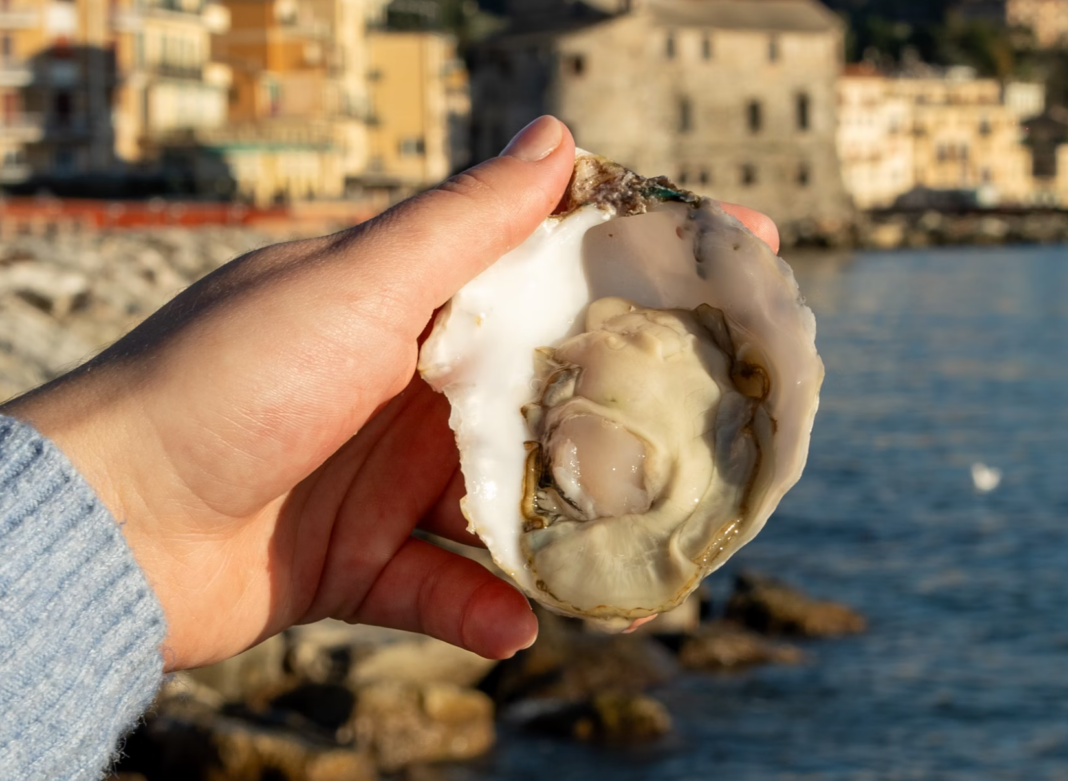
The sounds of war are a sort of sound pollution which probably also affect marine life like whales, coral, dolphins and baby oysters.

“The most tragic aspect of war is the loss of human life, among both soldiers and civilians. However, animals are also severely affected, both directly and indirectly, in ways that may threaten their survival. A few weeks before October 7, we began working on a long-term study to measure the rate of energy consumption of small ground geckos of the species Stenodactylus sthenodactylus.

“We obviously did not foresee the outbreak of the war, but unintentionally, we recorded the energy consumption of five geckos during the rocket barrages launched into Tel Aviv in the first month of the war,” says Prof. Shai Meiri. Recently, Meiri published a study on rain and biodiversity.

Shai Meiri
A photo of Shai Meiri

The study’s findings showed that at the sound of the bombings, the geckos’ metabolic rate jumped to double what it was when they were at rest. Their breathing became faster, and they clearly exhibited signs of stress.

The experiment lasted up to four hours after the barrages, yet even within this timeframe the geckos did not calm down and return to their resting levels. Moreover, even after a month of continuous fighting, the geckos did not acclimate to the sound of the explosions — their stress response remained unchanged.

Prof. Levin notes that “A state of stress is detrimental to both humans and animals. To compensate for the increase in oxygen consumption and depletion of energy reserves, animals need to eat more. Even if they manage to find food, in the process they expose themselves to predators and lose opportunities to reproduce.

“In a situation of ongoing conflict, such as the current reality in Gaza, the Gaza Envelope, and along the Israeli-Lebanese border, the metabolic cost can be significant and have a real impact on the energy reserves and activity periods of reptiles and other animals. This can exacerbate their conservation status, especially for species that are already endangered.”

The researchers note that the findings of this study are consistent with another experiment conducted during Operation Guardian of the Walls, in which they also observed a stress response in a small snake of the species Xerotyphlops syriacus.

Karin Kloosterman
Karin Kloostermanhttp://www.greenprophet.com
Karin Kloosterman is an award-winning journalist, innovation strategist, and founder of Green Prophet, one of the Middle East’s pioneering sustainability platforms. She has ranked in the Top 10 of Verizon innovation competitions, participated in NASA-linked challenges, and spoken worldwide on climate, food security, and future resilience. With an IoT technology patent, features in Canada’s National Post, and leadership inside teams building next-generation agricultural and planetary systems — including Mars-farming concepts — Karin operates at the intersection of storytelling, science, and systems change. She doesn’t report on the future – she helps design it. Reach out directly to [email protected]

Hot this week

Fishermen sue tire manufacturers on behalf of the salmon

A federal trial in San Francisco has brought US tire manufacturers, fishing groups, and environmental scientists into court over a chemical most drivers have never heard of — but which scientists say may be silently reshaping aquatic ecosystems.

Listening to Water: Tarek Atoui’s Next Work for Tate Modern

Born in Beirut, Lebanon in 1980 and now living in Paris, Atoui has spent years building instruments that don’t sit comfortably in concert halls. Many of them involve water, glass, and ceramics — materials that react to sound instead of simply producing it.

Leading Through a Dual-Energy Transition: Balancing Decarbonisation with Energy Security

Experience in one area of the energy industry isn't enough to guarantee readiness across all the others. That's where a structured program like an MBA in energy can come in. Today's advanced curricula explore energy economics, finance, policy, and strategic management alongside the technical subjects. And when pursuing an energy MBA online, professionals can skill up and retrain without having to step out of the labor market -- an important perk at a time when skilled professionals are already in short supply.

From Green Energy to Healthy Societies: Why old systems thinking is becoming relevant again

Across the Middle East and North Africa, large investments are being made in green hydrogen, renewable energy, water infrastructure and sustainability. Most of these efforts are discussed in the context of climate change, decarbonization and economic diversification. That framing is important, but it may not capture their full value.

We saw peace – an interreligious encounter deep in our eyes

They came from Israel, Palestine, Jordan, Iraq, Yemen, Morocco, Tunisia, Lebanon, Egypt… There are Sunni Muslims, Shiite Muslims, Jews (Orthodox and Reform), Orthodox Christians, Coptic Christians, Protestant Christians, Druze, Baha'is, a Scientologist.

Topics

Fishermen sue tire manufacturers on behalf of the salmon

A federal trial in San Francisco has brought US tire manufacturers, fishing groups, and environmental scientists into court over a chemical most drivers have never heard of — but which scientists say may be silently reshaping aquatic ecosystems.

Listening to Water: Tarek Atoui’s Next Work for Tate Modern

Born in Beirut, Lebanon in 1980 and now living in Paris, Atoui has spent years building instruments that don’t sit comfortably in concert halls. Many of them involve water, glass, and ceramics — materials that react to sound instead of simply producing it.

Leading Through a Dual-Energy Transition: Balancing Decarbonisation with Energy Security

Experience in one area of the energy industry isn't enough to guarantee readiness across all the others. That's where a structured program like an MBA in energy can come in. Today's advanced curricula explore energy economics, finance, policy, and strategic management alongside the technical subjects. And when pursuing an energy MBA online, professionals can skill up and retrain without having to step out of the labor market -- an important perk at a time when skilled professionals are already in short supply.

From Green Energy to Healthy Societies: Why old systems thinking is becoming relevant again

Across the Middle East and North Africa, large investments are being made in green hydrogen, renewable energy, water infrastructure and sustainability. Most of these efforts are discussed in the context of climate change, decarbonization and economic diversification. That framing is important, but it may not capture their full value.

We saw peace – an interreligious encounter deep in our eyes

They came from Israel, Palestine, Jordan, Iraq, Yemen, Morocco, Tunisia, Lebanon, Egypt… There are Sunni Muslims, Shiite Muslims, Jews (Orthodox and Reform), Orthodox Christians, Coptic Christians, Protestant Christians, Druze, Baha'is, a Scientologist.

Can biochar reduce ‘Forever Chemicals’ in food if it’s used in farms?

Biochar is produced by heating organic material in a low-oxygen environment so it does not burn. This process, known as pyrolysis, transforms plant matter into a stable, carbon-rich material.

In The Dark Review – An Immersive Music Experience in Total Darkness at St Andrew Holborn

In complete darkness, inside the holy space of St Andrew Holborn, listening begins to feel like a form of prayer. With no light and no distraction, sound fills the church and holds the room. For an hour, attention itself becomes the shared act.

How Quality of Hire Shapes Modern Recruitment

A 2024 survey by Deloitte found that 76% of talent leaders now consider long-term retention and workforce contribution among their most important hiring success metrics—far surpassing time-to-fill or cost-per-hire. As the expectations for new hires deepen, companies must also confront the inherent challenges in redefining and accurately measuring hiring quality.

Related Articles

Popular Categories