The ocean is too loud for baby oysters

too loud for baby oysters
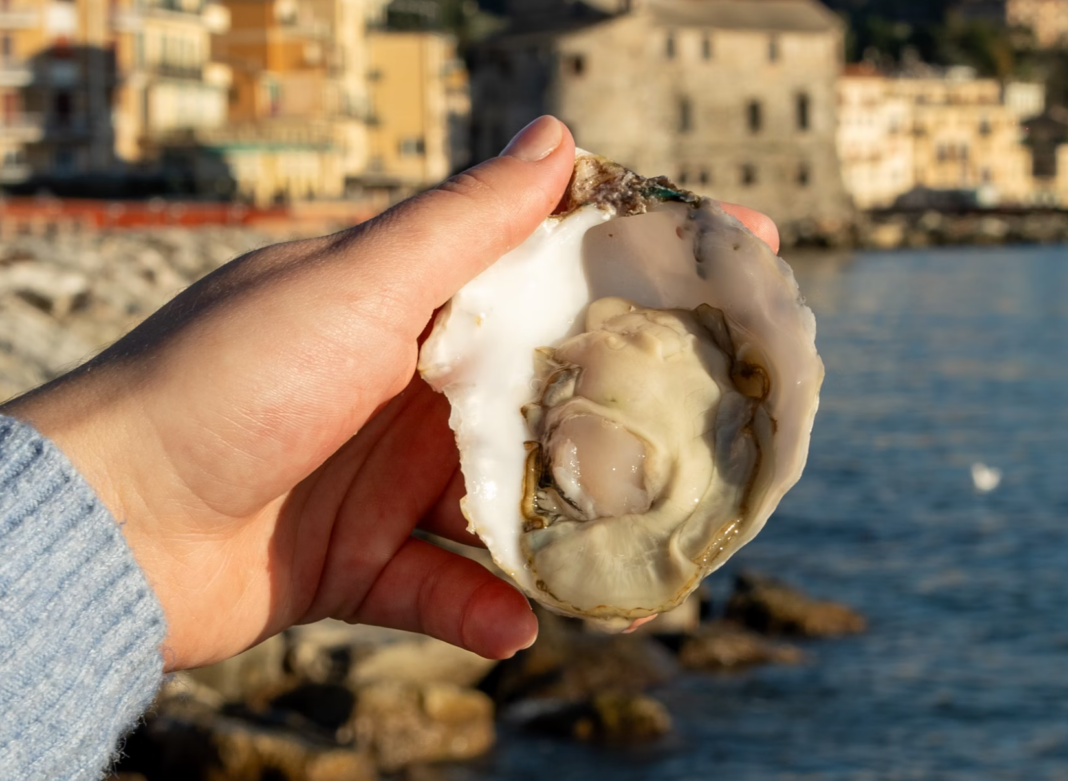
An oyster in Italy

The world is becoming too bright for bats. Baby oysters, too, are finding that sounds from us humans are causing them stress and is preventing them from moving away from “home” to settle into new environments, finds a new study. Noise pollution in seas may also be responsible in part to the proliferation of the oyster parasite multinucleate sphere X, or MSX, rendering oysters weak.

According to scientists at the University of Adelaide, oysters need specific sound cues to migrate and move around. Though they don’t swim, baby oysters do need to find the right habitat and ecosystem for them to live inside:

“The ocean’s natural sound is gradually hushing due to habitat loss, leading to a quieter natural environment increasingly drowned out by the crescendo of man-made noise pollution,” explained lead author Brittany Williams.

“Numerous marine larvae rely on natural sounds to navigate and select their dwellings, so this interference poses a problem for conservationists aiming to attract oysters to restored reefs using natural sounds.”

We know that shipping noises after whales and dolphins but marine noise pollution affects the less known creatures, some which are keystone species: “Noises from shipping, machinery and construction, for example, are pervasive and pose serious environmental change that affects both terrestrial and marine animals,” says Williams.

According to the research, published in Proceedings of the Royal Society B, marine organisms appear particularly vulnerable to the intensification of human-made or anthropogenic noise because they use sound for a range of activities, including to sense their surroundings, navigate, communicate, avoid predators, and find mates and food.

The teams have used a special kind of habitat “speaker” to help the oysters: But, “Our previous work demonstrated that novel acoustic technology can bolster oyster recruitment in habitat restoration projects, but this new research indicates potential limitations of this speaker technology,” said Dominic McAfee, who was part of the research team.

In environments where there is a lot of human noise pollution, the speakers did not increase larval recruitment.

Scientists all over the world have been playing specific seascape sounds using a loudspeaker to attract baby oysters. In the big scheme of things if the oysters are being attracted to harvesting islands where they are culled we can assume that natural selection will eventually wipe out the oysters who come for the call.

Oyster reef restorations are taking place in countries like America. This image shows surviving oyster reefs in Virginia. Aileen Devlin/Flickr, CC BY

Oyster reef restorations are taking place in countries like America. This image shows surviving oyster reefs in Virginia. Aileen Devlin/FlickrCC BY

“This suggests that noise pollution might cloak the intrinsic sounds of the ocean, potentially exerting profound ramifications on marine ecosystem vitality and resilience,” said co-author Professor Sean Connell, from the University of Adelaide and the Environment Institute.

While acoustic enrichment may be less effective along noisy metropolitan coastlines and urbanised waterways, the researchers are still optimistic about the application of the technique in less trafficked areas.

Another option: stop eating too much shellfish, and let the ocean dwellers take their own course.


Karin Kloosterman
Karin Kloostermanhttp://www.greenprophet.com
Karin Kloosterman is an award-winning journalist, innovation strategist, and founder of Green Prophet, one of the Middle East’s pioneering sustainability platforms. She has ranked in the Top 10 of Verizon innovation competitions, participated in NASA-linked challenges, and spoken worldwide on climate, food security, and future resilience. With an IoT technology patent, features in Canada’s National Post, and leadership inside teams building next-generation agricultural and planetary systems — including Mars-farming concepts — Karin operates at the intersection of storytelling, science, and systems change. She doesn’t report on the future – she helps design it. Reach out directly to [email protected]

Hot this week

How Renewable Energy is Revolutionizing the Way We Power Our World

Solar has become the star of the transition thanks to modular hardware and straightforward installation. It fits dense cities and remote towns alike. Many companies are turning to rooftop arrays and carport systems - and exploring commercial solar installation as a practical way to lock in future savings.

How does one start prepping?

Faced with an extreme winter storm this year, Americans wonder how to be prepared for catastrophe. Miriam has lived through wars in the Middle East - so she's prepared on giving you a guide to prepping.

Fishermen sue tire manufacturers on behalf of the salmon

A federal trial in San Francisco has brought US tire manufacturers, fishing groups, and environmental scientists into court over a chemical most drivers have never heard of — but which scientists say may be silently reshaping aquatic ecosystems.

Listening to Water: Tarek Atoui’s Next Work for Tate Modern

Born in Beirut, Lebanon in 1980 and now living in Paris, Atoui has spent years building instruments that don’t sit comfortably in concert halls. Many of them involve water, glass, and ceramics — materials that react to sound instead of simply producing it.

Leading Through a Dual-Energy Transition: Balancing Decarbonisation with Energy Security

Experience in one area of the energy industry isn't enough to guarantee readiness across all the others. That's where a structured program like an MBA in energy can come in. Today's advanced curricula explore energy economics, finance, policy, and strategic management alongside the technical subjects. And when pursuing an energy MBA online, professionals can skill up and retrain without having to step out of the labor market -- an important perk at a time when skilled professionals are already in short supply.

Topics

How Renewable Energy is Revolutionizing the Way We Power Our World

Solar has become the star of the transition thanks to modular hardware and straightforward installation. It fits dense cities and remote towns alike. Many companies are turning to rooftop arrays and carport systems - and exploring commercial solar installation as a practical way to lock in future savings.

How does one start prepping?

Faced with an extreme winter storm this year, Americans wonder how to be prepared for catastrophe. Miriam has lived through wars in the Middle East - so she's prepared on giving you a guide to prepping.

Fishermen sue tire manufacturers on behalf of the salmon

A federal trial in San Francisco has brought US tire manufacturers, fishing groups, and environmental scientists into court over a chemical most drivers have never heard of — but which scientists say may be silently reshaping aquatic ecosystems.

Listening to Water: Tarek Atoui’s Next Work for Tate Modern

Born in Beirut, Lebanon in 1980 and now living in Paris, Atoui has spent years building instruments that don’t sit comfortably in concert halls. Many of them involve water, glass, and ceramics — materials that react to sound instead of simply producing it.

Leading Through a Dual-Energy Transition: Balancing Decarbonisation with Energy Security

Experience in one area of the energy industry isn't enough to guarantee readiness across all the others. That's where a structured program like an MBA in energy can come in. Today's advanced curricula explore energy economics, finance, policy, and strategic management alongside the technical subjects. And when pursuing an energy MBA online, professionals can skill up and retrain without having to step out of the labor market -- an important perk at a time when skilled professionals are already in short supply.

From Green Energy to Healthy Societies: Why old systems thinking is becoming relevant again

Across the Middle East and North Africa, large investments are being made in green hydrogen, renewable energy, water infrastructure and sustainability. Most of these efforts are discussed in the context of climate change, decarbonization and economic diversification. That framing is important, but it may not capture their full value.

We saw peace – an interreligious encounter deep in our eyes

They came from Israel, Palestine, Jordan, Iraq, Yemen, Morocco, Tunisia, Lebanon, Egypt… There are Sunni Muslims, Shiite Muslims, Jews (Orthodox and Reform), Orthodox Christians, Coptic Christians, Protestant Christians, Druze, Baha'is, a Scientologist.

Can biochar reduce ‘Forever Chemicals’ in food if it’s used in farms?

Biochar is produced by heating organic material in a low-oxygen environment so it does not burn. This process, known as pyrolysis, transforms plant matter into a stable, carbon-rich material.

Related Articles

Popular Categories