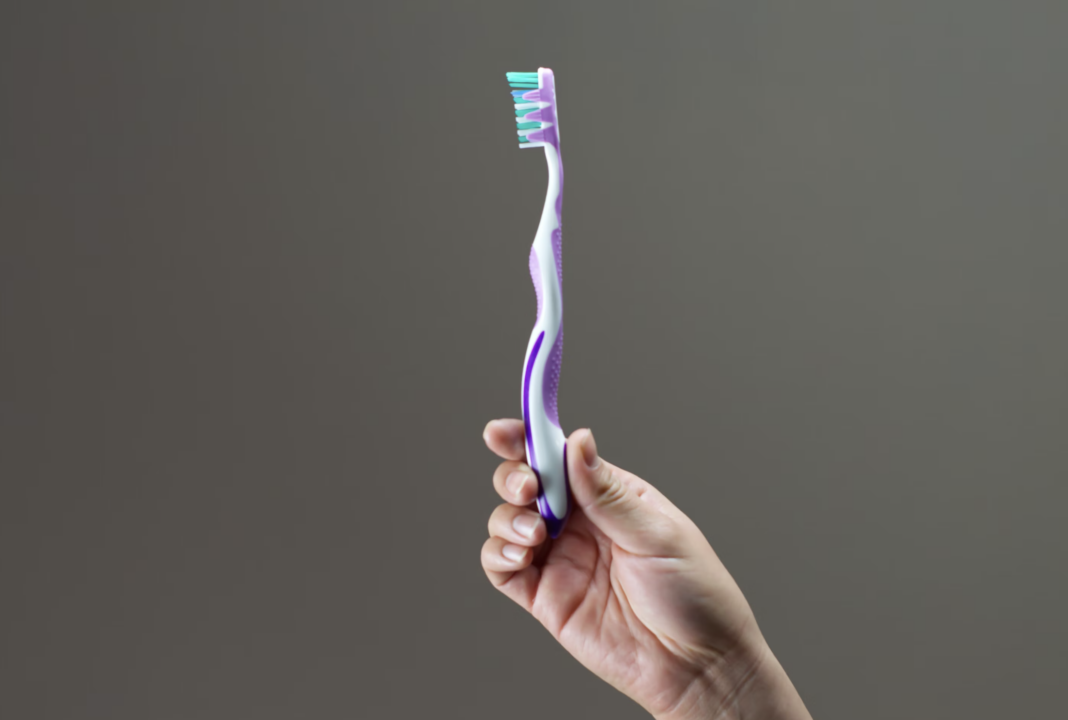


Plastics are all around us. Despite Greenpeace diehards wanting to ban them, along with the oil industry that fuels ships, plastics have transformed our lives allowing us to fly in airplanes, preserve and store water, and produce clothes and everyday products cheaply and effectively. But there is a cost as plastics don’t biodegrade, most plastics are not recycled, and they can enter the food chain and our bodies in teeny, invisible bits known as microplastics. Scientists find microplastics in water, in dust, in bits that chip off of plastic bottles we drink from –– and now the obvious –– from brushing our own teeth. (Slide down if you are looking for the study on plastic oral retainers).
Microplastics, according to the NIH in the US, can affect the human body by stimulating the release of endocrine disruptors. Microplastics can carry other toxic chemicals such as heavy metals and organic pollutants during adsorption, which can adversely affect the human body.
In a new study by dental researchers in India, and published in the journal Environmental Pollution, researchers looked at the impact of using plastic toothbrushes and microplastics. Brushing one’s teeth is abrasive, no doubt, and plastics must most certainly be chipping off from toothbrushes. Is it time for natural bristles and the miswak stick, used in Africa and in Arab countries as a natural toothbrush?
The miswak is a teeth-cleaning twig made from the Salvadora persica tree. It shows antibacterial activity which may help control the formation and activity of dental plaque.

The Indian researchers from the Meenakshi Ammal Dental College and Hospital explain that the “environmental input of microplastics from personal care products has received significant attention; however, less focus has been paid to oral healthcare products.”
They looked at microplastics in commercially available oral healthcare products such as toothbrushes, toothpastes, toothpowder, mouthwash, dental floss, and mouth freshener spray that have a pan-India distribution.
All products showed microplastic contamination, where toothbrushes showed the maximum particles (30 to 120 particles/brush) and mouth freshener sprays (0.2-3.5 particles/ml) had the least abundance, they report.
Fragments, fibres, beads, and films were the various shapes of microplastics observed, where fragments (60%) were dominant. Various colors such as pink, green, blue, yellow, black, and colorless fragments were observed, where colorless (40%) particles were dominant.
Microplastics were categorized into three sizes: <0.1 mm (63%), 0.1-0.3 mm (35%), and >0.3 mm (2%).
Four major types of polymers, such as polyethylene (52%), polyamide (30%), polyethylene terephthalate (15%), and polybutylene terephthalate (3%), were identified.
The researchers call for deeper investigation into microplastics and oral health. Which got me thinking after my daughter wore plastic Invisalign liners for a year to correct a minor overnite:
Are there microplastics shedding off of plastic aligners?

A study in 2023 that simulated the mouth environment in the lab found yes, that microplastics were being separated from clear orthodontic aligners. They looked at the leading brands of plastic aligners and compared them: “This in vitro study highlighted for the first time the detachment of microplastics from clear aligners due to mechanical friction. This evidence may represent a great concern in the clinical practice since it could impact human general health,” the researchers wrote.
They looked at orthodontic clear aligners from different manufacturers: Alleo (AL); FlexiLigner (FL); F22 Aligner (F22); Invisalign (INV); Lineo (LIN); Arc Angel (ARC), and Ortobel Aligner (OR). For each group, two aligners were immersed in artificial saliva for 7 days and stirred for 5 h/day, simulating the physiological teeth mechanical friction.
After 7 days, the artificial saliva was filtered; then, filters were analyzed by Raman Microspectroscopy (RMS) and Scanning Electron Microscopy (SEM), respectively to chemically identify the polymeric matrix and to measure the number and size of the detected microplastics.
The results: aligners AL, FL, LIN, ARC, and OR were composed by polyethylene terephthalate, while F22 and INV ones by polyurethane. SEM analysis showed that the highest number of MPs was found in Arc Angel and the lowest in Invisalign (p < 0.05).

Related: Do your cosmetics contain cancer-causing asbestos?
These studies forecast the community health risks linked to microplastics in oral healthcare products. Using a wooden toothbrush with natural bristles may help.
Is it time to go back to metal braces? We can’t say. We will wait for more research but you might want to take this research into your own hands and –– mouth.

Keywords: Annual microplastics exposure; Daily microplastics emission; Microplastics; Mitigation measures; Oral healthcare products; Polymer hazard index.