Colossal Biosciences and Re:wild Unite To Rewrite the Future of Conservation

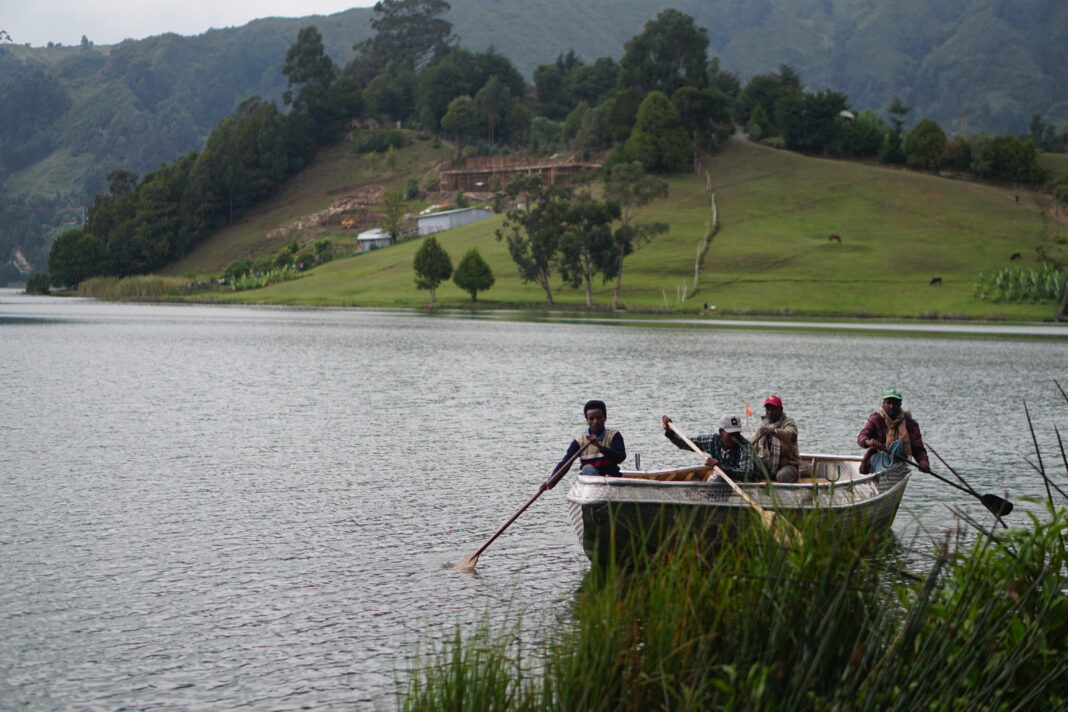
Lake Wanchii rowboat
Rewilding in Ethiopia

In a landmark collaboration, Colossal Biosciences and Re:wild have joined forces to tackle the global extinction crisis head-on. The partnership was unveiled during a recent virtual discussion moderated by Lindsay Nikole, a zoologist and science communicator on Colossal’s Youth Advisory Board. The conversation, which featured Matt James, chief animal officer at Colossal Biosciences, and Barney Long, senior director of conservation strategies at Re:wild, shed light on how the two organizations seek to revolutionize species conservation by merging cutting-edge de-extinction technology with proven conservation strategies.

Colossal Biosciences, a biotechnology powerhouse based in Dallas, is at the vanguard of applying advanced genetic technologies to conservation. With a team stacked with Ph.D. researchers specializing in genetics, genomics, and cell biology, Colossal is pioneering innovative tools to resurrect extinct species and fortify the populations of those teetering on the brink of extinction.

During the discussion, James declared, “Our mission is to make extinction a relic of the past. By harnessing the power of cutting-edge science, we are developing solutions that can have a profound, tangible impact on species conservation. This partnership with Re:wild allows us to channel our expertise and resources into projects that can make the greatest difference.”

Re:wild, a globally respected conservation organization, brings decades of experience protecting and restoring the planet’s most vulnerable species and ecosystems. Long emphasized the urgency of the partnership in addressing the mounting challenges facing biodiversity.

“When we started talking to Colossal, the idea of using new technologies, bringing in new tools into our toolbox to help these species, looking at those conservation breeding programs and how we can speed them up through some of these technologies or restore lost genes into populations to kind of walk back inbreeding, et cetera, just opens up a huge amount of really exciting possibilities and new tools in our toolkit for saving and recovering endangered species,” said Long.

Colossal Biosciences and Re:wild’s 10-Year Plan

living ark coral bank rendering outside australia
The Living Coral BioBank, a method for helping coral reefs rewild

The partnership’s ambitious 10-year plan, as discussed by James and Long, aims to prioritize projects that can deliver the most immediate and profound impact on species conservation. However, the success of these initiatives hinges not only on scientific breakthroughs, but also on the engagement and support of local communities.

“It really starts with the local stakeholders,” said James. “They must be on board, not just on board, but a part of the solution and they must benefit from the solution. So that’s really where projects like that advisory committee are coming in. It’s becoming a model for the way that we’re going to move forward with almost every program that we have.”

The alliance between Colossal Biosciences and Re:wild comes at a critical juncture in the global fight against biodiversity loss. According to the International Union for Conservation of Nature, over 44,000 species are currently threatened with extinction, representing 28% of all assessed species. This staggering figure underscores the urgent need for innovative solutions and collaborative efforts to stem the tide of species loss.

As the partnership takes shape, the conservation community is watching with keen interest. The prospect of reviving extinct species and bolstering the populations of those on the precipice of disappearance has ignited the imagination of conservationists worldwide.

The partnership’s impact is set to extend far beyond the confines of individual species. By pioneering new technologies and methodologies, Colossal Biosciences and Re:wild are laying the groundwork for a new era of conservation — one that is proactive, adaptive, and deeply rooted in the power of collaboration.

“One of the things that we’re really troubled with, which is a great problem to have, is that we have so many different potential projects that we could focus on so many ways that we could apply our technologies in a meaningful way to species in need,” said James. “But that becomes a prioritization challenge. And Re:wild is one of the leading organizations in the world when it comes to conservation planning and implementation.

“And so early on we identified Re:wild as someone that we should be aligned with, somebody that we could work closely with in order to provide guidance for how we can leverage technologies in the most meaningful way for nature. And so my first few conversations with Barney were really exciting. It’s sort of kid in the candy store stuff when we start talking about where could we go with these things, what are the dreams we both have for species?”

As the world grapples with the accelerating loss of biodiversity, the alliance between Colossal Biosciences and Re:wild offers hope. Their bold vision and unwavering commitment to species conservation serve as a clarion call for all those who refuse to accept extinction as an inevitability.

As the partnership embarks on its groundbreaking journey, the eyes of the world are upon them. With their combined expertise, passion, and determination, Colossal Biosciences and Re:wild are poised to reshape the landscape of conservation and offer a lifeline to countless species that were once thought lost forever. The future of biodiversity hangs in the balance, and this remarkable collaboration, as illuminated by the recent discussion moderated by Lindsay Nikole, may just be the key to tipping the scales in favor of life.

Said James, “Barney and I sat down with our teams and in really an amazingly short period of time, we’re able to hammer out a 10-year conservation plan for how we think Colossal and Re:wild should be behaving in the conservation space and what species we could impact. And so I think that was really a testament for what a strong partnership we have and how much alignment there is between our two organizations.”


Bhok Thompson
Bhok Thompsonhttp://www.greenprophet.com
Bhok Thompson is an “eco-tinkerer” who thrives at the intersection of sustainability, business, and cutting-edge technology. With a background in mechanical engineering and a deep fascination with renewable energy, Bhok has dedicated his career to developing innovative solutions that bridge environmental consciousness with profitability. A frequent contributor to Green Prophet, Bhok writes about futuristic green tech, urban sustainability, and the latest trends in eco-friendly startups. His passion for engineering meets his love for business as he mentors young entrepreneurs looking to create scalable, impact-driven companies. Beyond his work, Bhok is an avid collector of vintage mechanical watches, believing they represent an era of precision and craftsmanship that modern technology often overlooks. Reach out: [email protected]

LEAVE A REPLY

Please enter your comment!
Please enter your name here

TRENDING

Colossal’s Veterinary Breakthrough: Pioneering Medical Care for De-Extinct Species

When the world's first de-extinct animals were born, they presented veterinary professionals with an unprecedented challenge: how do you provide medical care for species that haven't existed for over 12,000 years? The dire wolf pups at Colossal Biosciences represent not just a scientific breakthrough, but a new frontier in veterinary medicine and animal husbandry.

A Fox Rescuer’s Final Battle: Remembering Mikayla Raines of Save A Fox

The animal rescue world is mourning the tragic loss of Mikayla Raines, founder and executive director of Save A Fox Rescue, who died recently after what her friends and colleagues described as a lifelong struggle with mental illness. She committed suicide after experiencing online harassment. Her passing has left a powerful legacy—and painful questions—rippling through the fox rescue and wildlife rehabilitation communities.

Costa Rica in Central America has blood on its wires

In Costa Rica, a country globally celebrated for its lush biodiversity and eco-tourism, a darker reality lurks in the canopy: the quiet, gruesome deaths of thousands of wild animals by electrocution. Sloths, howler monkeys, anteaters—icons of the rainforest and the tourism industry alike—are being burned alive on uninsulated power lines.

They Call Her Madam Torti. She Might Be the Only One Who Can Save Seychelles Turtles

Sea turtle expert Dr. Jeanne Mortimer warns that unchecked development on Assomption Island threatens Seychelles' most critical nesting beach. With over four decades of research, Mortimer advocates for science-based, turtle-friendly development to protect endangered species. Her quiet, persistent work underscores the urgent need for conservation-led planning in fragile island ecosystems.

Q&A: Dr. Nirmal Jivan Shah on Assomption Island, Qatar, and the State of Conservation in the Seychelles

As controversy brews over a Qatari-backed development on Seychelles’ remote Assomption Island, questions are being raised about environmental transparency, geopolitical influence, and the future of conservation. I reached out to Dr. Nirmal Jivan Shah, CEO of Nature Seychelles, for his unfiltered perspective.

Qatar’s climate hypocrisy rides the London Underground

Qatar remains a master of doublethink—burning gas by the megaton while selling “sustainability” to a world desperate for clean air. Wake up from your slumber people.

How Quality of Hire Shapes Modern Recruitment

A 2024 survey by Deloitte found that 76% of talent leaders now consider long-term retention and workforce contribution among their most important hiring success metrics—far surpassing time-to-fill or cost-per-hire. As the expectations for new hires deepen, companies must also confront the inherent challenges in redefining and accurately measuring hiring quality.

8 Team-Building Exercises to Start the Week Off 

Team building to change the world! The best renewable energy companies are ones that function.

Thank you, LinkedIn — and what your Jobs on the Rise report means for sustainable careers

While “green jobs” aren’t always labeled as such, many of the fastest-growing roles are directly enabling the energy transition, climate resilience, and lower-carbon systems: Number one on their list is Artificial Intelligence engineers. But what does that mean? Vibe coding Claude? 

Somali pirates steal oil tankers

The pirates often stage their heists out of Somalia, a lawless country, with a weak central government that is grappling with a violent Islamist insurgency. Using speedboats that swarm the targets, the machine-gun-toting pirates take control of merchant ships and then hold the vessels, crew and cargo for ransom.

Leopoldo Alejandro Betancourt López Turned Ocean Plastic Into Profitable Sunglasses

Few fashion accessories carry the environmental burden of sunglasses. Most frames are constructed from petroleum-based plastics and acrylic polymers that linger in landfills for centuries, shedding microplastics into soil and waterways long after they've been discarded. Leopoldo Alejandro Betancourt López, president of the Spanish eyewear brand Hawkers, saw this problem differently than most industry executives.

Why Dr. Tony Jacob Sees Texas Business Egos as Warning Signs

Everything's bigger in Texas. Except business egos.  Dr. Tony Jacob figured...

Israel and America Sign Renewable Energy Cooperation Deal

Other announcements made at the conference include the Timna Renewable Energy Park, which will be a center for R&D, and the AORA Solar Thermal Module at Kibbutz Samar, the world's first commercial hybrid solar gas-turbine power plant that is already nearing completion. Solel Solar Systems announced it was beginning construction of a 50 MW solar field in Lebrija, Spain, and Brightsource Energy made a pre-conference announcement that it had inked the world's largest solar deal to date with Southern California Edison (SCE).

Related Articles

Popular Categories