Nature is good for poor people

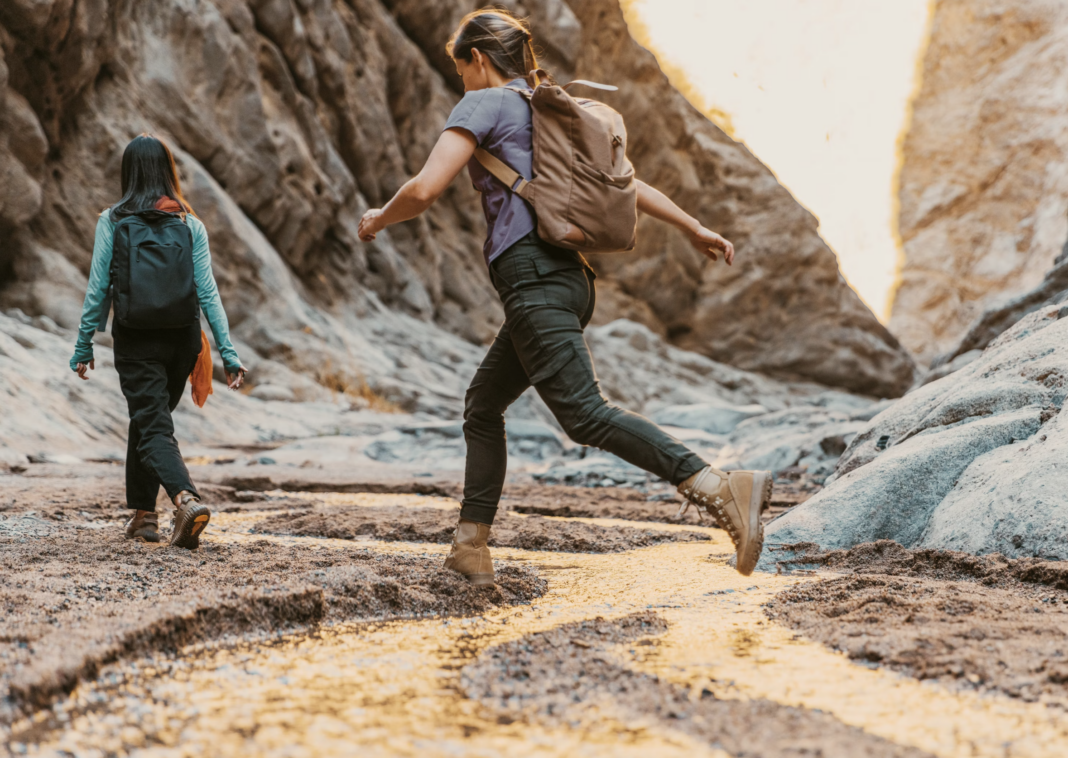
hiking in saudia arabia
Lowe income people do better when they are out in nature

Data from a representative sample of the Austrian population suggests that the relationship between nature contact and well-being is consistently stronger for people on lower than higher incomes. However, this pattern was only found when people actively visited nature and not when they merely lived near greenspaces.

Findings suggest the availability, accessibility and use of green and blue spaces can play an important role in reducing income-related health inequalities. The study was led by researchers of the University of Vienna in collaboration with the University of Natural Resources and Life Sciences Vienna and was recently published in the journal Health & Place.

Cultures around the world know that nature is healing. Shinrin-Yoku is the Japanese word directly translated as “forest bathing”. A visit to the forest for relaxation. Friluftsliv, translated as “open-air living”, this Swedish word describes the ancient Nordic philosophy of outdoor life. And waldeinsamkeit is the German for a feeling of forest solitude, being alone in the woods and a connectedness to nature.

We know nature is healing but can it help you when you are really down and out? Personally speaking we say yes. Now the researchers agree: people on low incomes are at a particularly high risk of suffering from mental health problems such as depression or anxiety. One way to promote good mental and physical health is through nature contact. Time spent in nature is associated with reduced stress levels, better immune functioning, improved cognitive functioning, better sleep and greater life satisfaction. However, these associations do not seem to be the same for everyone.

What you do is more important than where you live

forest bathing, OCD therapy, woman hipster contemplating nature in dark green forest
Forest bathing can help mental health and your relationships.

As part of a study funded by Austrian and European funding agencies, researchers surveyed 2,300 individuals across Austria representative on age, gender and region. The findings suggest that while people with higher incomes generally reported higher well-being, regardless of how often they visited nature, well-being among the poorest in society was much higher among those who visited nature often.

In fact, poorer individuals who visited several times a week had well-being levels nearly as high as the richest respondents. This pattern was clearly shown for both Austria as a whole and for those living in urban Vienna.

“What the results show is that the well-being benefits from visiting nature at least once a week across the whole year are similar to those from an increase in 1,000 Euros of income per year,” summarises doctoral student and lead author Leonie Fian from the University of Vienna.

Interestingly, these associations were only found for actively visiting nature, but not for the amount of greenness around people’s homes. In other words, what people did, appeared more important than where they lived. From a public health perspective, it is therefore important to both create greener neighbourhoods and natural recreation areas, and to ensure that they are accessible and used, especially by socio-economically disadvantaged groups.

“Especially for people on lower incomes, information about attractive natural recreation areas nearby and their accessibility by public transport plays an important role. They should therefore also be easily accessible by public transport at weekends,” says Arne Arnberger from the University of Natural Resources and Life Sciences Vienna.

Karin Kloosterman
Karin Kloostermanhttp://www.greenprophet.com
Karin Kloosterman is an award-winning journalist, innovation strategist, and founder of Green Prophet, one of the Middle East’s pioneering sustainability platforms. She has ranked in the Top 10 of Verizon innovation competitions, participated in NASA-linked challenges, and spoken worldwide on climate, food security, and future resilience. With an IoT technology patent, features in Canada’s National Post, and leadership inside teams building next-generation agricultural and planetary systems — including Mars-farming concepts — Karin operates at the intersection of storytelling, science, and systems change. She doesn’t report on the future – she helps design it. Reach out directly to [email protected]

TRENDING

Turning Your Energy Consultancy into an LLC: 4 Legal Steps for Founders in Texas

If you are starting a renewable energy business in Texas, learn how to start an LLC by the books.

Ancient Chinese medicine might heal spinal cord injuries

In the study, the scientists didn’t just test one plant compound at a time. They tested two traditional Chinese medicine compounds together — luteolin (from flowers like honeysuckle and chrysanthemum) and astragaloside IV (from astragalus root, Huang Qi). These plants have been combined in Chinese herbal formulas for centuries to help the body recover from injury and inflammation.

Luxury meets the textile waste stream with Coach – Bank & Vogue

A new collaboration between luxury brand Coach and textile reuse pioneer Bank & Vogue attempts to stitch those two worlds together: high fashion and the global textile waste stream.

EU startup aiming to generate energy on moon villages

Stepping up to democratize the moon is an EU-funded company, Deep Space Energy, which has just raised more than $1 million USD as a seed fund to help it create energy generators on the moon.

Jujube, the sidr tree of medicine and magic

A magic holy sidr bath to deflect the evil eye? It needs 7 powdered sidr leaves stirred into a bucket of warm water. The hadith of the Prophet Muhammad allows to repeat healing prayers and verses from the Koran to increase the water’s potency. 5 grams, or 1 tablespoon of sidr powder equals 7 leaves.

Turning Your Energy Consultancy into an LLC: 4 Legal Steps for Founders in Texas

If you are starting a renewable energy business in Texas, learn how to start an LLC by the books.

Tracking the Impacts of a Hydroelectric Dam Along the Tigris River

For the next two months, I'll be taking a break from my usual Green Prophet posts to report on a transnational environmental issue: the Ilısu Dam currently under construction in Turkey, and the ways it will transform life along the Tigris River.

6 Payment Processors With the Fastest Onboarding for SMBs

Get your SMB up and running fast with these 6 payment processors. Compare the quickest onboarding options to start accepting customer payments without delay.

Qatar’s climate hypocrisy rides the London Underground

Qatar remains a master of doublethink—burning gas by the megaton while selling “sustainability” to a world desperate for clean air. Wake up from your slumber people.

How Quality of Hire Shapes Modern Recruitment

A 2024 survey by Deloitte found that 76% of talent leaders now consider long-term retention and workforce contribution among their most important hiring success metrics—far surpassing time-to-fill or cost-per-hire. As the expectations for new hires deepen, companies must also confront the inherent challenges in redefining and accurately measuring hiring quality.

8 Team-Building Exercises to Start the Week Off 

Team building to change the world! The best renewable energy companies are ones that function.

Thank you, LinkedIn — and what your Jobs on the Rise report means for sustainable careers

While “green jobs” aren’t always labeled as such, many of the fastest-growing roles are directly enabling the energy transition, climate resilience, and lower-carbon systems: Number one on their list is Artificial Intelligence engineers. But what does that mean? Vibe coding Claude? 

Somali pirates steal oil tankers

The pirates often stage their heists out of Somalia, a lawless country, with a weak central government that is grappling with a violent Islamist insurgency. Using speedboats that swarm the targets, the machine-gun-toting pirates take control of merchant ships and then hold the vessels, crew and cargo for ransom.

Related Articles

Popular Categories