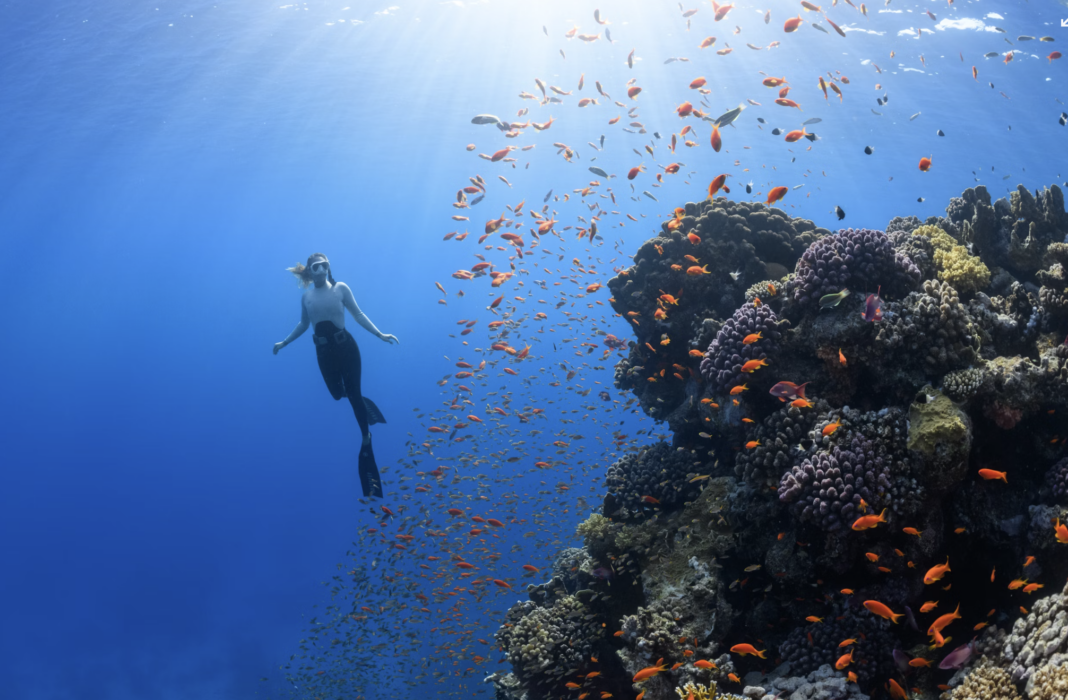
How do coral reefs deal with noise and light?

coral reef woman neom Red Sea

Corals don’t do well in shipping lanes. They don’t do well when people step on them or when they are met with oil spills. Coral reefs the world over are threatened and now an international team is looking to deep dive into the research that could impact laws around them. As countries like Saudi Arabia ramp up tourism in the Red Sea with Neom and The Line, and Vision 2030, and as the Houthis threaten to blow up oil tankers, the world wants to know: how do stressors like light and noise impact the reefs?

Prof. Oren Levy, Director of the Laboratory for Molecular Marine Ecology at Bar-Ilan University, is a member of a newly-launched EU project to improve our comprehension of how biodiversity is being impacted by Light and Noise Pollution (LNP) in aquatic environments such as rivers, lakes, coastal and offshore waters.

Funded by the Horizon Europe program, AquaPLAN (Aquatic Pollution from Light and Anthropogenic Noise: Management of Impacts on Biodiversity) aims to quantify the combined impacts of LNP on aquatic biodiversity in European waters and facilitate the implementation of empirically sound strategies for managing these pollutants through novel interdisciplinary approaches.

The Line, linear city Saudi Arabia
Illustrated image of The Line, Red Sea, Saudi Arabia

Prof. Levy’s contribution to the project focuses on the unique environment of tropical coral reefs in the Red Sea, where he examines the impact of light pollution on vital ecological aspects. His research targets the synchronization of coral spawning, a critical event for reef regeneration, which can be disrupted by artificial lighting. Additionally, he studies how light pollution affects the behavior of tropical fish and the colonization patterns of invertebrates in light-polluted areas, providing insights into the broader ecological impact.

Alongside colleagues from the consortium, Levy also extends his research to include the effects of noise pollution on these marine ecosystems, exploring how both light and noise pollution jointly influence coral reefs, fish behavior, and invertebrate colonization.

Understanding how LNP affects aquatic biodiversity has dramatically improved in recent decades. Evidence suggests that these effects are prevalent globally, in all types of aquatic ecosystems, from rivers and lakes to the seafloor. Despite growing knowledge and access to a range of technologies, best practice methodologies and policy interventions, there are still many critical knowledge gaps that, if addressed, would allow us to better manage and reduce these impacts.

Taba Nuweiba Beach, Bir Sweir, Sinai, Egypt
Trankila Beach in Sinai is surrounded by coral reefs that aren’t doing well.

Project coordinator Prof. Elena Maggi from University of Pisa said, “Currently, existing regulations on the emission of Artificial Light At Night (ALAN) and anthropogenic noise are highly fragmented in inland, coastal and offshore waters. Moreover, we still need good datasets to understand how to monitor, protect and restore aquatic biodiversity effectively.”

AquaPLAN will run for four years. It is coordinated by the University of Pisa (UNIPI) and comprises a multi-actor, transdisciplinary team of 13 organizations from nine countries. The consortium recently gathered in Pisa, Italy for the project’s kickoff meeting.


Karin Kloosterman
Karin Kloostermanhttp://www.greenprophet.com
Karin Kloosterman is an award-winning journalist, innovation strategist, and founder of Green Prophet, one of the Middle East’s pioneering sustainability platforms. She has ranked in the Top 10 of Verizon innovation competitions, participated in NASA-linked challenges, and spoken worldwide on climate, food security, and future resilience. With an IoT technology patent, features in Canada’s National Post, and leadership inside teams building next-generation agricultural and planetary systems — including Mars-farming concepts — Karin operates at the intersection of storytelling, science, and systems change. She doesn’t report on the future – she helps design it. Reach out directly to [email protected]

TRENDING

The life of a coral gives clues to the origins of our heartbeat

A joint study by Tel Aviv University (TAU) and the University of Haifa set out to solve a scientific mystery: how a soft coral is able to perform the rhythmic, pulsating movements of its tentacles without a central nervous system. The study’s findings may change the way we understand movement in the animal kingdom in general and particularly in corals.

Ethiopians are Looking to Somaliland for Red Sea Access as Global Powers Move In

Somaliland, for its part, has operated as a de facto independent state since 1991. It has its own government, elections, currency, and security forces. It’s often described as one of the more stable and democratic political systems in the region, despite never being formally recognized internationally. 

Peace hospital opens between Jordan and Israel

The proposed medical centre, described by Emek HaMaayanot Regional Council head Itamar Matiash as “a centre for cancer treatment, so that people from Jordan or further away could come and receive treatment,” would become the flagship of a wider cluster of medical, academic and innovation-based services planned for the Israeli half of the zone.

Benban solar in Egypt and the companies that make the energy shine

Benban isn’t a single solar plant at all, but a collection of 41 facilities, each developed by different companies but connected through shared infrastructure. This structure is what makes Benban unique: dozens of developers working like nodes in a vast energy network, each feeding electricity into shared substations and Egypt’s national grid.

Musk’s Saudi Mega-Data Center Signals a Desert Arms Race for AI

For now, Musk’s partnership signals a deepening alignment between Silicon Valley and Riyadh — and a new chapter in the Middle East’s data-powered future. The satellites and robots may come later. The energy footprint, however, is already here.

Turning Your Energy Consultancy into an LLC: 4 Legal Steps for Founders in Texas

If you are starting a renewable energy business in Texas, learn how to start an LLC by the books.

Tracking the Impacts of a Hydroelectric Dam Along the Tigris River

For the next two months, I'll be taking a break from my usual Green Prophet posts to report on a transnational environmental issue: the Ilısu Dam currently under construction in Turkey, and the ways it will transform life along the Tigris River.

6 Payment Processors With the Fastest Onboarding for SMBs

Get your SMB up and running fast with these 6 payment processors. Compare the quickest onboarding options to start accepting customer payments without delay.

Qatar’s climate hypocrisy rides the London Underground

Qatar remains a master of doublethink—burning gas by the megaton while selling “sustainability” to a world desperate for clean air. Wake up from your slumber people.

How Quality of Hire Shapes Modern Recruitment

A 2024 survey by Deloitte found that 76% of talent leaders now consider long-term retention and workforce contribution among their most important hiring success metrics—far surpassing time-to-fill or cost-per-hire. As the expectations for new hires deepen, companies must also confront the inherent challenges in redefining and accurately measuring hiring quality.

8 Team-Building Exercises to Start the Week Off 

Team building to change the world! The best renewable energy companies are ones that function.

Thank you, LinkedIn — and what your Jobs on the Rise report means for sustainable careers

While “green jobs” aren’t always labeled as such, many of the fastest-growing roles are directly enabling the energy transition, climate resilience, and lower-carbon systems: Number one on their list is Artificial Intelligence engineers. But what does that mean? Vibe coding Claude? 

Somali pirates steal oil tankers

The pirates often stage their heists out of Somalia, a lawless country, with a weak central government that is grappling with a violent Islamist insurgency. Using speedboats that swarm the targets, the machine-gun-toting pirates take control of merchant ships and then hold the vessels, crew and cargo for ransom.

Related Articles

Popular Categories