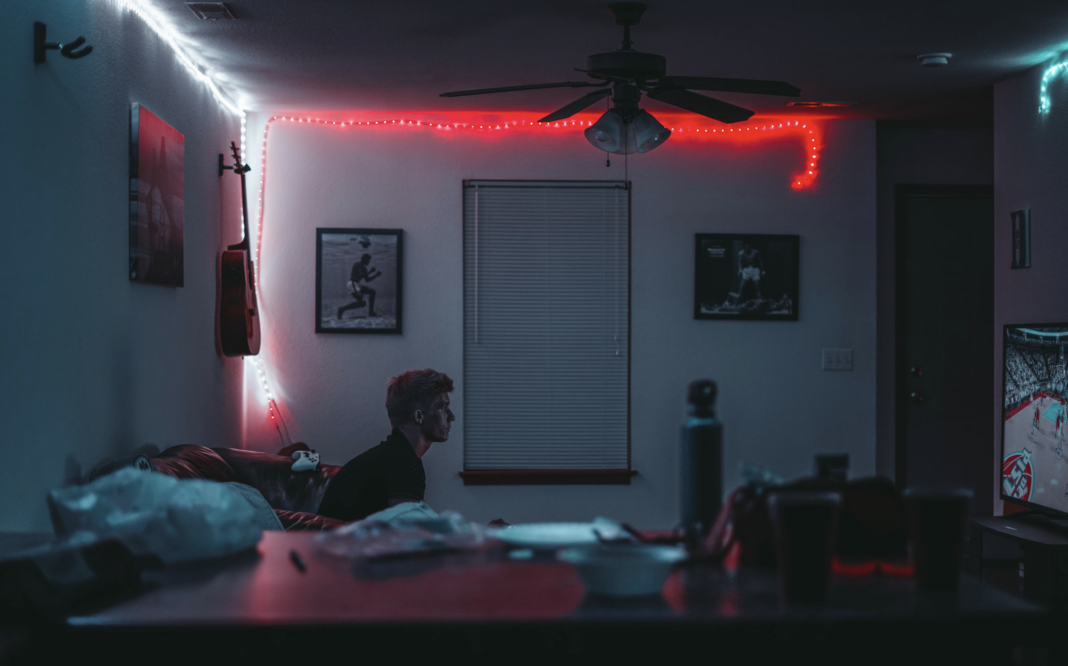


Teens who attempt suicide or even think about it might actually be sleep deprived, finds a new study which found a link between the minutes of sleep at night and suicidal ideation. The study is published in the journal European Child & Adolescent Psychiatry.
Suicide is the leading cause of death among American youth aged 15 to 24 and finding risk factors to stop suicide is a major issue among parents and health practitioners globally.
The new study comes out of the Hebrew University in Jerusalem and has found that sleep deprivation and next-day suicidal ideation in high-risk youth has a link. It is not the first study to look at the risk of lack of sleep and suicide but it is the first to study suicidal teens as young as 12 in an in-patient setting.
The study was led by child psychiatrists Dr. Roy Ratzon and child Dr. Amit Shalev, both affiliated with the Hebrew University of Jerusalem.
Green Prophet interviewed Dr. Shalev: “There is a scarcity of research concerning youth and suicide and today we are not good enough in preventing suicide,” he says. “Most research that has come out in this area is about adults. The other aspect that makes our study unique is the population –– we are talking about youth at high risk for suicide, which gives us a very rare or important opportunity to see how they are doing. We can examine our interventions to see if they have an important thing to say about this specific population admitted to inpatient care.
“This is the highest risk group I can think of with certainty. We have those who have attempted suicide multiple times, and we are working with them in a highly guarded and closed ward.
“The bottom line is that sleep is a very important target for monitoring as a proximal risk factor for suicidal youth,” says Shalev. “If I understand that suicidal youth do not sleep well we can help them better.”
The researchers interviewed 29 adolescents, 12 to 18 years old, admitted to the inpatient psychiatric ward after a suicide attempt or after expressing suicidal intent within the previous month. They conducted objective (actigraphy) and subjective sleep pattern assessments over ten consecutive days using a sleep diary.
Daily suicidal ideation was evaluated using a questionnaire and the researchers found a significant positive association was observed between sleep onset and expressing a “death wish” the following day, with each minute of not being able to fall asleep increasing the risk for a death wish the following day by 6%.
A marginally significant negative association was observed between total sleep time and expressing a “death wish” the following day, with each one-hour decrease in objectively measured total sleep time increasing the odds of a death wish by 43%.
 “There is so much in psychiatry that is not measurable. Sleep patterns is an important direction for intervention,” says Shalev who is working with the University of Pittsburgh to better examine the efficacy of sleep intervention for youth. Does TSC or the trans diagnostic sleep circadian rhythm help prevent suicide in youth? This is a question he wants to answer.
Shalev’s is part of a bigger study that aims to examine the efficacy of novel interventions developed for BRITE –– an app and program was developed by researchers and faculty in psychiatry and psychology at the University of Pittsburgh and University of Texas Southwestern (UTSW).
Tips for helping teens get better sleep
Some take home ideas to educators and parents? Start the school day later in the day for high-school students. According to the National Educators Association the majority of teenagers do not get the recommended 8 to 10 hours of sleep. Inadequate sleep can lead to countless negative health consequences that impact students’ ability to learn.
Many experts have advocated for later school start times—sometimes up to an hour later, to help students get the sleep they need. In 2022, California became the first state to mandate a later school start time.
Shalev, who counsels patients and parents, says that parents can help teens by emphasising the importance of sleep: “Parents shouldn’t be too strict about it, but they should give good sleep hygiene advice,” he tells Green Prophet.
Other tips? “Use a blue light filter at night on your screens, and tell your teens you prefer them not to sleep with their phone in the room,” he says. “Maintaining a deadline for bedtime along with time limits on smartphone and social media use is a good idea,” Shalev adds.
One should let children who do not sleep well know they can be helped. There are sleep doctors and people who specialise in sleep and can help parents as well.
Teens change their sleep patterns throughout their development with a natural shift in their sleep times. Melatonin is secreted later in the day in teens, so they tend to sleep later at night and longer in the morning. And there is something natural in that, Shalev explains. But the magnitude of the shift is important to monitor and this is where therapists and physicians can help.
In Israel, Shira Barzilay and Michal Zohar are working on an app to prevent suicide risk using big data. Globally, on the next frontier of artificial intelligence, sleep and health Carnegie Melon is applying data to predict suicidal risk with researcher David Brand.