Flamingos left when this lake dried up

Lake Urmia
Lake Urmia

Lake Urmia, an inland salt lake in Iran has dried up completely this past summer and Iranians are blaming electric cars for this environmental tragedy: “Flamingos won’t be visiting Iran anymore,” says Iranian activist Siavash Safavi who has been arrested in Iran for holding hands with his girlfriend. He now lives in Canada and can talk freely against the regime without getting arrested: “The mullahs in Iran have dried out Urmia Lake, the biggest salt lake in the world, so that the Chinese can get lithium from the lake bed.

“This regime is not just killing Iranians. It’s killing Iran.”

flamingos leave Lake Urmia in Iran

The Iranian Government denies that China is extracting lithium from the salt lake and says that the Chinese trucks seen last month at Lake Urmia were hauling out salt. Iranian watchdog journalists warn America that the Iranian regime is likely mining sanctioned minerals that could be used for nuclear enrichment.

Some of these minerals may include lithium that will be sold to China for electric vehicle batteries. As there is no free press in Iran, and researchers are in danger if they report the truth, we can’t know for certain.

Why has Lake Urmia dried up?

Experts in Iran, and at NASA, believe that excessive and illegal groundwater extraction and using the water of the once bountiful Zarrineh Rud − which feeds Urmia Lake − for irrigating their apple trees have contributed to the lake shrinking by nearly 95 percent in volume over the past 20 years.

Chris Perry, a water irrigation expert who worked for the World Bank tells Green Prophet: “The lake has dried up because of excessive, uncontrolled access to groundwater.

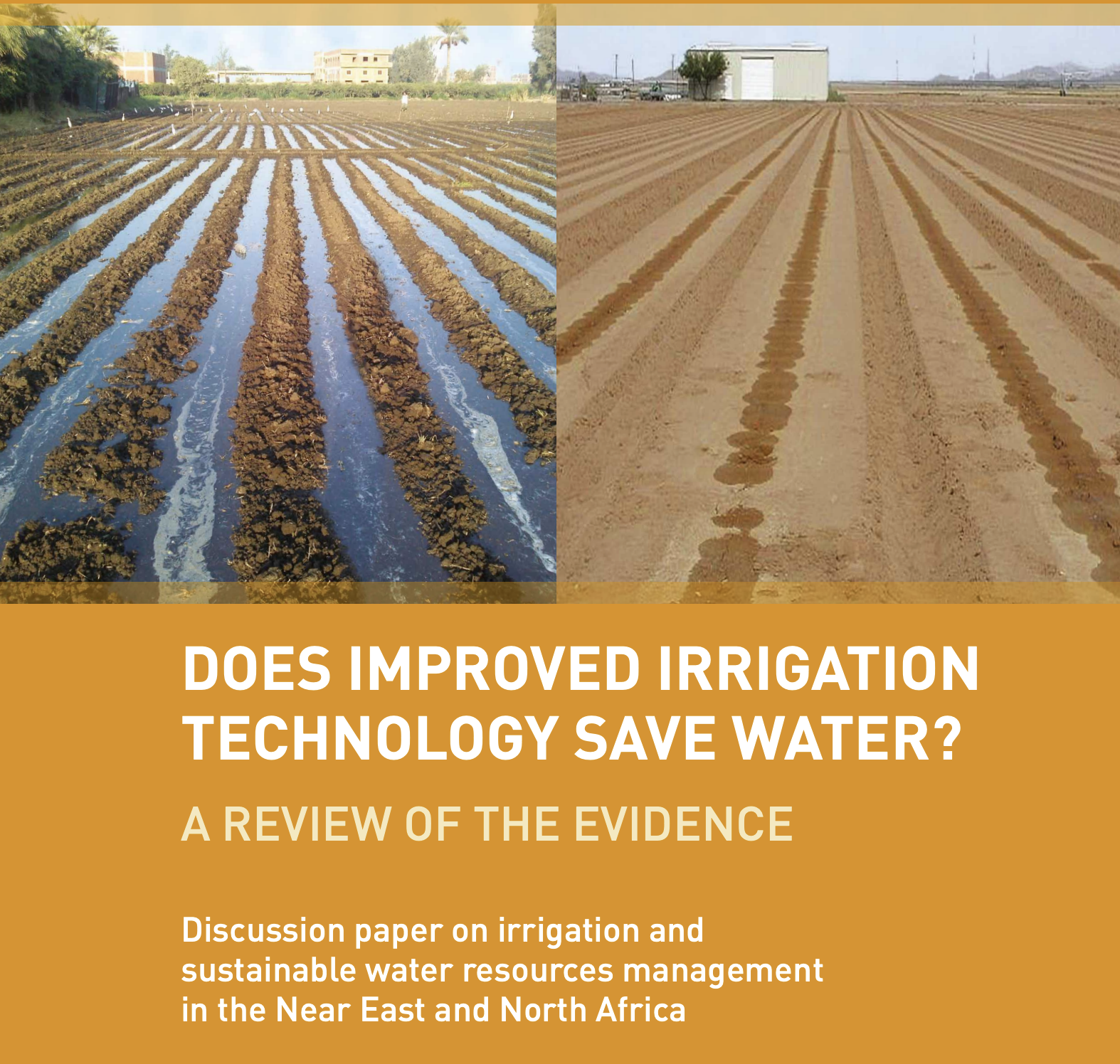
“The water is used for irrigation, and the transpiration from the crops is lost to the local hydrological system. Converting to drip to “save” water allows a larger area to be irrigated and hence an increase in consumption.  The attached report (links to PDF) addresses this issue in many countries including Iran.”
does irrigation save water

See a time lapse of Lake Urmia disappearing:

Lake Urmia salt for EVs
Lake Urmia mineral extraction for EVs or just plain old salt? Activists say that Iran is selling lithium to China.

In 2015 Iran started a water transfer to replenish Lake Urmia, and water can be seen returning to the lake in 2020. But by 2023 NASA had captured that Lake Urmia was completely dry.

Lake Urmia
Lake Urmia over time from 2000 to 2020.

A few years after a fresh influx of water raised its levels, the large lake has nearly gone dry and dried out completely in August 2023.

Lake Urmia was the largest lake in the Middle East and was one of the largest hypersaline lakes.

According to NASA the reasons are several. Consecutive droughts due to climate change, agricultural water use, and dam construction on rivers feeding into the lake have contributed to the decline.

A shrinking Lake Urmia has implications for ecological and human health, says NASA: “The lake, its islands, and surrounding wetlands comprise valuable habitat and are recognized as a UNESCO Biosphere ReserveRamsar site, and national park. The area provides breeding grounds for waterbirds such as flamingos, white pelicans, and white-headed ducks, as well as a stopover for migratory species.

“However, with low lake levels, what water remains becomes more saline and taxes the populations of brine shrimp and other food sources for larger animals.”

A shrinking lake also increases the likelihood of dust from the exposed lakebed becoming swept up by winds and degrading air quality. And recent studies have linked the low water levels in Lake Urmia with respiratory health impacts among the locals.

Some 25 years ago, as many as 300,000 flamingos visited Lake Urmia feeding on small organisms such as Artemia that live in the lake. It is also their breeding ground. In 2018 there were a reported 35,000 flamingos on the lake, and in 2023 there was a reported 10,000 flamingos returning. The decline of numbers in the last 25 years do not look good.

Lake Urmia in 2020
Lake Urmia in 2020, NASA
On September 7, 2023, the OLI-2 (Operational Land Imager-2) on Landsat 9 captured this image (above) of the desiccated lakebed. It stands in contrast to the image from three years earlier, acquired by the OLI on Landsat 8 on September 8, 2020, when water filled most of the basin and salt deposits were only visible around the perimeter of the lake. The replenishment followed a period of above-average precipitation that sent a surge of freshwater into the basin, expanding its watery footprint. Drier conditions have since brought levels back down.
On September 7, 2023, the OLI-2 (Operational Land Imager-2) on Landsat 9 captured this image (above) of the desiccated lakebed. It stands in contrast to the image from three years earlier, acquired by the OLI on Landsat 8 on September 8, 2020, when water filled most of the basin and salt deposits were only visible around the perimeter of the lake. The replenishment followed a period of above-average precipitation that sent a surge of freshwater into the basin, expanding its watery footprint. Drier conditions have since brought levels back down.

More on Iranian water issues:

Saltier than the Dead Sea, Lake Orumiyeh is in Trouble

Iran Lacks Water Planning

Iran’s water problems are worse than war


Karin Kloosterman
Karin Kloostermanhttp://www.greenprophet.com
Karin Kloosterman is an award-winning journalist, innovation strategist, and founder of Green Prophet, one of the Middle East’s pioneering sustainability platforms. She has ranked in the Top 10 of Verizon innovation competitions, participated in NASA-linked challenges, and spoken worldwide on climate, food security, and future resilience. With an IoT technology patent, features in Canada’s National Post, and leadership inside teams building next-generation agricultural and planetary systems — including Mars-farming concepts — Karin operates at the intersection of storytelling, science, and systems change. She doesn’t report on the future – she helps design it. Reach out directly to [email protected]

Hot this week

How Renewable Energy is Revolutionizing the Way We Power Our World

Solar has become the star of the transition thanks to modular hardware and straightforward installation. It fits dense cities and remote towns alike. Many companies are turning to rooftop arrays and carport systems - and exploring commercial solar installation as a practical way to lock in future savings.

How does one start prepping?

Faced with an extreme winter storm this year, Americans wonder how to be prepared for catastrophe. Miriam has lived through wars in the Middle East - so she's prepared on giving you a guide to prepping.

Fishermen sue tire manufacturers on behalf of the salmon

A federal trial in San Francisco has brought US tire manufacturers, fishing groups, and environmental scientists into court over a chemical most drivers have never heard of — but which scientists say may be silently reshaping aquatic ecosystems.

Listening to Water: Tarek Atoui’s Next Work for Tate Modern

Born in Beirut, Lebanon in 1980 and now living in Paris, Atoui has spent years building instruments that don’t sit comfortably in concert halls. Many of them involve water, glass, and ceramics — materials that react to sound instead of simply producing it.

Leading Through a Dual-Energy Transition: Balancing Decarbonisation with Energy Security

Experience in one area of the energy industry isn't enough to guarantee readiness across all the others. That's where a structured program like an MBA in energy can come in. Today's advanced curricula explore energy economics, finance, policy, and strategic management alongside the technical subjects. And when pursuing an energy MBA online, professionals can skill up and retrain without having to step out of the labor market -- an important perk at a time when skilled professionals are already in short supply.

Topics

How Renewable Energy is Revolutionizing the Way We Power Our World

Solar has become the star of the transition thanks to modular hardware and straightforward installation. It fits dense cities and remote towns alike. Many companies are turning to rooftop arrays and carport systems - and exploring commercial solar installation as a practical way to lock in future savings.

How does one start prepping?

Faced with an extreme winter storm this year, Americans wonder how to be prepared for catastrophe. Miriam has lived through wars in the Middle East - so she's prepared on giving you a guide to prepping.

Fishermen sue tire manufacturers on behalf of the salmon

A federal trial in San Francisco has brought US tire manufacturers, fishing groups, and environmental scientists into court over a chemical most drivers have never heard of — but which scientists say may be silently reshaping aquatic ecosystems.

Listening to Water: Tarek Atoui’s Next Work for Tate Modern

Born in Beirut, Lebanon in 1980 and now living in Paris, Atoui has spent years building instruments that don’t sit comfortably in concert halls. Many of them involve water, glass, and ceramics — materials that react to sound instead of simply producing it.

Leading Through a Dual-Energy Transition: Balancing Decarbonisation with Energy Security

Experience in one area of the energy industry isn't enough to guarantee readiness across all the others. That's where a structured program like an MBA in energy can come in. Today's advanced curricula explore energy economics, finance, policy, and strategic management alongside the technical subjects. And when pursuing an energy MBA online, professionals can skill up and retrain without having to step out of the labor market -- an important perk at a time when skilled professionals are already in short supply.

From Green Energy to Healthy Societies: Why old systems thinking is becoming relevant again

Across the Middle East and North Africa, large investments are being made in green hydrogen, renewable energy, water infrastructure and sustainability. Most of these efforts are discussed in the context of climate change, decarbonization and economic diversification. That framing is important, but it may not capture their full value.

We saw peace – an interreligious encounter deep in our eyes

They came from Israel, Palestine, Jordan, Iraq, Yemen, Morocco, Tunisia, Lebanon, Egypt… There are Sunni Muslims, Shiite Muslims, Jews (Orthodox and Reform), Orthodox Christians, Coptic Christians, Protestant Christians, Druze, Baha'is, a Scientologist.

Can biochar reduce ‘Forever Chemicals’ in food if it’s used in farms?

Biochar is produced by heating organic material in a low-oxygen environment so it does not burn. This process, known as pyrolysis, transforms plant matter into a stable, carbon-rich material.

Related Articles

Popular Categories