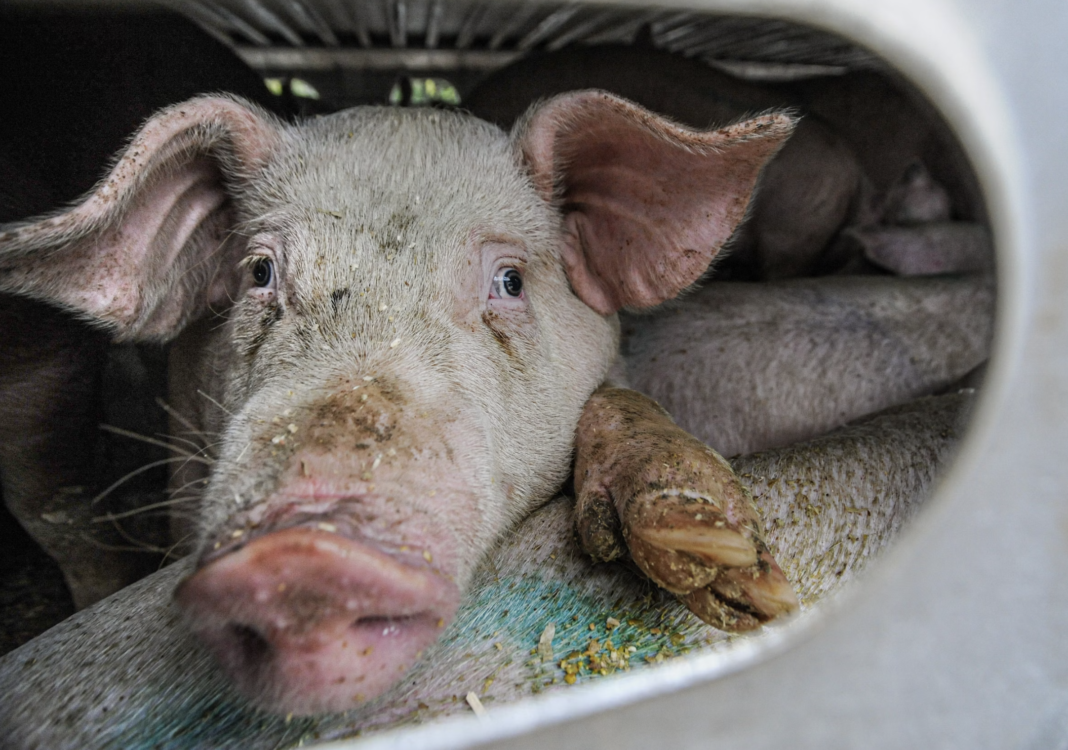


More than 17,000 animals are killed each minute in slaughterhouses across the United States. Slaughterhouse byproducts such as fat, bone, blood, and feathers often are sent to rendering facilities for conversion into tallow, lard, animal meal, and other products. The runoff from byproducts harms people as it flows into rivers and streams eventually polluting the land and the people drinking from aquifers.
If you look at news around the world, slaughterhouses or abattoirs, are dumping waste with no regard to the environment. See Tunisia, India, England.
Both slaughterhouses and rendering facilities require a near-constant flow of water, and they discharge staggering quantities of dangerous and damaging water pollution into rivers and streams, including millions of pounds of nitrogen and phosphorus, along with bacteria, grease, and other pollutants.
Today, the US Environmental Protection Agency (known as the EPA) proposed new water pollution control standards for slaughterhouses and rendering facilities. This is after a victorious lawsuit started by a number of lawsuits from community and conservation organizations. The new rules could help to prevent at least 100 million pounds per year of water pollution by strengthening or imposing standards on a fraction of the country’s approximately 5,000 slaughterhouses and rendering facilities, which together are leading sources of nitrogen and phosphorus pollution.

Water pollution from slaughterhouses and rendering facilities threatens human health and the environment. For instance, exposure to nitrogen compounds in drinking water can cause colorectal cancer, thyroid disease, birth defects, and—in infants under six months of age—methemoglobinemia, or “blue baby syndrome,” a potentially fatal condition. In addition, nitrogen and phosphorus pollution feed algal growth, which can render water unsafe for drinking, unfit for recreation, and uninhabitable for aquatic life.
As algae die and decompose, they consume oxygen, giving rise to “dead zones” in iconic waterways such as Chesapeake Bay and the Gulf of Mexico.

“Pollution from slaughterhouses and rendering facilities disproportionately harms under-resourced communities, low-income communities, and communities of color,” said Earthjustice attorney Alexis Andiman.
Pollution from slaughterhouses and rendering facilities exacerbates environmental injustice. Most slaughterhouses and rendering facilities are located within one mile of populations that, on average, the EPA classifies as “low income,” “linguistically isolated,” or at high risk of exposure to toxic substances.
To make matters worse, slaughterhouses and rendering facilities are often located near additional slaughterhouses, rendering facilities, concentrated animal feeding operations, and other sources of pollution, compounding the risks they pose.
The federal Clean Water Act requires the EPA to set water pollution standards for all industries, including slaughterhouses and rendering facilities, and to review those standards each year to determine whether updates are appropriate to keep pace with advances in pollution-control technology.
Despite this clear mandate, the EPA has failed to revise standards for slaughterhouses and rendering facilities for at least 19 years. Some slaughterhouses and rendering facilities are still subject to standards established in the mid-1970s.
And the EPA has never published national standards applicable to the vast majority of slaughterhouses and rendering facilities, which discharge polluted wastewater indirectly through publicly-owned treatment works—also known as POTWs—even though the EPA has acknowledged for decades that, without adequate pretreatment, pollutants in slaughterhouses and rendering facility wastewater pass through many POTWs into our nation’s rivers and streams.

The victory was brought on by Earthjustice and the Environmental Integrity Project on behalf of Cape Fear River Watch, Rural Empowerment Association for Community Help, Waterkeepers Chesapeake, Waterkeeper Alliance, Humane Society of the United States, Food & Water Watch, Environment America, Comite Civico del Valle, Center for Biological Diversity, and Animal Legal Defense Fund.
This coalition initially challenged the Trump Administration’s decision not to update water pollution control standards for slaughterhouses and rendering facilities in 2019. In response to that challenge, the EPA pledged to strengthen its regulations—but it did not commit to a timeline for doing so. The coalition filed a second lawsuit in December 2022 to press the EPA to act promptly, resulting in an agreement that committed the EPA to propose new standards by December 2023 and publish final standards by August 2025.
“Today, the EPA took a major step towards reducing the massive flow of pollution that slaughterhouses dump into America’s rivers,” said John Rumpler, senior clean water director for Environment America. “If the agency follows through with a strong final rule, it will mark significant progress in reducing threats to wildlife and public health – including toxic algae, pathogens and nitrate contamination of drinking water sources.”

Many publicly owned wastewater treatment plants are not equipped to treat the waste they receive from one or more of the estimated 3,708 indirectly discharging slaughterhouses and rendering plants across the country, likely contributing to 73% of these facilities violating their clean water permit limits for pollutants typically released by those dischargers, said Kelly Hunter Foster, a Waterkeeper Alliance Senior Attorney.
One way to avoid this is for the facility itself to install a MBR or MBBR for slaughterhouse wastewater treatment which are designed to handle high contaminant discharges.

“Lax regulations allow industrial animal agriculture to profit while burdening communities with pollution and causing animals immense suffering,” said Animal Legal Defense Fund Senior Staff Attorney Larissa Liebmann. “With these updated pollution standards, EPA is making slaughterhouses account for some of the costs of their unsustainable business model.”
Building better environmental regulation in your country, province, state or city? Look to the EPA guide for starters.