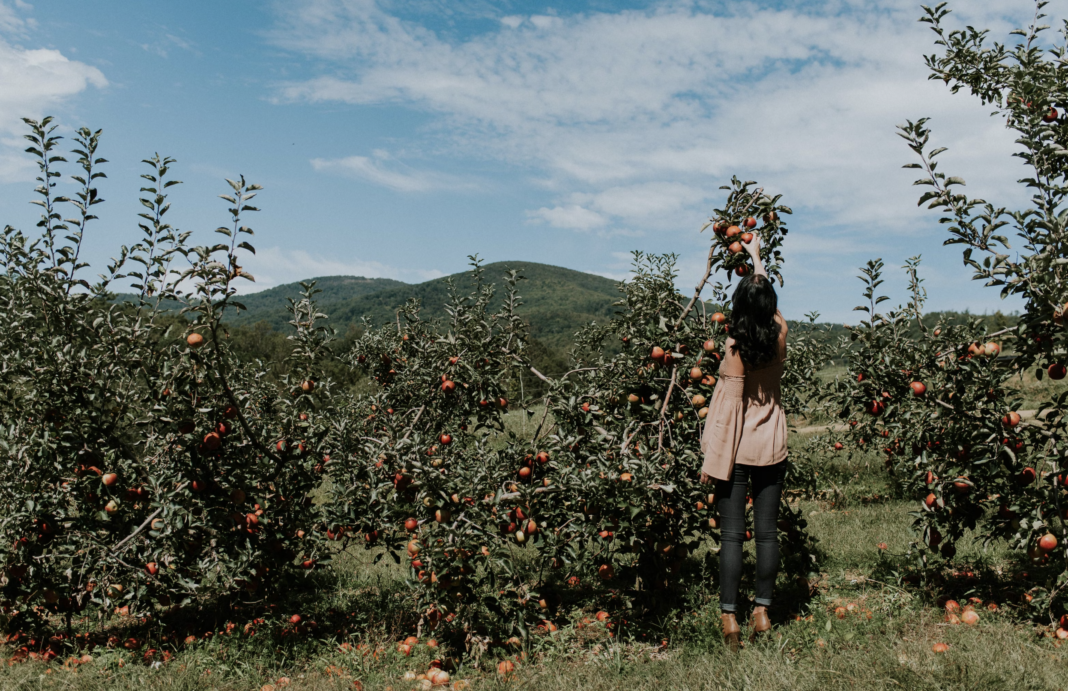

Known for their habitual restraint, the Germans rarely resort to hyperbole. Thus, when Germany’s Agricultural Minister, Cem Özdemir, recently remarked that “the climate crisis increasingly turns our harvests into a game of chance,” he wasn’t being melodramatic. Indeed, Özdemir’s assertion is corroborated by Germany’s recently released harvest data; the year witnessed a series of weather extremes, causing marked variations across regions and production sectors.
The report highlighted several factors that made the harvest unpredictable, such as an unusually mild winter in 2022, a spring that began wet and concluded dry, and an arid summer that turned wet just in time to disrupt the harvesting of key crops.
It’s evident that future-proofing the agriculture sector in Germany—and in Europe at large—is an essential and pressing challenge. In Germany, this year’s overall grain yield was 4% below the multi-year average; the harvest was particularly disappointing in the centre and the northeast of the country.
Winter wheat, a primary grain crop, had a yield 3% below the usual. In response to the disappointing results, Özdemir made a compelling observation, stating, “Delaying climate protection and adaptation efforts doesn’t serve German agriculture’s best interests.” This sentiment was mirrored by Joachim Rukweid, President of the German Farmers Association, who noted the palpable impacts of climate change.

While there’s broad European consensus acknowledging that climate change is dealing a devastating blow to the continent’s agriculture, the European Union’s strategy to ‘future-proof’ against looming challenges remains ambiguous.
Legislation in limbo
Concrete policies from the European Commission might be slow in coming, especially given how contentious many agricultural. For a hint at their pace, consider another Commission objective with major impacts on the continent’s agricultural sector: the introduction of front-of-pack (FOP) nutritional labels. The harmonisation of these labels across the bloc, initially planned for 2022, has already been delayed—unsurprisingly, given how divisive the issue has proven, with deep disagreements emerging between member states.
Particular controversy has sprung up over one label in particular, the French initiative Nutri-Score. Once considered the frontrunner for a harmonized FOP label, Nutri-Score’s fortunes have fallen in recent months as its fundamental shortcomings have become evident.
Despite being a relatively new system, Nutri-Score’s algorithm is already on its umpteenth iteration in an apparent attempt to patch a hole on a sinking ship, after countless accusations that the algorithm by which Nutri-Score classifies foods lacks scientific rigour. Simple on paper—Nutri-Score classifies foods from a green A to a red E depending on their apparent nutritional value—some of Nutri-Score’s classifications appear completely irrational and the label has even been banned by the Italian Competition Authority, which dubbed it “misleading” and found that it could cause consumers to eat unhealthy amounts of certain foods.
Agricultural producers across Europe, meanwhile, are up in arms over the controversial label. They argue that the algorithm behind Nutri-Score, while in theory attempting to provide a holistic view of a product’s nutritional value, often fails to capture the nuances and complexities of traditional European foods. For instance, certain high-fat but nutritionally dense products, like olive oil, may receive a less favourable rating than some processed foods with added sugars and low nutritional content, simply due to their fat content. This can negatively impact the image of traditional and regional specialties that have been part of European diets for centuries. Moreover, producers believe the system could inadvertently encourage consumers to prioritize products with better scores over traditional, wholesome foods, thereby affecting sales and potentially eroding cultural food heritage.
A dangerous labelling obsession?


The Nutri-Score debate is just one example of controversy springing up in the agri-food sector over what seems to be an ever-increasing stable of food labels. Nutri-Score’s home country of France has also concocted the “Eco-Score”, a label intended to describe the environmental impact of food products—supposedly taking into account the entire life cycle of the foodstuff, from its production, to its processing, to its packaging and the logistics of getting it to consumers. Under the Eco-Score system, foods are given scores out of 100—and then, depending on these scores, are put on a green A to red E scale very similar to Nutri-Score.
Like Nutri-Score, however, Eco-Score’s algorithm has come under fire, and the label has been particularly criticized by the organic farming sector. Jan Plagge, head of Europe’s major organic food and farming trade association, IFOAM, has argued that the system could increase customer confusion. “Instead of fighting greenwashing,” Plagge posited, “labelling schemes like the Eco-Score contribute to it. They potentially misled consumers about the organic or non-organic nature of the food products on which they are displayed, and favour products from intensive agriculture”. IFOAM has even brought legal action before Paris courts to try and block the Eco-Score system, claiming that it is “unfair to organic production and deceptive for consumers”.
Genuine progress on future-proofing goes beyond labels
The challenges faced by Europe’s agricultural sector due to erratic weather patterns underscore the urgent need for comprehensive strategies to future-proof the industry. However, the current focus on food labelling (it’s also on mattresses and all sorts of eco products), as evidenced by the controversies surrounding labels such as Nutri-Score and Eco-Score, suggests a diversion from the core issue. While labels can play a role in informing consumers, they should be scientifically rigorous, transparent, and not mislead or oversimplify complex nutritional and environmental factors.

Europe’s agricultural resilience hinges not just on labels, but on holistic policies that address the multifaceted impacts of climate change. It’s imperative to preserve cultural food heritage and ensure sustainable practices across the entire food production chain. As Europe grapples with the tangible effects of climate change on its harvests, it’s crucial that the continent’s strategies prioritize genuine, long-term solutions over superficial measures. The emphasis should be on fostering a resilient and sustainable agricultural sector that can withstand the challenges of the future.