
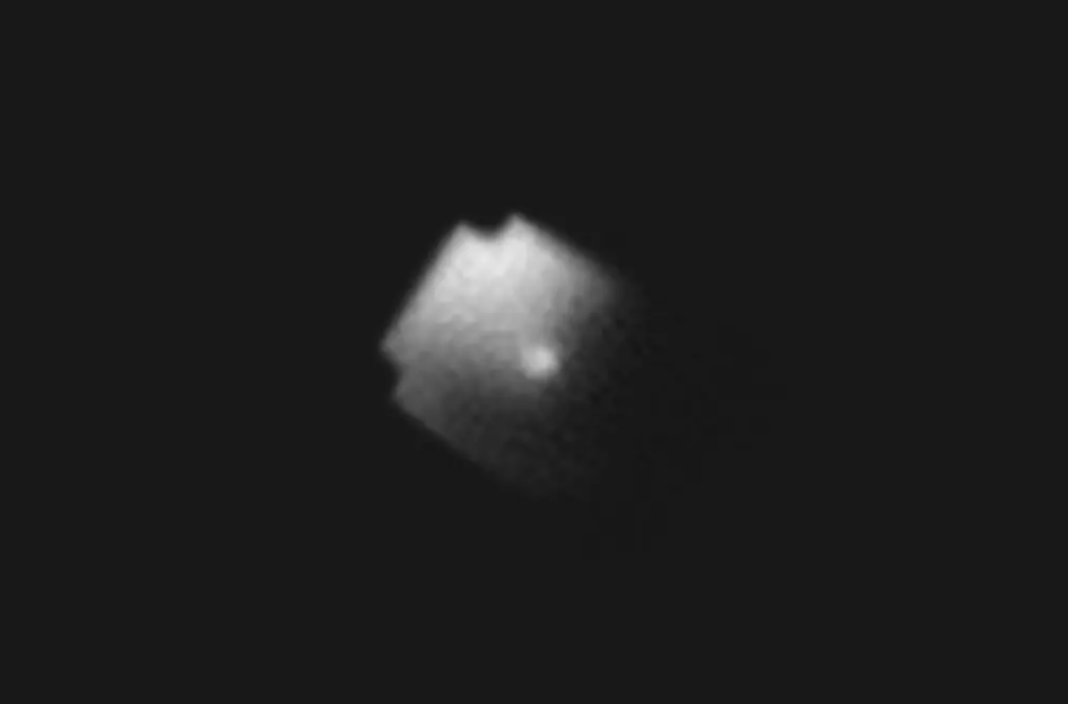

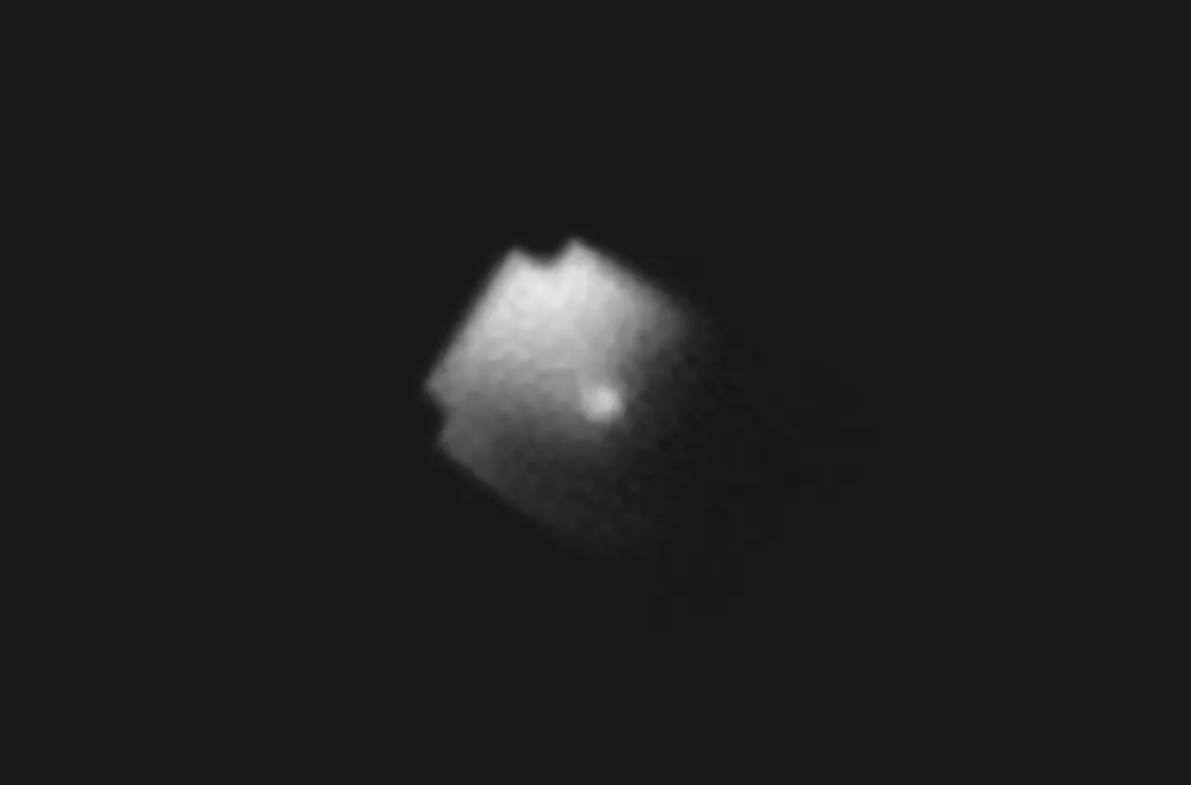
Astronomers are worried about the launch of the latest satellite to Earth’s orbit, the Bluewalker 3. The new satellite which unfolded in Low Earth Orbit in November, measures about 700 square feet in size, about the same size as a studio apartment in New York City. The satellite is meant to be used for cellular communication, but the amount of light pollution it emits makes it harder for astronomers to see the night sky. At its peak BlueWalker 3, which looks like a Tetris block flying across the sky, is as bright as two of brightest stars we can see with our eyes.
Bluewalker’s bright light is about the same stars Procyon and Achernar, two of the brightest stars in the night sky. And this satellite is just the first of dozens of constellations of satellites planned for Low Earth Orbit.
“After BlueWalker 3 unfolded its 64m2 array it is visible in both dark sky and urban skies, though in urban settings, this will be limited to when Bluewalker 3 passes overhead,” said Jeremy Tregloan-Reed, a co-author in the new study from the Universidad de Atacama in Chile.

But the appearance of the satellite is a growing concern as satellite groups like Elon Musk’s Starlink eject thousands of light-polluting satellites to our skies, all of which become space junk at the end of their days. Astronomers are outlining the problem of Bluewalker 3 as a wake up call as more and more companies like Starlink race to cover the world in high speed internet – even if Starlink can help Iranian dissidents.
Other companies, such as Amazon and OneWeb, have similar ambitions to launch satellites in space, and many countries are developing their own private communications constellations. Astronomers are very worried.
Watch the video of Bluewalker 3 below captured by astromers
A ground telescope tracks the BlueWalker 3 satellite in orbit on April 3, 2023. Dimmer Starlink satellites are also visible. Credit Marco Langbroek/Delft Technical University
“Large constellations of bright artificial satellites in low Earth orbit (LEO) pose significant challenges to ground-based astronomy,” the study’s authors write in the journal Nature.
Tregloan-Reed explains, among other problems, a large reflective brightness interferes with space telescopes like Hubble. When a satellite crosses the detector of a telescope, it often leaves a streak of light that can be difficult to remove.
Observations by the Hubble telescope have been affected by Starlink streaks because the telescope was in a LEO, sitting below that of the Starlink constellation.
While the researchers acknowledge that efforts are being made by the aerospace industry, policymakers, astronomers and others to mitigate the impact of such satellites, “the trend towards the launch of increasingly larger and brighter satellites continues to grow,” they write.
It’s sort of like asking the petroleum industry to regulate the use of fossil fuels.
BlueWalker 3, built by AST SpaceMobile, is a predecessor to a planned constellation of satellites nicknamed BlueBirds. AST SpaceMobile plans to make cellular broadband connections available to people who are currently without –– a solution that could help alleviate poverty or save lives in remote locations.
AST SpaceMobile BlueWalker 3’s array is so large, they say, so they can beam strong cellular coverage directly to phones on Earth. The satellite is comprised of small antennas which connect to existing smartphones. This is different than Starlink which requires a ground antenna or dish.
AST SpaceMobile has agreements and understandings with mobile network operators globally that have over 1.8 billion existing subscribers, including a mutual exclusivity with Vodafone in 24 countries. Interconnecting with AST SpaceMobile’s planned network including Vodafone Group, Rakuten Mobile, AT&T, Bell Canada, MTN Group, Orange, Telefonica, Etisalat, Indosat Ooredoo Hutchison, Smart Communications, Globe Telecom, Millicom, Smartfren, Telecom Argentina, Telstra, Africell, Liberty Latin America and others, the ability to offer extended cellular broadband coverage to their customers who live, work and travel in areas with poor or non-existent cell coverage, with the goal of eliminating dead zones with cellular broadband from space.
“We want to close coverage gaps in our markets, particularly in territories where terrain makes it extremely challenging to reach with a traditional ground-based network. Our partnership with AST SpaceMobile – connecting satellite directly to conventional mobile devices – will help in our efforts to close the digital divide,” said Luke Ibbetson, Head of Group R&D, Vodafone and an AST SpaceMobile director.
AST SpaceMobile issued a statement that the company is working on anti-reflective materials for the next generation of satellites and they they will avoid broadcasting in the US National Radio Quiet Zone. But the frequency sound waves they use are close to those used by astronomers today making interference an issue with ongoing and future studies.
The latest research on Bluewalker 3 was done by amateur and professional astronomers from Chile, the US, Mexico, New Zealand,Netherlands and Morocco.
Indigenous groups and the astronomy community are now invested in protecting the night skies: “We shouldn’t have progress at any cost,” Tregloan-Reed said. “It’s like building a brand-new development over a historical site. You can’t just do that. You have to protect these things.”
While astronomers don’t own the night sky they don’t want to see it taken by the highest bidder in the name of progress: “What we’d like to do is share the night sky and get the public to understand that this is a potential issue,” he said.


