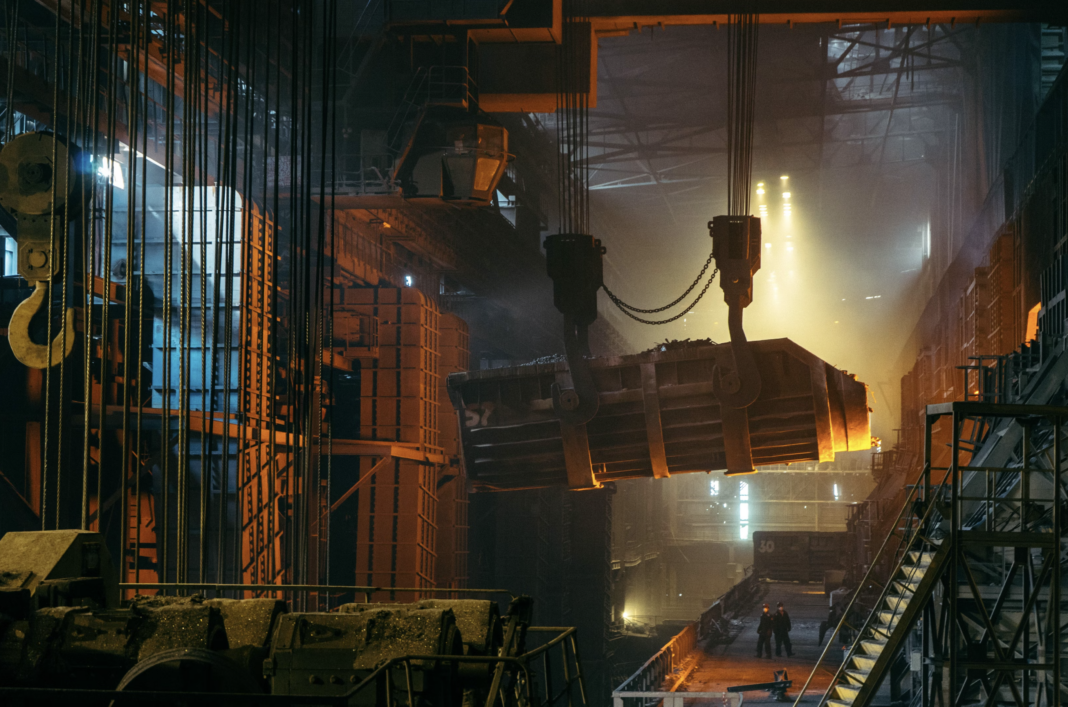
Upgrading China’s steel plants could save the world years of carbon emissions

Think about the business opportunities for engineers who can build retrofit solutions. Time for impact investors to start creating incentives for new technologies.

Upgrading, or retrofitting, the world’s iron and steel processing plants early could reduce carbon emissions by up to 70 gigatonnes by 2050, roughly equivalent to two years’ worth of net global carbon emissions, according to a new study led by UCL researchers.

Published in the journal Nature, the researchers found that by upgrading the world’s iron and steel production facilities, carbon emissions can be reduced by 58.7 gigatonnes between 2020 and 2050, roughly equivalent to two years’ worth of net global carbon emissions. In addition, they found that by bumping forward emissions reduction retrofits five years ahead of when they would be typically scheduled, it would reduce emissions by 69.6 gigatonnes over that time frame. Iron and steel production contributes about 7% to total global carbon emissions.

To develop this schedule, the team created a comprehensive database of 19,678 individual processing units located in 4,883 individual iron and steel plants around the world, inventoried by their technical characteristics, including their locations, processing technologies, operating details, status and age.

Iron and steel production is a carbon emissions heavy process. The researchers found that as of 2019, the last year that data is available, 74.5% of the world’s steel was produced in coal powered plants that release considerable carbon emissions. Technologies exist to reduce these admissions, but upgrades are expensive and time consuming and so are usually only undertaken at the end of a processing unit’s operational lifetime.

Refining is also hard on the equipment, and the individual processing units within each plant need to be retrofitted periodically to prolong their operational lifetimes. Overall, 43.2% of global iron and steel plants have been retrofitted with new technologies or have otherwise enhanced their processes to extend their operating lifetime. The frequency of their retrofits depends on the technique they employ and how old they are, but typically they occur after 15 to 27 years of use.

The researchers found that if all currently operating processing units were upgraded to incorporate low-emissions technology at their predicted time of their refit, total emissions from the iron and steel sector could be reduced by 58.7 gigatonnes between 2020 and 2050, but if all the refits and upgrades were bumped forward and completed five years early, the total carbon savings would be 16% greater at 69.6 gigatonnes.

But the team also emphasises that mitigation efforts will have to take place at the individual facility level, and that the decarbonisation of the entire iron and steel industry depends on the efforts undertaken by every single plant. Because of the complexity and variety of methods involved in steel production around the world, there’s no one-size-fits-all decarbonisation technology or solution for the entire sector, and each processing unit should be upgraded individually according to its technical specification.

Dabo Guan
Dabo Guan

Senior author Professor Dabo Guan from the UCL Bartlett School of Sustainable Construction said: “Our results lend vivid background to the possibility of achieving net-zero carbon emissions in iron and steel production in the future. By retrofitting existing plants with low-carbon technologies, and improving scrap collecting and recycling, the iron and steel sector can dramatically reduce its carbon emissions. This study sheds light on the specific emissions reductions that are possible within the iron and steel industry.”

About 63% of the world’s steel production is from some type of blast oxygen furnace, while most of the remaining capacity is produced by electric arc furnaces. Upgrading the global inventory of blast oxygen furnaces will yield the greatest net carbon savings, about 74% of the total projected carbon savings. Upgrades to electric arc furnaces would account for the second highest net carbon savings, at about 16% of the projected whole, though this may be limited by the total amount of stock scrap available worldwide as the technique is dependent on recycling existing metals.

The researchers hope that this data can be used to identify improved ways to update ageing steel plants with emission reduction technologies in order to reach net-zero carbon emissions more quickly. Compiling this publicly available global database of iron and steel plants and tracking all their ages and technologies has significantly improved the detail of data around the carbon emission of global iron and steel production.

The researchers emphasise that because of the wide range of production methods and plant designs, the particulars of individual upgrades and mitigation effort of each processing unit will have to be done on an individual basis. Their research will help policymakers create a roadmap of when and how to upgrade iron and steel plants to meet emissions reduction targets.

The top five carbon emitting iron and steel plants contribute 7% of the total CO2 emissions from the global iron and steel industry but only make up 0.1% of the total 4,883 plants.

They are:

  1. Anshan Iron & Steel (China)
  2. Posco – Pohang Iron & Steel (South Korea)
  3. Shanghai Baosteel (China)
  4. Jiangsu Shagang (China)
  5. Maanshan Iron & Steel Group (China).

The researchers say that retrofitting these plants to lower their carbon emissions would demonstrate the feasibility for other, similar plants. The research was led by UCL and conducted in collaboration with Tsinghua University, Peking University and King’s College London.

Karin Kloosterman
Karin Kloostermanhttp://www.greenprophet.com
Karin Kloosterman is an award-winning journalist, innovation strategist, and founder of Green Prophet, one of the Middle East’s pioneering sustainability platforms. She has ranked in the Top 10 of Verizon innovation competitions, participated in NASA-linked challenges, and spoken worldwide on climate, food security, and future resilience. With an IoT technology patent, features in Canada’s National Post, and leadership inside teams building next-generation agricultural and planetary systems — including Mars-farming concepts — Karin operates at the intersection of storytelling, science, and systems change. She doesn’t report on the future – she helps design it. Reach out directly to [email protected]

Hot this week

How Renewable Energy is Revolutionizing the Way We Power Our World

Solar has become the star of the transition thanks to modular hardware and straightforward installation. It fits dense cities and remote towns alike. Many companies are turning to rooftop arrays and carport systems - and exploring commercial solar installation as a practical way to lock in future savings.

How does one start prepping?

Faced with an extreme winter storm this year, Americans wonder how to be prepared for catastrophe. Miriam has lived through wars in the Middle East - so she's prepared on giving you a guide to prepping.

Fishermen sue tire manufacturers on behalf of the salmon

A federal trial in San Francisco has brought US tire manufacturers, fishing groups, and environmental scientists into court over a chemical most drivers have never heard of — but which scientists say may be silently reshaping aquatic ecosystems.

Listening to Water: Tarek Atoui’s Next Work for Tate Modern

Born in Beirut, Lebanon in 1980 and now living in Paris, Atoui has spent years building instruments that don’t sit comfortably in concert halls. Many of them involve water, glass, and ceramics — materials that react to sound instead of simply producing it.

Leading Through a Dual-Energy Transition: Balancing Decarbonisation with Energy Security

Experience in one area of the energy industry isn't enough to guarantee readiness across all the others. That's where a structured program like an MBA in energy can come in. Today's advanced curricula explore energy economics, finance, policy, and strategic management alongside the technical subjects. And when pursuing an energy MBA online, professionals can skill up and retrain without having to step out of the labor market -- an important perk at a time when skilled professionals are already in short supply.

Topics

How Renewable Energy is Revolutionizing the Way We Power Our World

Solar has become the star of the transition thanks to modular hardware and straightforward installation. It fits dense cities and remote towns alike. Many companies are turning to rooftop arrays and carport systems - and exploring commercial solar installation as a practical way to lock in future savings.

How does one start prepping?

Faced with an extreme winter storm this year, Americans wonder how to be prepared for catastrophe. Miriam has lived through wars in the Middle East - so she's prepared on giving you a guide to prepping.

Fishermen sue tire manufacturers on behalf of the salmon

A federal trial in San Francisco has brought US tire manufacturers, fishing groups, and environmental scientists into court over a chemical most drivers have never heard of — but which scientists say may be silently reshaping aquatic ecosystems.

Listening to Water: Tarek Atoui’s Next Work for Tate Modern

Born in Beirut, Lebanon in 1980 and now living in Paris, Atoui has spent years building instruments that don’t sit comfortably in concert halls. Many of them involve water, glass, and ceramics — materials that react to sound instead of simply producing it.

Leading Through a Dual-Energy Transition: Balancing Decarbonisation with Energy Security

Experience in one area of the energy industry isn't enough to guarantee readiness across all the others. That's where a structured program like an MBA in energy can come in. Today's advanced curricula explore energy economics, finance, policy, and strategic management alongside the technical subjects. And when pursuing an energy MBA online, professionals can skill up and retrain without having to step out of the labor market -- an important perk at a time when skilled professionals are already in short supply.

From Green Energy to Healthy Societies: Why old systems thinking is becoming relevant again

Across the Middle East and North Africa, large investments are being made in green hydrogen, renewable energy, water infrastructure and sustainability. Most of these efforts are discussed in the context of climate change, decarbonization and economic diversification. That framing is important, but it may not capture their full value.

We saw peace – an interreligious encounter deep in our eyes

They came from Israel, Palestine, Jordan, Iraq, Yemen, Morocco, Tunisia, Lebanon, Egypt… There are Sunni Muslims, Shiite Muslims, Jews (Orthodox and Reform), Orthodox Christians, Coptic Christians, Protestant Christians, Druze, Baha'is, a Scientologist.

Can biochar reduce ‘Forever Chemicals’ in food if it’s used in farms?

Biochar is produced by heating organic material in a low-oxygen environment so it does not burn. This process, known as pyrolysis, transforms plant matter into a stable, carbon-rich material.

Related Articles

Popular Categories