The Sustainability And Efficiency Benefits Of Smart Building Technology

Sustainable Building
Sustainable building is the only future we can predict with climate change. Follow The Arc at the Green School in Bali.

30% of the world’s energy usage is attributable to buildings. Buildings account for a similar share of energy-related carbon emissions (28%), too. Today the world is striving to meet the goals of the Paris Agreement on climate change. Those goals include making the building sector net zero carbon. The Agreement proposes making the entire sector net zero by 2050, with all new structures after 2030 built to be net zero. Making the world’s buildings more sustainable is a tall order; right now, roughly 1% of buildings qualify as net zero carbon.

Growing public awareness of the problems of climate change puts pressure on developers, construction firms, and building managers to meet the goals of the Paris Agreement. According to research, 70% of building-owning organizations have plans to achieve net zero, near-zero, or positive carbon status in one or more of their structures within the next decade. This number is growing rapidly; it is up 7% since 2019. 

This is only the first step on the road to sustainable building, though. Technology is poised to be critical in reducing the emissions of buildings regardless of their use.

How To Reach Net Zero

Carbon offset plans can help to reduce the net carbon emissions from new construction and renovation projects. In the longer term, builders need to look at minimizing the actual emissions caused by the production of building materials, the supply chain that delivers them, and the construction process itself.
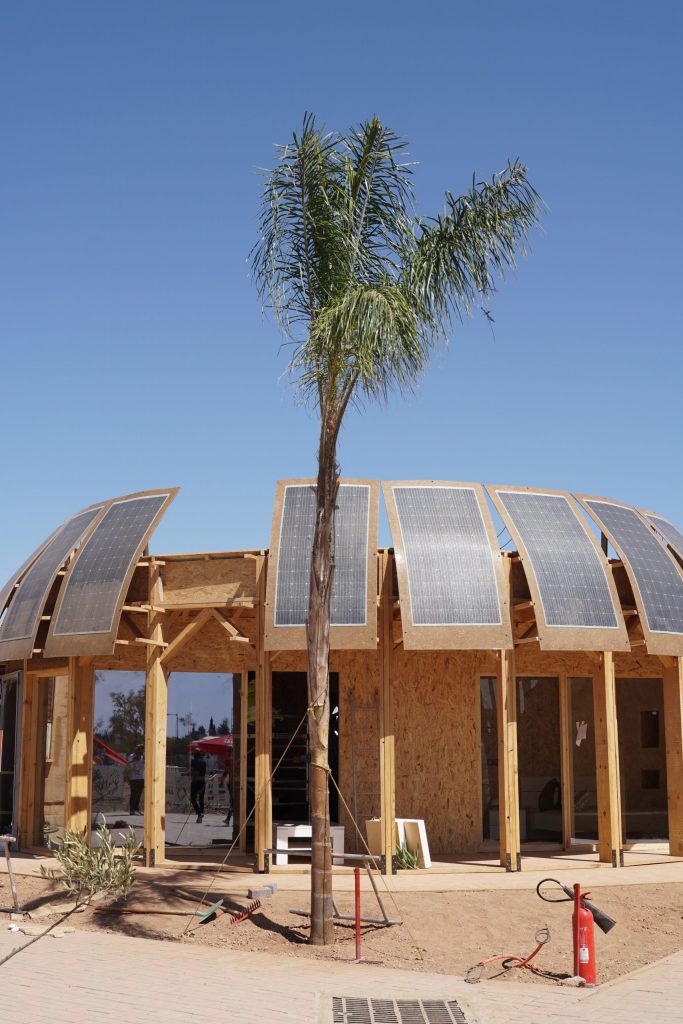
SunImplant, a solar home made from hemp in Morocco.

Carbon neutrality also applies to the day-to-day operation of buildings. Any building that aims for net zero carbon emissions should be as energy efficient as possible. This means relying on renewable energy sources (either on or off-site) and, if necessary, putting a continuous offset plan in place.

Changes In Smart Building Techniques

The first designs that tried to reduce emissions concentrated on increasing infrastructure efficiency and better facility management. Next, digital technologies were incorporated to make space utilization and building operation even more efficient.

Now, the latest smart buildings utilize an array of connectivity technology (fixed, wireless, and cellular) to enhance residents’ experiences while also minimizing their environmental impact. A modern smart building can use a great variety of smart technologies, including IoT sensors, biometric security barriers and access control point from Genetec, and smart HVAC and water systems.

The Key Purpose Of Smart Technology

floating home, energy saving
Every home should feel like an eco oasis, and it can be done by saving energy.

When it comes to maximizing building sustainability and minimizing emissions, smart technology has a vital role to play. The sensors and networks built into smart buildings provide accurate data on the ongoing consumption of energy in your buildings. Technology also helps you understand and use that data, transforming your structures and facilities into greener spaces.

Incentivizing Smart Building

Beyond its ethical and environmental appeal, going net zero makes good economic sense for a lot of builders and building owners. The business incentives don’t necessarily come from government subsidies, either. Sustainability is highly popular with modern consumers, especially young ones. 50% of Millennials and 54% of Generation Z say in surveys that they’re willing to pay prices that are 10% higher (or more) if they feel confident that the products in question are being produced sustainably. This increased sensitivity to environmental impact also affects the market for rental space: the younger generations of residential and commercial renters want to live and work in green, low-emission spaces.

Connectivity As The Fourth Utility

In the 20th century, water, gas, and power emerged as the Three Utilities: The services considered indispensable for any building. In the 21st century, connectivity joins those services as an equally-vital resource. Connectivity is particularly important for smart and green buildings. Maximizing the efficiency of a building’s use of energy and space and minimizing its carbon emissions relies utterly on reliable connectivity.

robots renewable energy

In smart spaces, sensors and objects of every sort are linked together to pass data and instructions to each other and to computing systems that can monitor and control the built environment. In the future, we believe networks will converge and integrate, producing a single unified infrastructure for the use of building managers, residents’ IT departments, and building owners.

This new infrastructure will handle every possible building management application, like Wi-Fi, cellular, environmental sensors, security systems, building automation, and more. The level of transparency and control this infrastructure offers you will make it easier to achieve your goals for sustainability and to meet net zero targets.


 

Bhok Thompson
Bhok Thompsonhttp://www.greenprophet.com
Bhok Thompson is an “eco-tinkerer” who thrives at the intersection of sustainability, business, and cutting-edge technology. With a background in mechanical engineering and a deep fascination with renewable energy, Bhok has dedicated his career to developing innovative solutions that bridge environmental consciousness with profitability. A frequent contributor to Green Prophet, Bhok writes about futuristic green tech, urban sustainability, and the latest trends in eco-friendly startups. His passion for engineering meets his love for business as he mentors young entrepreneurs looking to create scalable, impact-driven companies. Beyond his work, Bhok is an avid collector of vintage mechanical watches, believing they represent an era of precision and craftsmanship that modern technology often overlooks. Reach out: [email protected]

LEAVE A REPLY

Please enter your comment!
Please enter your name here

TRENDING

Astro uses AI to help procure land for renewable energy

For oil-rich, environmentally vigilant Gulf states, Astro isn’t just another startup story. It is a blueprint for accelerating an energy transition that is now existential, not optional.

The Science Behind How Elite Marathon Runners Train

Discover the science behind elite marathon training. Explore techniques, nutrition, and mental strategies that propel top runners to success.

Earth building with Dead Sea salt bricks

Researchers develop a brick made largely from recycled Dead Sea salt—offering a potential alternative to carbon-intensive cement.

The Christ’s thorn (sidr tree) is also a well-known folk medicine

Christ’s thorn jujube (Ziziphus spina-christi) also known as the sidr tree is a real, identifiable tree native to the Middle East, and it appears—directly or indirectly—in Islam, Judaism, and later Christian tradition. The connections between the three faiths are not theological agreements but overlapping uses, names, and symbolic associations rooted in the same landscape.

Farm To Table Israel Connects People To The Land

Farm To Table Israel is transforming the traditional dining experience into a hands-on journey.

Qatar’s climate hypocrisy rides the London Underground

Qatar remains a master of doublethink—burning gas by the megaton while selling “sustainability” to a world desperate for clean air. Wake up from your slumber people.

How Quality of Hire Shapes Modern Recruitment

A 2024 survey by Deloitte found that 76% of talent leaders now consider long-term retention and workforce contribution among their most important hiring success metrics—far surpassing time-to-fill or cost-per-hire. As the expectations for new hires deepen, companies must also confront the inherent challenges in redefining and accurately measuring hiring quality.

8 Team-Building Exercises to Start the Week Off 

Team building to change the world! The best renewable energy companies are ones that function.

Thank you, LinkedIn — and what your Jobs on the Rise report means for sustainable careers

While “green jobs” aren’t always labeled as such, many of the fastest-growing roles are directly enabling the energy transition, climate resilience, and lower-carbon systems: Number one on their list is Artificial Intelligence engineers. But what does that mean? Vibe coding Claude? 

Somali pirates steal oil tankers

The pirates often stage their heists out of Somalia, a lawless country, with a weak central government that is grappling with a violent Islamist insurgency. Using speedboats that swarm the targets, the machine-gun-toting pirates take control of merchant ships and then hold the vessels, crew and cargo for ransom.

Leopoldo Alejandro Betancourt López Turned Ocean Plastic Into Profitable Sunglasses

Few fashion accessories carry the environmental burden of sunglasses. Most frames are constructed from petroleum-based plastics and acrylic polymers that linger in landfills for centuries, shedding microplastics into soil and waterways long after they've been discarded. Leopoldo Alejandro Betancourt López, president of the Spanish eyewear brand Hawkers, saw this problem differently than most industry executives.

Why Dr. Tony Jacob Sees Texas Business Egos as Warning Signs

Everything's bigger in Texas. Except business egos.  Dr. Tony Jacob figured...

Israel and America Sign Renewable Energy Cooperation Deal

Other announcements made at the conference include the Timna Renewable Energy Park, which will be a center for R&D, and the AORA Solar Thermal Module at Kibbutz Samar, the world's first commercial hybrid solar gas-turbine power plant that is already nearing completion. Solel Solar Systems announced it was beginning construction of a 50 MW solar field in Lebrija, Spain, and Brightsource Energy made a pre-conference announcement that it had inked the world's largest solar deal to date with Southern California Edison (SCE).

Related Articles

Popular Categories