
It’s a dream come true for zoologists and environmentalists: researchers around the world have discovered that a number of worms, larval forms of insects to be more precise, are expert plastic eaters and the clue is in their spit.
Give millions of larvae something to chew on and we solve our plastic crisis at the dump? Jump to the bottom of this story to try your own plastic-eating worm experiments at home.
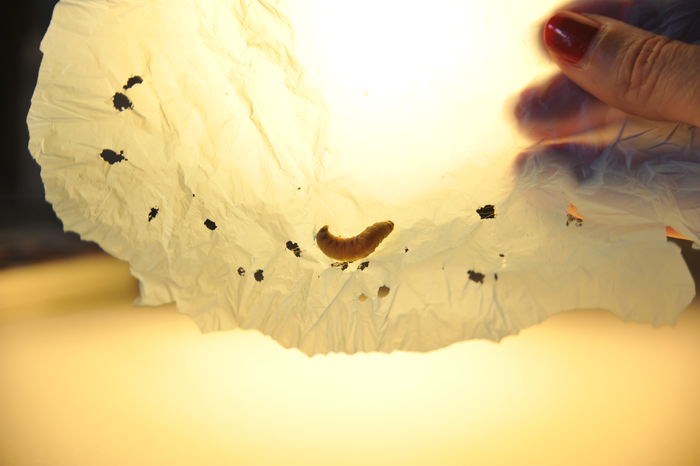
Spanish scientists reported back in 2017 that wax worms, larvae of a moth that eats bee wax, can eat plastic and now their research shows just how: through worm saliva. This is excellent direction for recycling plastic waste before it breaks up into tiny bits and enters our waterways and lungs.
A team of CSIC researchers discovered that this worm species from the moth family (the lepidopteran Galleria mellonella) is able to break down pstic (polyethylene). Its saliva contains enzymes that can rapidly set off polyethylene degradation at room temperature.
10 examples of polyethylene plastic
- milk cartons
- disposable cutlery
- packing materials
- CD cases
- detergent bottles
- cereal box liners
- toys
- buckets
- park benches
- rigid pipes
These enzymes are the first and only known enzymes capable of degrading polyethylene plastic without requiring pre-treatment, according to Federica Bertocchini, the lead CSIC researcher at the CIB-CSIC (Centre for Biological Research) who led the study in Spain. The results of the work appears in the BioRxiv online archive. Researchers at SUNY Plattsburgh, in New York, have also found wax worms eat plastic.
“For plastic to degrade, oxygen must penetrate the polymer (the plastic molecule). This is the first step in oxidation, which is usually a result of exposure to sunlight or high temperatures, and represents a bottleneck that slows down the degradation of plastics like polyethylene, one of the most resistant polymers,” explains Bertocchini. “That is why, under normal environmental conditions, plastic takes months or even years to degrade,” she adds.
“Now we have found out that enzymes in the wax worm’s saliva perform this crucial step: they oxidise the plastic. This means they can overcome the bottleneck in the plastic degradation process and accelerate its decomposition,” she adds.
The next step is for scientists to recreate this enzyme chemically, a form of biomimicry.
Polyethylene is one of the toughest and most widely used plastics. Together with polypropylene and polystyrene, it makes up 70% of total plastic production. Plastic pollution poses a threat to the planet’s health and environment, so it is urgent to find solutions to tackle the plastic waste problem.
To date, only a handful of microorganisms, including a beetle larva, are known to break down the tough plastic polymers forming polyethylene. What is more, in most cases, aggressive pre-treatment is needed to guarantee oxidation and thus enable the micro-organisms to exert some slow effect on the plastic.
What are waxworms?
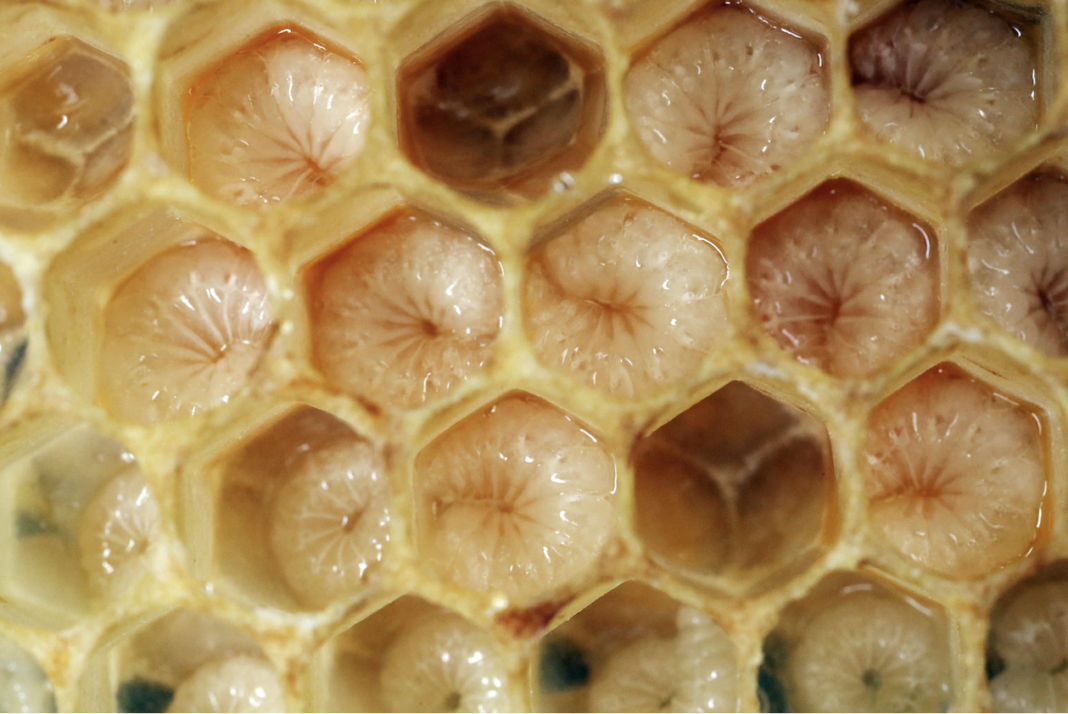
Waxworms are the caterpillar larvae of wax moths, which belong to the family Pyralidae also known as snout moths. As adults they are sometimes called “bee moths”.
“In our lab, we discovered the insect that seems to be the fastest of all: the larvae of the lepidopteran Galleria mellonella, commonly known as the wax worm,” says Bertocchini. “These larvae are able to oxidise and break down the polymers in the plastic really quickly,” after just one hour’s exposure, she explains.
“In recent years, efforts have been made to find out how these insects manage to do this. Numerous studies have focused on the microorganisms inhabiting the digestive system of these worms, based on the assumption that the worms can use plastic as food and that its degradation would be the result of their metabolic activity and digestive processes,” remarks the researcher. “But this assumption is highly questionable so, from the start, our research has focused on the worm’s oral cavity,” she explains.
Race to isolate insect salvia protein
The Spanish researchers have analysed the saliva using electron microscopy and observed a high protein content. “We have isolated two enzymes from the saliva that can reproduce the oxidation produced by the saliva as a whole,” explains the researcher. These two proteins, called Demetra and Ceres, belong to the family of phenol oxidase enzymes.
“We found that the Demetra enzyme had a significant effect on polyethylene, leaving marks (small craters) on the surface of the plastic, visible to the naked eye; this effect was also confirmed by the appearance of degradation products formed after exposure of the polyethylene to this enzyme.
The Ceres enzyme oxidises the polymer too, but does not leave visible marks, suggesting that the two enzymes have a different effect on polyethylene,” she sums up.
How phenol oxidase enzymes work
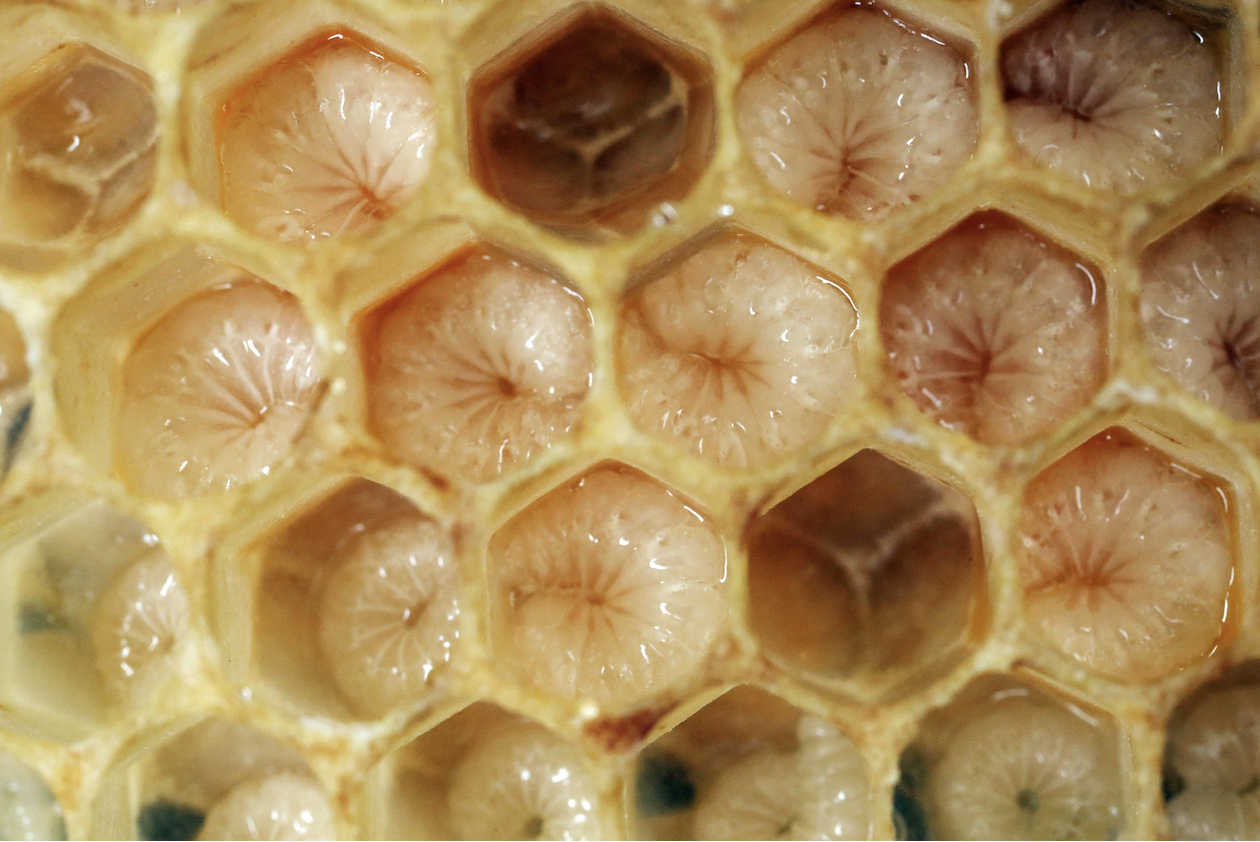
An even more interesting question is how wax worms have acquired this ability. Researchers speculate that it could be due to an evolutionary process. “Wax worms feed on hive wax and pollen from a wide variety of plant species. Considering that hive wax is full of phenols, this type of enzyme would be very useful to these bugs. Indirectly, this would explain why wax worms can break down polyethylene. However, so far this theory is only speculation and we must carry out more research combining insect biology with biotechnology.
Superworms eat plastic too

While the Spanish team continue their research and publish papers, a team in Queensland, Australia is looking at a beetle larvae’s ability to eat plastic.
Scientists at the University of Queensland found that the larvae of darkling beetles, Zophobas morio eat plastic and the enzymes seem to be located in their stomachs, or gut.
Chris Rinke, who led the study said that he had heard that tiny waxworms and mealworms (also a beetle larvae) were good at eating plastic so he wanted to test a hypothesis that larger superworms, bred for reptile and bird food, and for humans to eat in Thailand and Mexico, could eat even more plastic. can eat even more.”
Superworms can grow up to 2 inches grow up to two inches (five centimeters) and are bred as a food source for reptiles and birds, or even for humans in countries such as Thailand and Mexico.
Rinke and his team fed superworms different diets over a three week period, with some given polystyrene foam, commonly known as styrofoam, some bran, and others not fed at all.
“We confirmed that superworms can survive on a sole polystyrene diet, and even gain a small amount of weight – compared to a starvation control group – which suggests that the worms can gain energy from eating polystyrene,” he said.
In 2019, a study at Stanford in the United States, confirmed mealworms, a beetle larva, can eat plastic.
“This is definitely not what we expected to see,” lead author Anja Malawi Brandon, a PhD candidate at Stanford at the time said: “It’s amazing that mealworms can eat a chemical additive without it building up in their body over time. “This suggests the worms can derive energy from the polystyrene, most likely with the help of their gut microbes.”
What worms are confirmed to eat plastic?
- Waxworms, a moth larvae, Spain
- Superworms, a beetle larvae, Queensland, Australia
- Mealworms, a beetle larvae, Stanford Study
Try your own plastic eating superworm experiment at home
Do they eat plastic?

- Buy live superworms at Petsmart.
- Place them in screen-covered Ball jars
- Set up pilots as below
- Weigh worms, frass (worm poop), and plastics until moths emerge
- Share your findings in the comments section below
Pilot 1: Conditions: 5 worms per jar under 2 light regiments (darkness, natural light).
Plastics: water bottle (Polyethylene teraphthalate (PET)), soda bottle (PET colored), PVC tubing (Poly(Diallyl phthalate (PDAP))), bottle caps (Ethylene/Vinyl Acetate(EVAC)), and projector sheet (Hydroxypropyl methyl cellulose).
Pilot 2: Conditions: 5 worms per jar under 2 light regimes (natural, UV light).
Plastics: grocery bag (polyethylene, high density(HDPE(1))), produce bag (HDPE(2)), Ramen package (polypropylene, isotactic), bottle caps (EVAC), green mesh (HDPE(3)), and chocolate mold (polystyrene(PS)). Controls: 5 worms per jar, under all 3 light conditions (darkness, natural and UV light), with NO plastics.
Pilot 3: Conditions: 10 worms per ball jar, under most favorable light regimes (natural and UV light)
Plastics: grocery bag (HDPE(1)), Ramen package (PP), produce bag (HDPE(2)), and bottle caps (EVAC).
Pilot 4: best conditions, highest performing plastics
Conditions: 10 worms, under UV light conditions. Plastic: produce bag (HDPE(1)) Replication: 3 replicates, one control worm jar (no plastics).
(Above experiment idea via SUNY)