
UN climate conference forgets faith, women and youth, say MENA groups

cop 27

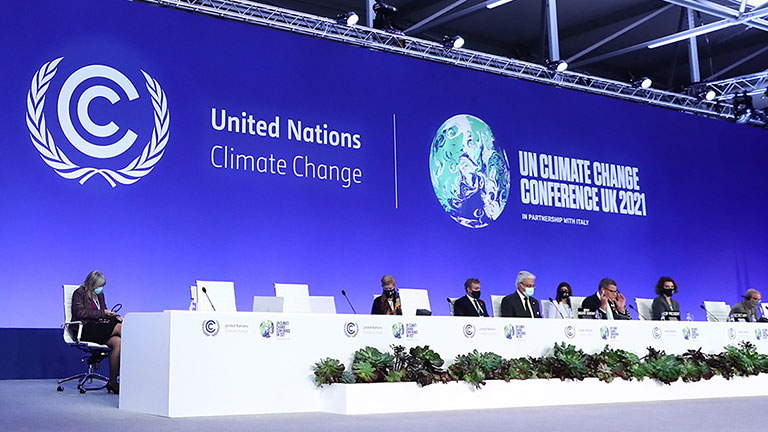
The UN’s climate change conference, with the worst names, COP27, will happen in Egypt this year.  

The Middle East region holds its own climate platforms via the UN (recently the MENA climate week in Dubai), not that most industries like oil and gas are listening, but did want to send a message to the UN’s mother event about to take place:

“If countries are to achieve effective climate action at a global level, COP27 and COP28 climate negotiations must include the most vulnerable communities across faiths, like women and youth,” said an announcement put together by a number of local groups.

Organised by ACT Alliance and Ummah For Earth, the side event “Multi-sectoral, multi-stakeholder engagement for effective climate action” was held on 30th of March 2022 at Atlantis Hotel – Palm Dubai. Speakers included Tarek Al Olaimi (ally of Ummah for Earth), Ines Belliard (Global One), Dani El Obeid (ACT Alliance, Lebanese University), and Devar Sher (ACT Alliance), and was facilitated by Julius Mbatia (ACT Alliance). 

The event provided the opportunity for Muslim and Christian faith actors to reflect on possible solutions and pathways to strengthen multi-sectoral and multi-stakeholder engagement for effective climate planning and action. It also helped to identify the gaps to be filled in order to enhance multi-stakeholder and multi-sectoral approach, including the lack of youth, gender and faith inclusion in climate policy and decision making.

“Climate change represents one of the most urgent global challenges we are facing today. In order to tackle its impact, there is a need for a whole economic and governmental approach that contributes to low carbon, climate resilient and sustainable economies in MENA.

“Youth and faith actors need to be brought to the decision table every day, in order to include them in sectoral planning, prioritisation, and policy frameworks,” said Tarek Al Olaimi, from Ummah for Earth and somehow connected to Greenpeace as he offers a Greenpeace email for correspondence. (Email him: [email protected])

Muslims climate change
The year before, Ummah announced what Muslims want for the earth

We need to take a step back and take a snapshot of the MENA countries, specifically where armed conflict remains a living hell. We can’t expect conflict-affected communities to be aware of the climate hazards. The MS-MS approach must have the people’s awareness at the heart of its activities and making everyone understand what a crucial role we have to fix the climate crisis,” said Devar Sher of ACT Alliance.

The speakers highlighted the need for better coordination in order to achieve an overall transformation of societies at economic and governmental levels. They focused on the role of faith communities in terms of filling the gaps between different sectors, organising and responding to specific needs in planning and action.

Noticeably missing from MENA or Middle East North Africa events are members from Israel, and the Jewish faith, visibly very entrepreneurial in the renewable energy sector and for the Middle East, but also conveniently left by Muslim-majority countries. 

Karin Kloosterman
Karin Kloostermanhttp://www.greenprophet.com
Karin Kloosterman is an award-winning journalist, innovation strategist, and founder of Green Prophet, one of the Middle East’s pioneering sustainability platforms. She has ranked in the Top 10 of Verizon innovation competitions, participated in NASA-linked challenges, and spoken worldwide on climate, food security, and future resilience. With an IoT technology patent, features in Canada’s National Post, and leadership inside teams building next-generation agricultural and planetary systems — including Mars-farming concepts — Karin operates at the intersection of storytelling, science, and systems change. She doesn’t report on the future – she helps design it. Reach out directly to [email protected]

Read More

TRENDING

The Hidden Components Powering the Renewable Energy Revolution

A rooftop solar system looks simple: panels, an inverter, a battery and a few cables. But beneath that simplicity lies a bill of materials thousands of lines long, where tiny current sensors, magnetic cores, gate drivers, capacitors and connectors quietly determine efficiency, safety and lifespan. These overlooked components—not the solar panels themselves—are why today's residential solar systems are smaller, smarter and far more reliable than those of a decade ago.

Teen Farmerettes were Canada’s answer to Victory Gardens during wartime food shortages

It is a wake-up call to teen girls on TikTok planning their next Coachella outfit or trip to Sephora: During the Second World War, thousands of young men left family farms to enlist, but the crops still needed planting and harvesting. Ontario's government answered by recruiting high school girls, from ages 16 to 18, to spend parts of spring, summer and fall to fill in for the labor shortage. 

The Early Believers: Investors Who Backed SpaceX Long Before Its Record IPO

SpaceX’s 2026 IPO didn’t just mint billionaires—it revealed the many forms of conviction behind one of the most doubted bets in venture history.

From eco city experiment to global clean energy giant: How Masdar became the UAE’s renewable energy powerhouse

Masdar began as an ambitious eco city in the Abu Dhabi desert. Two decades later, it has become one of the world's largest renewable energy developers, financing billions of dollars in solar, wind and battery storage projects across the globe.

Is the manosphere selling a testosterone crisis? Pentagon’s new “Low T” policy sparks debate

The Pentagon's decision to introduce annual testosterone testing for U.S. military personnel over 30 has sparked debate among doctors and public health experts. Researchers warn that social media influencers are turning normal signs of ageing into a "Low T" crisis, encouraging unnecessary hormone testing and supplementation while blurring the line between evidence-based medicine and marketing.

The Essential Guide To Sustainability in Project Management

Sustainability is an approach where businesses and individuals balance the environmental, social, and economic aspects of a project such that current and future stakeholders are not overburdened with the impacts of the project in future.

Yerukim Forms a New Green Economy Where the Money is Really Green

The Yerukim members who pick up the recyclables get to keep the monetary reward, the public earns "green" bills that can be used in shops, and business owners get to be associated with environmentalism.

Choosing Riyadh over Dubai? What Investors Should Know

Saudi Arabia is deploying capital at unmatched scale to catalyze tourism and advanced industry while rewiring its power-and-water backbone. The investable frontier is widening—especially in renewables, grid storage, water efficiency/desal retrofits, and hospitality operating platforms. Prudent investors will insist on phased delivery, enforceable KPIs (energy, water, biodiversity), and RHQ/zone compliance—while pricing political-economy and reputational risks alongside growth upside.

Sell your cooking oil for biodiesel money

Want to make money on old french fry oil? Sell it.

Qatar Alternative Energy Summit Pairs Investors And Innovators

Alternative energy investors and innovators can meet n' greet in Doha, Qatar March 16 and 17.

Here’s How To Implement The Four Pillars Of Employee Engagement

If you throw a party for your work team and they are vegans, don't make it a barbecue. Know the sustainability values of your team to boost moral and retain good people.

Locals From Rishon Fight IKEA

Big Box stores are a pretty new concept in Israel, and thank God that not every Israeli city wants them in their backyard. A word from someone who has see the beautiful farmland around her hometown Newmarket, Ontario stripped and converted into vulgar strip malls of big box shops: they have no place in a healthy and sustainable town or city.

The Jewish National Fund Meets An Inconvenient Truth

According to the JNF, it has transformed thousands of acres of barren land into green forests in Israel. They state that each person emits about 23 tons of carbon per year, estimating that each tree planted can absorb one ton of carbon in its lifetime. That's a whole lot of trees you'd need to be planting. Could so many fit in Israel?

Popular Categories