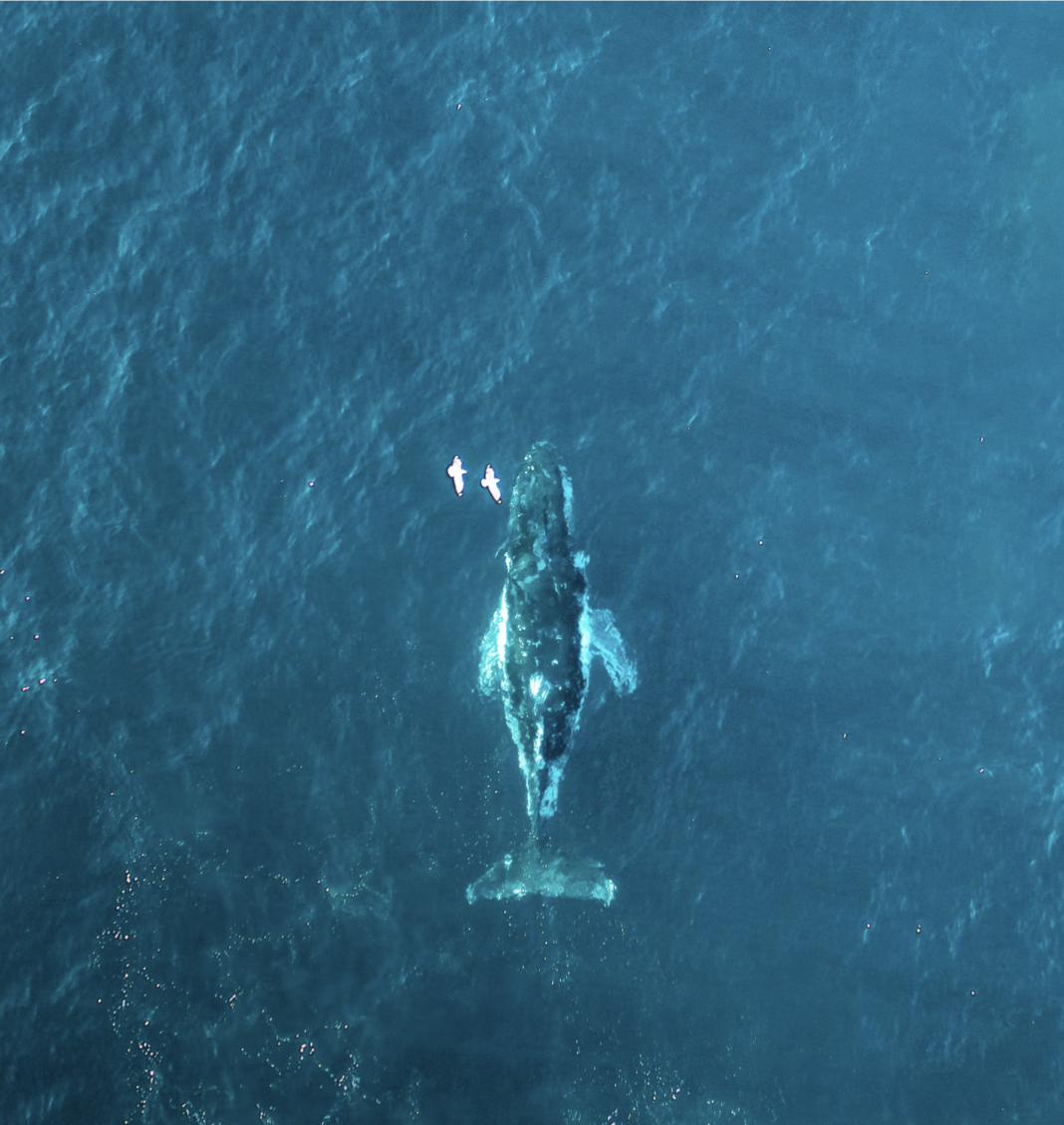

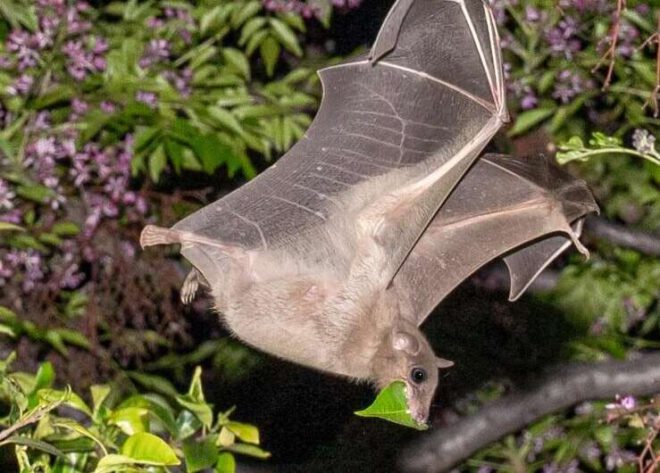
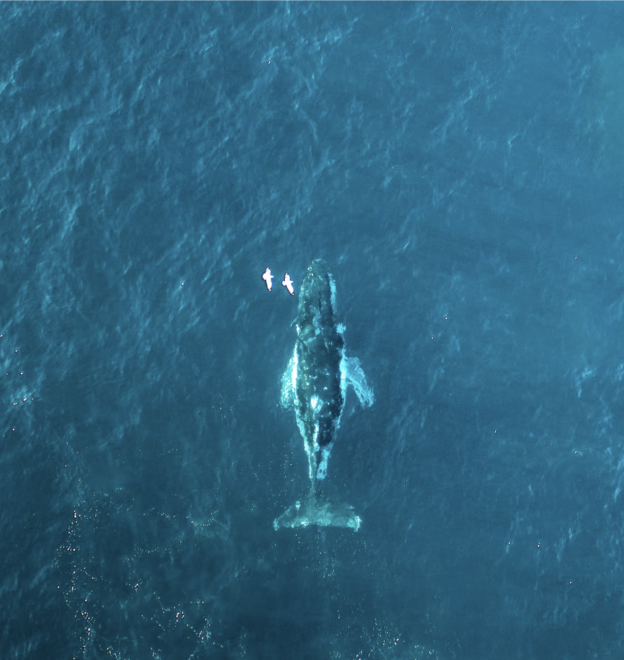
Movement is ubiquitous across the natural world. Whales and bats may navigate with the stars and the magnetic poles. And with light – though artificial city lights are messing up wildlife. All organisms move, actively or passively, regularly or during specific life stages, to meet energy, survival, reproductive and social demands. Movement affects a variety of ecological processes and the ability of individuals to cope with human-induced, rapid environmental changes.
Professor Ran Nathan of the Hebrew University of Jerusalem, and colleagues around the world, reviewed a variety of technologies that have been used to gather information on the movements of mammals, birds, fish, and other wildlife in their natural environments.

Over the past decade, technological advances have transformed the field of movement ecology – the integrated study of organismal movement – from a data-poor to a data-rich discipline.
In a review published in the prestigious journal Science, Nathan and his colleagues assessed the main tools, insights, challenges and opportunities of the big-data revolution in movement ecology. So if you are looking to save the planet this is how you might apply your engineering degree or MBA into something good for the planet.
Wildlife tracking technologies vary in how they tackle the basic trade-offs between data collection rate, spatial coverage, tracking duration and the size of tracked animals.
Look at reverse GPS
Among eight major tracking technologies examined in this study, a technology called “reverse-GPS” stood out in its exceptional capacity to produce big data on animal movement in a cost-effective manner. For background, see our 2011 story on bats getting wired with GPS.
Other tracking technologies, such as GPS devices, computer vision systems and radars, can also produce big data, and the researchers recommended viewing all major tracking technologies as complementary rather than competing alternatives.
A new reverse-GPS system called ATLAS developed by Nathan and Professor Sivan Toledo of Tel Aviv University and their teams, at the Minerva Center for Movement Ecology. It proved unparalleled in creating a rich database of wild animal movement by simultaneously tracking many dozens of wild animals with great accuracy (a few meters) at a high resolution (every second) and over a relatively long time period (months) using small, inexpensive radio tags attached to the animal.
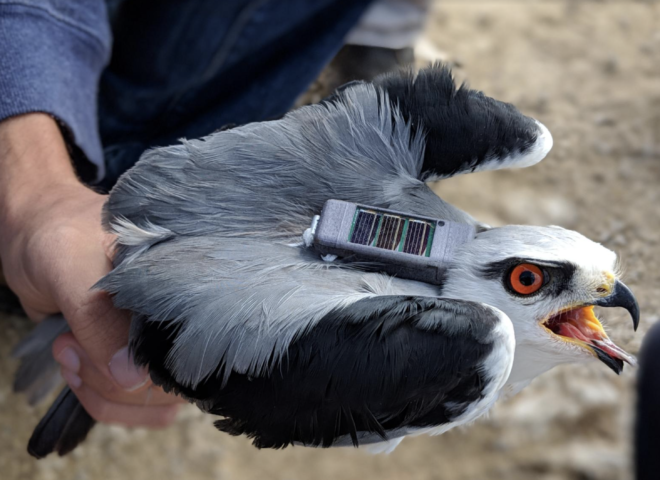
The system has been installed in Israel, UK, the Netherlands, Germany and elsewhere around the world, allowing researchers to tackle basic movement ecology questions that were out of reach until today.
“This sophisticated tracking system has ushered in a range of exciting discoveries and novel insights,” says Nathan. “including the first evidence for the existence of a cognitive map in a wild animal (a fruit bat), a pioneering study linking variation among individual birds (pheasants) in their cognitive ability and space-use patterns, and a discovery of a notable spatial segregation in foraging areas among bats that roost in two adjacent colonies, owing to an individual’s memory and information transfer among bats, with surprisingly no evidence for competition as a driving force,” Nathan added.
GPS for water-borne wildlife
Another reverse-GPS system known as “acoustic telemetry” uses acoustic tags to track fish and other aquatic animals under water. Various systems of this kind were installed in rivers, lakes and seas around the world, yielding new scientific insights and important guidelines for dealing with human-inflicted risks for wildlife.
For example, by using an acoustic tracking system in European rivers, researchers found that downstream-migrating eels–a critically endangered species– and Atlantic salmons change their behavior upon encountering dams, likely increasing their energy expenditure and mortality risk.
Another important tracking technology is GPS, which has been widely used to globally track relatively large animals and can periodically track animals at high resolution to uncover the factors generating variation in animal behavior and to assist biodiversity conservation and ecosystem management. For example, GPS tracking allowed Nathan and his students to reveal that young vultures from the declining population in Israel climb rising-air columns (thermals) much less efficiently than do experienced adult vultures when those thermals are drifted by winds. Elsewhere, GPS tracking of critically endangered California condors can provide early alerts to avoid collision with wind turbines in the area, while GPS tracking of albatrosses can help locate illegal fishing vessels across vast oceans.
Pioneering movement ecology
In another example too recent to be included in the review, GPS tracking provided unique information about the avian flu epidemic that led to the death of thousands of cranes in Israel earlier during this winter.
Nathan explains: “At the first sign of death among a few dozen cranes, a much greater proportion of our GPS-tagged cranes died or were suspected to be infected given the sudden reduction in their movement and activity. We informed the authorities that a drastic mortality event is coming, as unfortunately did happen, and that urgent measures should be taken. Later, the team was able to trace the fate of infected birds and found that some had eventually recovered. We now closely watch the data from cranes that winter in Africa to monitor the possible second wave of the outbreak when millions of migrating birds will soon arrive,” Nathan emphasized.
Movement ecology is rapidly expanding scientific frontiers, providing improved opportunities for conservation and insights into wild animal movements through large interdisciplinary and collaborative frameworks.