
Africa’s Great Green Wall (GGW) programme to combat desertification in the Sahel region is not only crucial to the battle against climate change but also makes commercial sense for investors, a new study led by the Food and Agriculture Organization of the United Nations (FAO) and published in Nature Sustainability shows. The lead author is from Bonn, Germany.
For every US dollar put into the massive effort to halt land degradation across the African continent from Senegal in the west to Djibouti in the east, investors can expect an average return of USD 1.2, with outcomes ranging between USD 1.1 and USD 4.4, the analysis finds.
Imagine if such a project extends to North African regions of Tunisia and Libya and then makes its way to water-starved regions like Yemen and Syrian in the east?

“We need to change the rhetoric about the Sahel region,” to reflect the fact that despite its harsh and dry environment, “investors can get a viable return on their investment in efforts to restore the land,” says Moctar Sacande, from the FAO.

But the study results might just be UN rhetoric as well to justify their means. According to Politico Only 4% of the Great Green Wall’s original goal has been met, and an estimated $43 billion would be needed to achieve the rest.
If you read below Jeff Bezos has contributed a billion, but we’d need a few dozen more billionaires to realize the grand dream. Planting trees in Africa is one thing, but what happens when temperatures not accounted for rises and it doesn’t rain and millions of trees die?
Teachings for the Middle East on desert agriculture?
“The project that doesn’t involve the community is doomed to failure,” Diegane Ndiaye told Politico. He is part of a group known as SOS Sahel, which has helped with planting programs in Senegal and other countries across the Sahel, a broad geographic zone between the Sahara in the north and the more temperate African savanna to the south. His data might fine-tune what the UN is not seeing.
How to grow trees on sandy soils in the Sahel:
But a US diplomat visiting the region also told Politico that there wasn’t initially much hope that it would succeed from the outset, yet progress is seen:
Jonathan Pershing, deputy special envoy for climate at the US State Department, visited Senegal as part of an Africa trip last month, saying the US wants to partner with African nations to fight climate change.
“The desert is encroaching. You see it really moving south,” Pershing said.
Investing for longer term goals
In terms of the Great Green Wall project, he told Politico, “I don’t think that very many people thought it was going to go very far. But there are indications of progress, as seen in the community projects.
“It has a global benefit, and people are prepared to make those kinds of long-term investments through their children and their families, which I think is a hallmark of what we need to do in other climate arenas.”
The UN analysis uses field and satellite data to track the land degradation over the period 2001 to 2018 and then compares the costs and benefits of restoring the land based on different scenarios adapted to the local contexts.
The results provide the final piece of economic transparency in a jigsaw, with the political will and technical know-how already in place and should encourage the private sector, which is showing increased interest, Sacande says.

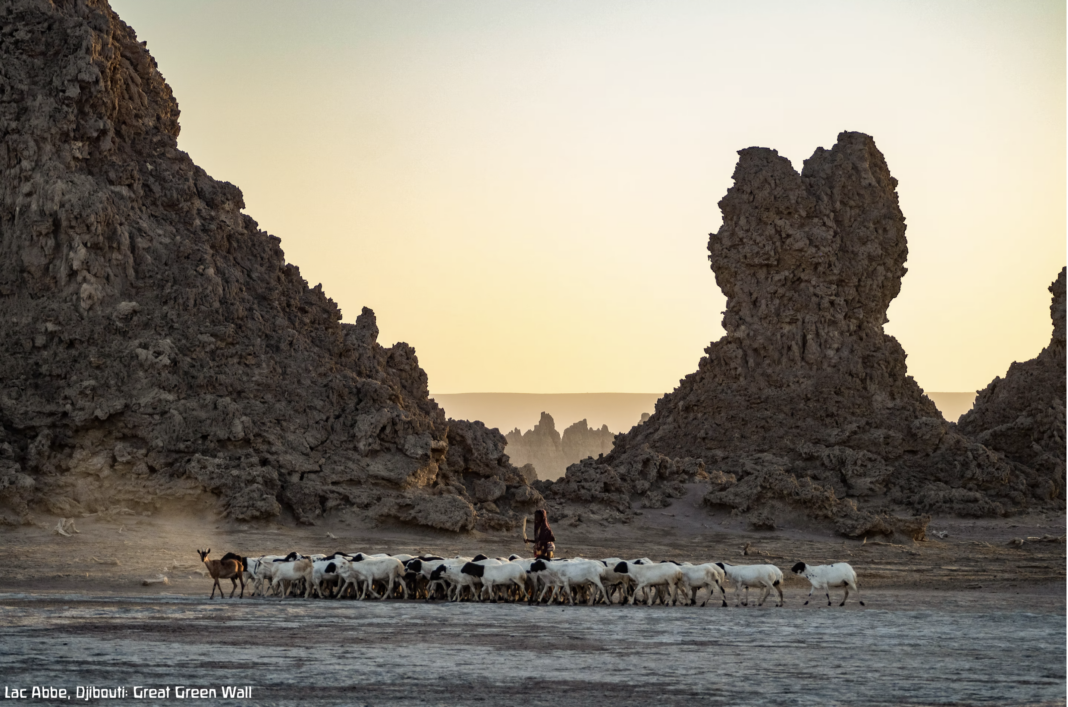
The greening and land restoration along this belt stretching 8,000 km across the continent is already underway. Communities are planting resilient and hardy tree species such as the Acacia senegal, providing gum arabic, widely used as an emulsifier in food and drinks and the Gao tree or Faidherbia albida, which helps to fertilise soil for the cultivation of such staples as millet, and for animal fodder.
With technical support from the UN, more than 500 communities have seen improved food security and income generation opportunities. The total area the GGW programme encompasses remains limited, with only 4 million hectares out of a targeted 100 million, according to the study.
Jeff Bezos pledges a billion USD
A total of some 20 billion USD dollars has been pledged internationally to support the scaling up of the Great Green Wall programme, including USD 14.3 billion at a One Planet summit for biodiversity held in Paris in January this year and USD 1 billion from Amazon founder Jeff Bezos at the just-concluded COP26 climate conference.
Concrete details of how these funds can be accessed are yet to be clearly mapped out, Sacande says, adding that unless some of the funding is delivered urgently, it could be too late for planting to catch the limited rainfall expected in June and July.

With its potential for carbon sequestration and restoring biodiversity and its emphasis on the socio-economic benefits to the impoverished communities inhabiting the region, the GGW straddles the key areas of climate mitigation, adaptation and resilience.
The Green Wall also addresses UN Sustainable Development Goals on hunger, climate, life on land, and more.
The armed conflicts pervading the region have long made some wary about its potential. And the study finds that about 50 percent of the land area involved is currently inaccessible for security reasons. But even taking this into account, land restoration interventions still represent a viable business proposition, the authors report.