
How Did Horses Become a Means of Transportation?

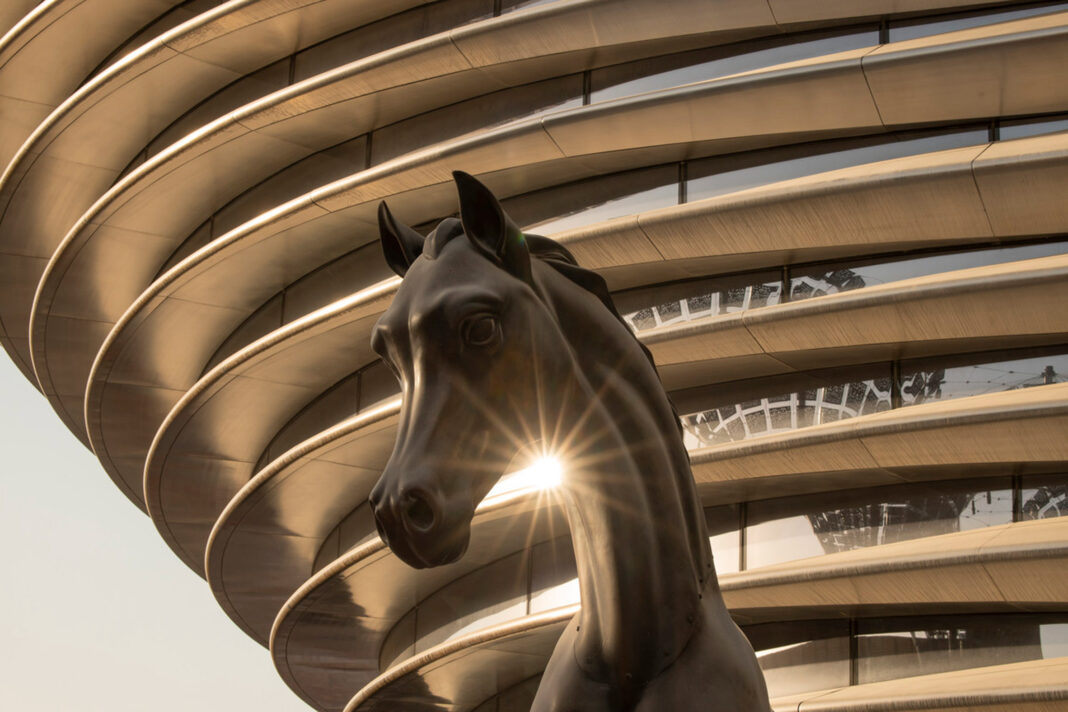
wild horse Dubai expo

Horses have been living alongside humans for thousands of years, with the earliest signs of them coming in Paleolithic cave art drawings. 

At what point did we start looking at them as a mean of transportations and for carrying out other activities?

The Early History of Humans and Horses

At first, wild horses roamed around parts of Eurasia. However, they were largely seen as sources of food and were hunted by humans. There is no clear moment in history that we can point to as when these animals were domesticated. It is likely that different cultures gradually domesticated horses in varying ways, meaning that there is no single date when this happened.

One period that stands out is around 2000 BCE, which is when we can see the first evidence of horses being used to pull chariots during burials. It seems likely that the domestication process had begun long before this. One of the reasons it is so difficult to place a date on it is that all current wild horses are actually descendants of domesticated horses that escaped at some point.

The Eurasian Steppes region is typically mentioned as being the place where this transition from wild animal to domestic animal helped probably occurred. The Botai people are often looked upon as being the first culture to train and use horses, possibly 5,000 years ago, although it has been impossible to confirm this to date.

The Uses for Domesticated Horses 

At first, keeping them as farm animals for easy access to their meat was an obvious use for domesticated horses. Yet, it probably didn’t take people too long to understand that these fast, powerful beasts could be used for tasks ranging from farm work to pulling chariots.

One of the major uses of these animals was in warfare. In fact, it is safe to say that the ability of humans to use horses in battle and to carry supplies changed the course of warfare over the centuries.  

Their use as a means of transportation was likely to have been discovered by humans very easily. Strong, fast, and reliable, for many centuries they offered us the speediest and safest way of getting from one place to another, with a minimum of fuss and relatively little maintenance needed.

These animals were our best method of transportation throughout antiquity, when European explorers travelled to the Americas, and right up until deep into the Industrial Revolution. It was only in the early 20th century that motorized vehicles including automobiles like the Ford Mobile T saw horses finally replaced as our main way of getting around and moving heavy objects.

Other Uses for Horses

The value that humans place on horses can clearly be seen in the fact that they have been present in sporting events throughout history. It appears that we started using them for sport not long after domesticating them, as evidence can be seen of games being carried out in various parts of the world.

Horse racing has traditionally been a prestigious sport, leading to it being called the sport of kings. Some sources state that the first races probably took place in Central Asia around 4500 BCE, when nomadic tribes would arrange races. 

The Roman and Greek cultures also placed a huge amount of importance on horse-based events such as chariot races and horseback riding. 

As with the use of these animals as a means of transportation, their use in sports travelled across the globe and become firmly entrenched in just about every culture. 

Today, there are very few parts of the world where horses aren’t still a part of the culture, either for their working potential or in the form of sporting events like the Kentucky Derby, the Dubai World Cup, or sports like Buzkashi in Central Asia. In the USA, famous racetracks like Del Mar and Santa Anita Park became part of the country’s landmarks.

Nowadays, with the inclusion of other kinds of transports, like cars, trains and planes, horses became obsolete as means of transport, but they are still useful in small towns.

Technology will continue to give us new options for getting around more quickly. Yet, the timeless allure of horses should ensure that they remain an important part of our world for the foreseeable future.

Bhok Thompson
Bhok Thompsonhttp://www.greenprophet.com
Bhok Thompson is an “eco-tinkerer” who thrives at the intersection of sustainability, business, and cutting-edge technology. With a background in mechanical engineering and a deep fascination with renewable energy, Bhok has dedicated his career to developing innovative solutions that bridge environmental consciousness with profitability. A frequent contributor to Green Prophet, Bhok writes about futuristic green tech, urban sustainability, and the latest trends in eco-friendly startups. His passion for engineering meets his love for business as he mentors young entrepreneurs looking to create scalable, impact-driven companies. Beyond his work, Bhok is an avid collector of vintage mechanical watches, believing they represent an era of precision and craftsmanship that modern technology often overlooks. Reach out: [email protected]

TRENDING

Astro uses AI to help procure land for renewable energy

For oil-rich, environmentally vigilant Gulf states, Astro isn’t just another startup story. It is a blueprint for accelerating an energy transition that is now existential, not optional.

The Science Behind How Elite Marathon Runners Train

Discover the science behind elite marathon training. Explore techniques, nutrition, and mental strategies that propel top runners to success.

Earth building with Dead Sea salt bricks

Researchers develop a brick made largely from recycled Dead Sea salt—offering a potential alternative to carbon-intensive cement.

The Christ’s thorn (sidr tree) is also a well-known folk medicine

Christ’s thorn jujube (Ziziphus spina-christi) also known as the sidr tree is a real, identifiable tree native to the Middle East, and it appears—directly or indirectly—in Islam, Judaism, and later Christian tradition. The connections between the three faiths are not theological agreements but overlapping uses, names, and symbolic associations rooted in the same landscape.

Farm To Table Israel Connects People To The Land

Farm To Table Israel is transforming the traditional dining experience into a hands-on journey.

Qatar’s climate hypocrisy rides the London Underground

Qatar remains a master of doublethink—burning gas by the megaton while selling “sustainability” to a world desperate for clean air. Wake up from your slumber people.

How Quality of Hire Shapes Modern Recruitment

A 2024 survey by Deloitte found that 76% of talent leaders now consider long-term retention and workforce contribution among their most important hiring success metrics—far surpassing time-to-fill or cost-per-hire. As the expectations for new hires deepen, companies must also confront the inherent challenges in redefining and accurately measuring hiring quality.

8 Team-Building Exercises to Start the Week Off 

Team building to change the world! The best renewable energy companies are ones that function.

Thank you, LinkedIn — and what your Jobs on the Rise report means for sustainable careers

While “green jobs” aren’t always labeled as such, many of the fastest-growing roles are directly enabling the energy transition, climate resilience, and lower-carbon systems: Number one on their list is Artificial Intelligence engineers. But what does that mean? Vibe coding Claude? 

Somali pirates steal oil tankers

The pirates often stage their heists out of Somalia, a lawless country, with a weak central government that is grappling with a violent Islamist insurgency. Using speedboats that swarm the targets, the machine-gun-toting pirates take control of merchant ships and then hold the vessels, crew and cargo for ransom.

Leopoldo Alejandro Betancourt López Turned Ocean Plastic Into Profitable Sunglasses

Few fashion accessories carry the environmental burden of sunglasses. Most frames are constructed from petroleum-based plastics and acrylic polymers that linger in landfills for centuries, shedding microplastics into soil and waterways long after they've been discarded. Leopoldo Alejandro Betancourt López, president of the Spanish eyewear brand Hawkers, saw this problem differently than most industry executives.

Why Dr. Tony Jacob Sees Texas Business Egos as Warning Signs

Everything's bigger in Texas. Except business egos.  Dr. Tony Jacob figured...

Israel and America Sign Renewable Energy Cooperation Deal

Other announcements made at the conference include the Timna Renewable Energy Park, which will be a center for R&D, and the AORA Solar Thermal Module at Kibbutz Samar, the world's first commercial hybrid solar gas-turbine power plant that is already nearing completion. Solel Solar Systems announced it was beginning construction of a 50 MW solar field in Lebrija, Spain, and Brightsource Energy made a pre-conference announcement that it had inked the world's largest solar deal to date with Southern California Edison (SCE).

Related Articles

Popular Categories