
Do Wind Turbines Create Noise Pollution?

wind turbines

With Global Warming becoming a greater concern each year, countries around the world turn to renewable power sources. Scientists believe that using green and sustainable power could decrease the effects of climate change.

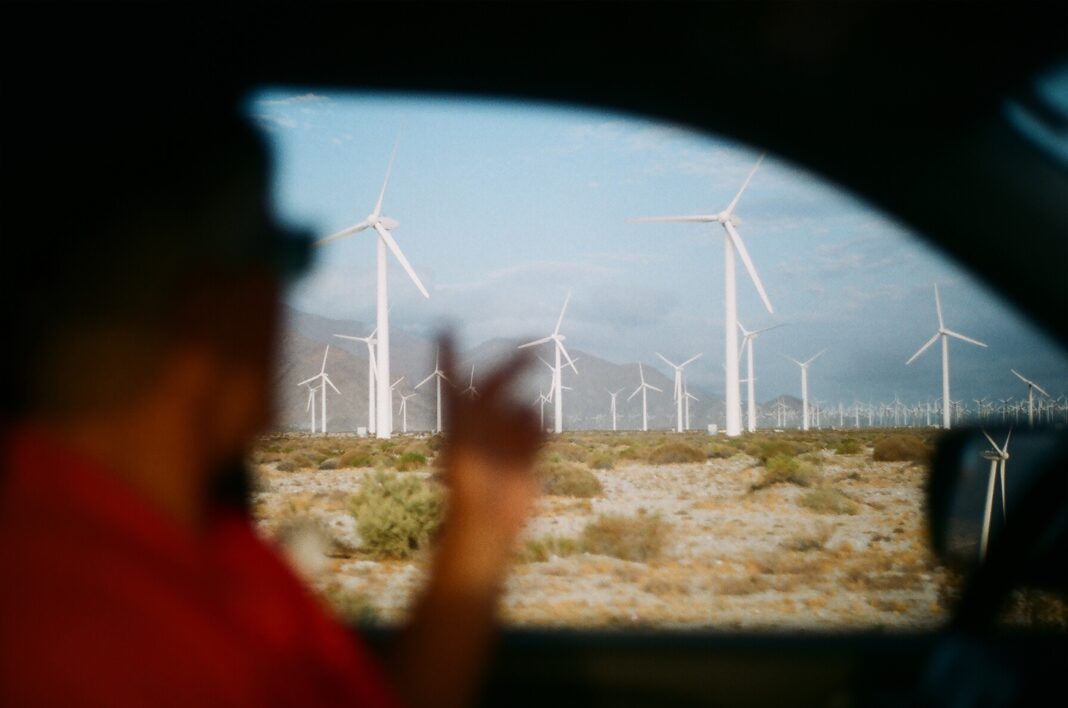
One alternate way of producing power is with the help of wind turbines. It’s popular, because it’s the most cost-effective renewable power source out there, and its operation creates no greenhouse gases, nor any pollution. But of course, wind power has some negative side effects.

One important side effect is noise pollution, as it could affect residents of nearby cities.

Noise pollution can cause physiological and psychological problems. In an office environment, for example, it can negatively affect productivity, concentration and can also increase stress. Many other factors can make a workplace difficult to work in, you can read more about surviving in such an environment.

But What is Noise Pollution and How Does a Wind Turbine Create it?

Noise pollution is any sound or noise that is louder than the usual background noise you hear. In case of wind turbines, it has two different kinds: mechanical and aerodynamical. Mechanical noise is created by the friction between two components of the machinery, and vibrations induced by the rotating components. The generator, fans, and hydraulic systems all contribute to it.

Aerodynamical noise is more complex and is the dominant source of noise from a turbine. It comes from the motion of the air around the blades. It’s proportional to the speed of the blades.

Wind turbine parks were also found to create infrasound. Infrasound or low-frequency sound is noise below the lower limit of audibility. Although humans can not hear it, it can still have a serious health effect. Studies conducted in the matter found that the infrasound produced is below the natural background infrasound, meaning it has no harmful consequences.

Let’s look at a few examples of noise pollution and how loud they are. A busy office environment is around 60 dB, a loud concert is 100 dB, a commercial airline flying above resident areas (near airports) is about 200 dB. A wind turbine produces approximately 100 dB of noise, and it drastically decreases as the distance increases.

250 meters away from the turbine, the noise is at 50 dB, but from 2 kilometers away it’s only about 20 dB. Depending on which way the wind is blowing, this noise rate can decrease by 10 dB.

Noise Reduction Strategies

In the case of mechanical noises, there are different ways to minimize unwanted vibrations. Vibration control is implemented in more and more new designs. They include the use of sound-isolating materials, insulation, and closing the holes in the nacelles which would decrease the sound transmitted to the air.

There are several adaptive noise reduction approaches for aerodynamic noise, including varying the speed of rotation of the blades. Since an increase in rotational speed will also lead to increased noise production, lowering the rotational speed will lead to decreased sound.

However, the rotational speed decrease reduces power output, and therefore should only be implemented within a certain range of wind velocities, since high winds also have the added benefit of masking the sound of the wind turbine with the sound of the wind itself.

The pitch angle of the wind turbine blades also has an important role in noise production. An increase in pitch angle will lead to a reduction in the angle of attack. If the pitch angle is reduced, a thinner boundary layer results on the suction side, which is considered the strongest source of noise production. 

The major drawback to this adaptive noise control method is the corresponding reduction of power output since the angle of attack is decreased. Despite the loss in power, the main advantage of wind turbines with optimized operating conditions is that the acoustically affected areas are much smaller, allowing more wind turbines to be built in a wind park.

Bhok Thompson
Bhok Thompsonhttp://www.greenprophet.com
Bhok Thompson is an “eco-tinkerer” who thrives at the intersection of sustainability, business, and cutting-edge technology. With a background in mechanical engineering and a deep fascination with renewable energy, Bhok has dedicated his career to developing innovative solutions that bridge environmental consciousness with profitability. A frequent contributor to Green Prophet, Bhok writes about futuristic green tech, urban sustainability, and the latest trends in eco-friendly startups. His passion for engineering meets his love for business as he mentors young entrepreneurs looking to create scalable, impact-driven companies. Beyond his work, Bhok is an avid collector of vintage mechanical watches, believing they represent an era of precision and craftsmanship that modern technology often overlooks. Reach out: [email protected]

Hot this week

How Renewable Energy is Revolutionizing the Way We Power Our World

Solar has become the star of the transition thanks to modular hardware and straightforward installation. It fits dense cities and remote towns alike. Many companies are turning to rooftop arrays and carport systems - and exploring commercial solar installation as a practical way to lock in future savings.

How does one start prepping?

Faced with an extreme winter storm this year, Americans wonder how to be prepared for catastrophe. Miriam has lived through wars in the Middle East - so she's prepared on giving you a guide to prepping.

Fishermen sue tire manufacturers on behalf of the salmon

A federal trial in San Francisco has brought US tire manufacturers, fishing groups, and environmental scientists into court over a chemical most drivers have never heard of — but which scientists say may be silently reshaping aquatic ecosystems.

Listening to Water: Tarek Atoui’s Next Work for Tate Modern

Born in Beirut, Lebanon in 1980 and now living in Paris, Atoui has spent years building instruments that don’t sit comfortably in concert halls. Many of them involve water, glass, and ceramics — materials that react to sound instead of simply producing it.

Leading Through a Dual-Energy Transition: Balancing Decarbonisation with Energy Security

Experience in one area of the energy industry isn't enough to guarantee readiness across all the others. That's where a structured program like an MBA in energy can come in. Today's advanced curricula explore energy economics, finance, policy, and strategic management alongside the technical subjects. And when pursuing an energy MBA online, professionals can skill up and retrain without having to step out of the labor market -- an important perk at a time when skilled professionals are already in short supply.

Topics

How Renewable Energy is Revolutionizing the Way We Power Our World

Solar has become the star of the transition thanks to modular hardware and straightforward installation. It fits dense cities and remote towns alike. Many companies are turning to rooftop arrays and carport systems - and exploring commercial solar installation as a practical way to lock in future savings.

How does one start prepping?

Faced with an extreme winter storm this year, Americans wonder how to be prepared for catastrophe. Miriam has lived through wars in the Middle East - so she's prepared on giving you a guide to prepping.

Fishermen sue tire manufacturers on behalf of the salmon

A federal trial in San Francisco has brought US tire manufacturers, fishing groups, and environmental scientists into court over a chemical most drivers have never heard of — but which scientists say may be silently reshaping aquatic ecosystems.

Listening to Water: Tarek Atoui’s Next Work for Tate Modern

Born in Beirut, Lebanon in 1980 and now living in Paris, Atoui has spent years building instruments that don’t sit comfortably in concert halls. Many of them involve water, glass, and ceramics — materials that react to sound instead of simply producing it.

Leading Through a Dual-Energy Transition: Balancing Decarbonisation with Energy Security

Experience in one area of the energy industry isn't enough to guarantee readiness across all the others. That's where a structured program like an MBA in energy can come in. Today's advanced curricula explore energy economics, finance, policy, and strategic management alongside the technical subjects. And when pursuing an energy MBA online, professionals can skill up and retrain without having to step out of the labor market -- an important perk at a time when skilled professionals are already in short supply.

From Green Energy to Healthy Societies: Why old systems thinking is becoming relevant again

Across the Middle East and North Africa, large investments are being made in green hydrogen, renewable energy, water infrastructure and sustainability. Most of these efforts are discussed in the context of climate change, decarbonization and economic diversification. That framing is important, but it may not capture their full value.

We saw peace – an interreligious encounter deep in our eyes

They came from Israel, Palestine, Jordan, Iraq, Yemen, Morocco, Tunisia, Lebanon, Egypt… There are Sunni Muslims, Shiite Muslims, Jews (Orthodox and Reform), Orthodox Christians, Coptic Christians, Protestant Christians, Druze, Baha'is, a Scientologist.

Can biochar reduce ‘Forever Chemicals’ in food if it’s used in farms?

Biochar is produced by heating organic material in a low-oxygen environment so it does not burn. This process, known as pyrolysis, transforms plant matter into a stable, carbon-rich material.

Related Articles

Popular Categories