

My husband is a musician who built a foundation for ethnic music in the Middle East. He can play many instruments and they took years to learn. Usually when you play one string instrument well, like the guitar, you can pick up others with ease, like the banjo or the Turkish jumbush. Most learning of most conventional instruments are hard to learn and take about 10,000 hours of practice to master. But there are some you can pick up and enjoy which lets you be part of the music from your first beat or tap without knowing music theory or how to read music.
And it turns out that a number of these instruments, special as they are, are also made by hand.
How to choose an intuitive instrument?
Ocarinas which I’ve made in my pottery studio, singing bowls played by Buddish monks or your yoga teacher in LA, tongue drums or a hang drum, whistles, steel drums, cajon (the drum beat box which we have at home – and which also makes a good stool when playing on the keyboard), kalimba, a ktak, a snare drum you can wear which we also own – all these instruments have a simple architecture and can be understood how to be played by touching and feeling and experimenting. You could say, even a piano, if you have a bit of patience.
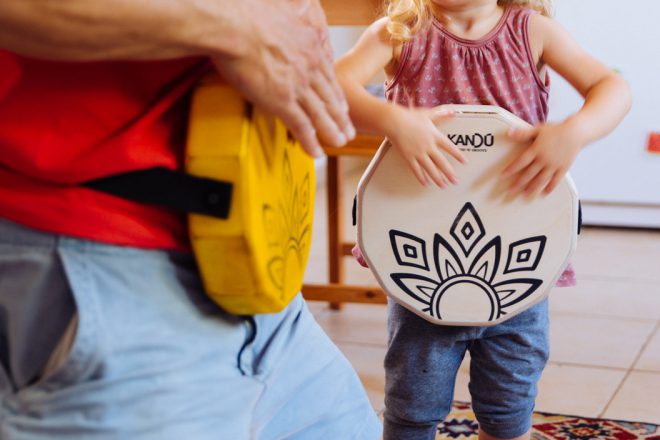
Idiophones –– drums, castanets, the tambourine, a triangle –– are all intuitive instruments because they create the sound by the instrument’s vibration, and some of them are tuned to resonate within a range of harmonious pitch (like the hang drum or steel drum or even the Turkish saz which is a string instrument) — so you can start tapping, whistling, or striking and creating some melody.
Once I brought a saz to a party and pretended I was a master saz player and people who weren’t musicians believed me. Any stroke of the saz (it’s a Turkish lute) sounds like angel’s wings. I am not kidding. After a while though without knowing much theory it gets boring.
The nice thing about intuitive instruments is that they invite you in and you can enjoy from day 1 as you learn. Which is not true for a tuba, a saxophone or a violin. All of these have very steep learning curves.
The downside of the most intuitive instruments is that you are limited in notes/pitches/resonance. You will never be able to reproduce all the beauty of Mozart’s sonata using a whistle, kazoo or a set of spoons, but in Covid times, a nice sounding instrument at home could beat the speeches of the early days of violin or trumpet.
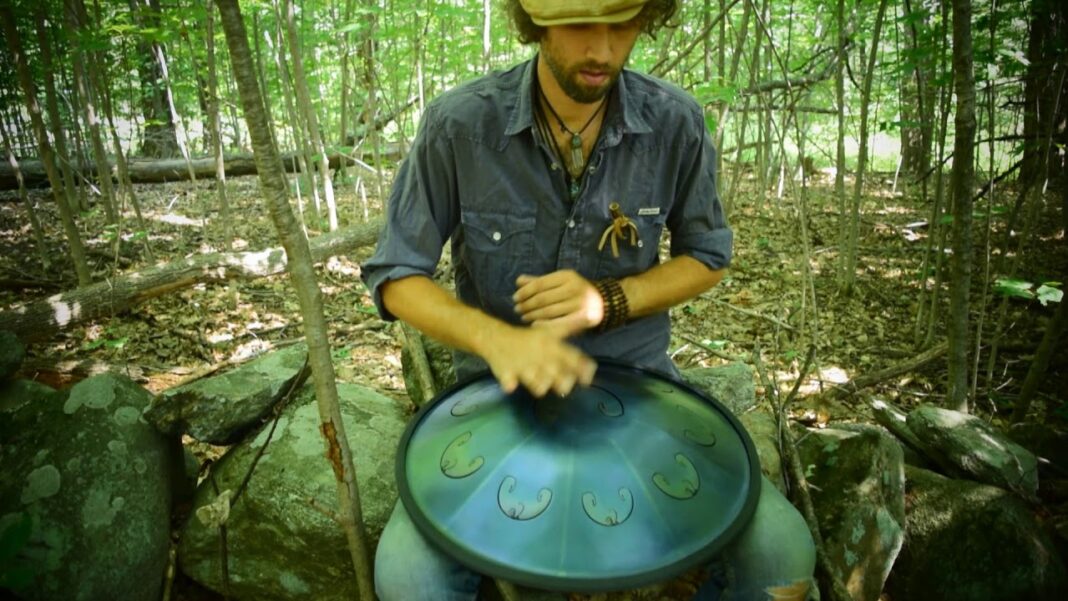
Over the years there is one instrument I have seen loved by musicians and novices alike. Some people call it the hang drum, though it reminds me very much of the fine-tuned steel drums I used to hear in the Carribean. I guess you could make one and many people did when the waiting list for the original Swiss version was 3 years. Luckily some new hang drums have come on the market. I am going to reach out to the company to send me one to try. It’s called the RAV Vast.
The RAV Vast is a steel tongue drum hand-crafted to emit a perfectly balanced pitch and sonorous, harp-alike voice. For calling angels? The progression of notes tuned on 9 tongues may vary from scale to scale (and if you want to make a band of one) you can choose 20 scales, each tuned to provide various voices and tones on different scales. The diversity lets you choose one for ethnic music or even for being part of Jazz standards –– as long as you know the key. I like to support this company because they priced their handpan drums at a price that most people can afford. If something costs too much like some of the original hang drum makers do it will only be played by the rich.
With all hang drums, each tongue or section on the flying-saucer like drum has up to 7 overtones that makes the tone of the drum deep and wide simultaneously. Imagine playing seven keys on the piano together. Drums like the RAV Vast hang drum can be played by anyone as all the notes of the drum sound harmoniously together. Basically, if the more experienced musicians know the key of your drum, you are good to jam.
And like I mentioned above, professionals also love the hang drum. We’ve hosted many music festivals at our home in Jaffa over the years and there is always a hang drum part of at least one set, often many. Mainly because it’s versatile, offering endless options. Simple melodies can be learned and taught to children, or it can be played as part of a meditative retreat in the desert while teaching yoga or as a funny cover band version of Mozart. No planning needed. Your unconscious can guide you.
How to play a handpan drum?
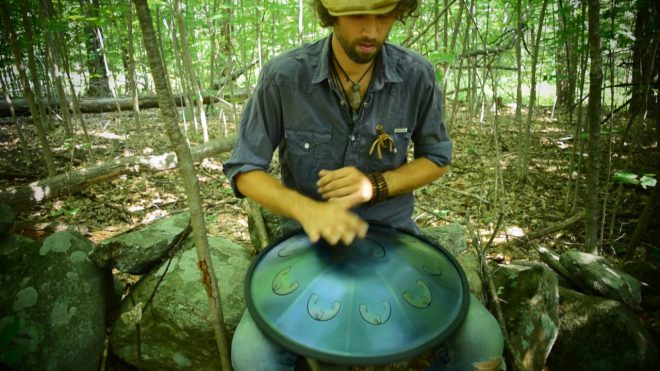
There’s no right or wrong way to play a hang drum, also known as a handpan drum. Ascending pitches are played in a zigzag order from the bottom to the top. The lowest note – called the Ding – and it is found in the center of the drum. The drum sits in your lap with the lower notes close to you by playing the progression: central note – bottom note – side notes – top notes.
If you can do it several times slowly, you can remember the location of the notes. You can also use stickers to remember the notation (for advanced musicians), this way you’ll be able to learn to play the “sheet” music quicker.
Experiment with the number of notes you play progressively and simultaneously and their order. Do you know that you are playing music already? Keep on practicing, involve your palms, fingers, and knuckles while playing. Using mallets or wooden sticks will let you produce a different kind of melody and a different sound. Let the instrument guide you and give a clue to creating an endless number of beautiful compositions. Your intuition will guide you. A lovely thing.