Greenpeace against Arab world’s first nuclear power plant

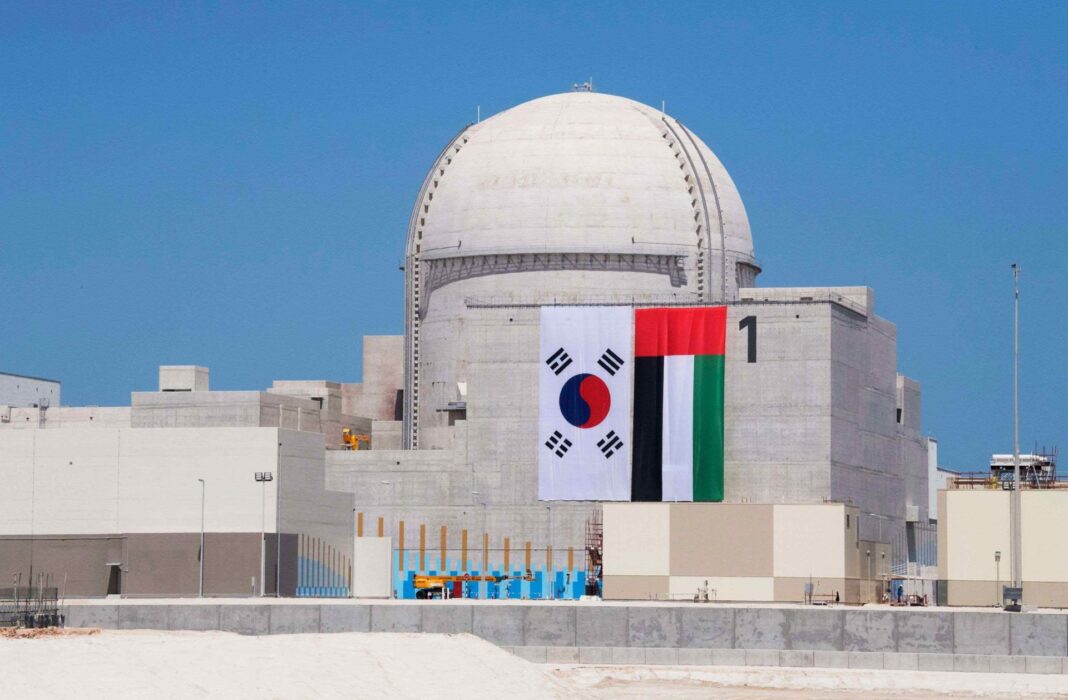
The first nuclear energy plant in the United Arab Emirates goes online on the Gulf Coast east of Qatar.

In a desert region full of oil, and well unlimited sunshine, Abu Dhabi still plans to go ahead and build a nuclear energy site despite the risks. Remember Japan? And Greenpeace, which runs an active unit in the Arab world and Middle East, called Greenpeace MENA, isn’t thrilled about the development. (They weren’t thrilled about Jordan going nuclear as well, in 2011. That seems to be off the table for now.)

After seeing the lack of Middle East oversight of dangerous chemicals in Beirut, some groups like Greenpeace worry about the dangers of a nuclear Arab world. The United Arab Emirates  will become the first Arab country to produce nuclear energy when commercial operations start at the $24.4 Billion USD Barakah nuclear power plant in 2020.

Until 2006, the six oil-producing states of the Gulf Cooperation Council (GCC) had been vocally opposed to nuclear power in the Gulf, however, as Iran’s nuclear ambitions advanced, the position changed.

Once all four of Barakah’s reactors are operational in 2025, the plant will provide the UAE with 5.6GW of power generation capacity – about one quarter of the country’s anticipated energy requirements.

Greenpeace believes that this action will further deplete natural resources such as water, which is very scarce in the United Arab Emirates.

Currently desalination is looked to as a viable option, but creating it is energy intense. Creating a nuclear reactor to run desalination is much like a snake biting its own tail.

The plant in Abu Dhabi was set to open in 2017 but its start-up was delayed for what officials say were “safety requirements” according to the BBC.

The UAE is oil rich but despite that plans for Barakah to meet ts energy needs, as the region of seven emirates adopts more sustainable energy sources.

Two weeks ago the UAE sent a mission to Mars, another scientific first for the Gulf nation.

A threat to peace? 

The UAE also has plans to invest in solar, putting into question the logic of the Barakah nuclear plant. Solar power is cleaner, cheaper, 100% renewable and makes a lot more sense in a region plagued by terrorism and political problems over oil and wealth. See solar energy at Masdar City.

masdar-shams-1-solar-energy
Solar energy farm at Masdar

The BBC reports that “last year Qatar called the Barakah plant a flagrant threat to regional peace and environment. Qatar is a bitter regional rival of the UAE and Saudi Arabia.”

Greenpeace says they “condemn the start-up of unit 1 of the Barakah Nuclear Energy Plant, located in the Al Dhafrah Region of Abu Dhabi, as a wasteful investment in the wrong technology that will only deplete the scarce water resources of the Emirates.

Established in 2016, the Nawah Energy Company plans on running 4 nuclear energy units, the first nuclear energy plant in the United Arab Emirates.

Nawah will generate up to 5,600 megawatts of energy from the 4 units at Barakah, supplying approximately 25% of the UAE’s electricity requirements.

Julien Jreissati, programme manager at Greenpeace Middle East and North Africa, commented: “Nuclear energy is not the energy of the future, and definitely not the solution. With it we are leaving our future generations with nothing but a toxic legacy of radioactive and dangerous nuclear waste”.

He continued: ”The UAE has been a regional leader in developing and investing in cheap, safe and green renewable energy such as solar. This innovative country should keep its focus on capitalising on its abundant and generous sun instead of “betting” on the nuclear race. After the legacy of Fukushima and the high price Japan had to pay for relying on nuclear power, countries around the world – like Germany-  are opting for phasing-out nuclear energy not the other way around.”

Building new nuclear plants is more expensive and takes longer than building renewable energy plants, Greenpeace argues.

Building a nuclear plant in a water scarce country is just a bad and dangerous investment that will compete with the UAE people on accessing much needed water resources, the organization points out. In a region that has been prone to conflicts, the reactor also poses considerable safety risk to the people. 

Karin Kloosterman
Karin Kloostermanhttp://www.greenprophet.com
Karin Kloosterman is an award-winning journalist, innovation strategist, and founder of Green Prophet, one of the Middle East’s pioneering sustainability platforms. She has ranked in the Top 10 of Verizon innovation competitions, participated in NASA-linked challenges, and spoken worldwide on climate, food security, and future resilience. With an IoT technology patent, features in Canada’s National Post, and leadership inside teams building next-generation agricultural and planetary systems — including Mars-farming concepts — Karin operates at the intersection of storytelling, science, and systems change. She doesn’t report on the future – she helps design it. Reach out directly to [email protected]

LEAVE A REPLY

Please enter your comment!
Please enter your name here

TRENDING

Astro uses AI to help procure land for renewable energy

For oil-rich, environmentally vigilant Gulf states, Astro isn’t just another startup story. It is a blueprint for accelerating an energy transition that is now existential, not optional.

Leading Through a Dual-Energy Transition: Balancing Decarbonisation with Energy Security

Experience in one area of the energy industry isn't enough to guarantee readiness across all the others. That's where a structured program like an MBA in energy can come in. Today's advanced curricula explore energy economics, finance, policy, and strategic management alongside the technical subjects. And when pursuing an energy MBA online, professionals can skill up and retrain without having to step out of the labor market -- an important perk at a time when skilled professionals are already in short supply.

What Renewable Energy Means for Long-Term Environmental Planning

In the context of American energy policy (setting the stage for the world as oil prices are in USD), the relevance of renewable energy planning is increasingly evident. Federal agencies are preparing final biofuel blending mandates under the Renewable Fuel Standard, with decisions expected early in 2026 after delays that have left investors and producers in limbo.

How wind energy must adapt to a changing climate

For a wind farm designed on 20 years of historical data, this matters. A project that looks profitable today may deliver less energy in the future, on the opposite, way more. Uncertainty replaces confidence.

Alphabet buys Intersect Power for $4.5 Billion USD to sustainably power its AI infrastructure

That shift helps explain why Alphabet, Google’s parent company, has agreed to acquire American renewable energy company Intersect Power in a deal valued at roughly $4.75 billion. It’s a move that reflects a deeper change: technology companies are paying closer attention to the physical systems that support their growth. 

Qatar’s climate hypocrisy rides the London Underground

Qatar remains a master of doublethink—burning gas by the megaton while selling “sustainability” to a world desperate for clean air. Wake up from your slumber people.

How Quality of Hire Shapes Modern Recruitment

A 2024 survey by Deloitte found that 76% of talent leaders now consider long-term retention and workforce contribution among their most important hiring success metrics—far surpassing time-to-fill or cost-per-hire. As the expectations for new hires deepen, companies must also confront the inherent challenges in redefining and accurately measuring hiring quality.

8 Team-Building Exercises to Start the Week Off 

Team building to change the world! The best renewable energy companies are ones that function.

Thank you, LinkedIn — and what your Jobs on the Rise report means for sustainable careers

While “green jobs” aren’t always labeled as such, many of the fastest-growing roles are directly enabling the energy transition, climate resilience, and lower-carbon systems: Number one on their list is Artificial Intelligence engineers. But what does that mean? Vibe coding Claude? 

Somali pirates steal oil tankers

The pirates often stage their heists out of Somalia, a lawless country, with a weak central government that is grappling with a violent Islamist insurgency. Using speedboats that swarm the targets, the machine-gun-toting pirates take control of merchant ships and then hold the vessels, crew and cargo for ransom.

Leopoldo Alejandro Betancourt López Turned Ocean Plastic Into Profitable Sunglasses

Few fashion accessories carry the environmental burden of sunglasses. Most frames are constructed from petroleum-based plastics and acrylic polymers that linger in landfills for centuries, shedding microplastics into soil and waterways long after they've been discarded. Leopoldo Alejandro Betancourt López, president of the Spanish eyewear brand Hawkers, saw this problem differently than most industry executives.

Why Dr. Tony Jacob Sees Texas Business Egos as Warning Signs

Everything's bigger in Texas. Except business egos.  Dr. Tony Jacob figured...

Israel and America Sign Renewable Energy Cooperation Deal

Other announcements made at the conference include the Timna Renewable Energy Park, which will be a center for R&D, and the AORA Solar Thermal Module at Kibbutz Samar, the world's first commercial hybrid solar gas-turbine power plant that is already nearing completion. Solel Solar Systems announced it was beginning construction of a 50 MW solar field in Lebrija, Spain, and Brightsource Energy made a pre-conference announcement that it had inked the world's largest solar deal to date with Southern California Edison (SCE).

Related Articles

Popular Categories