
Plagues are no stranger to the western east: The Plague of Amwas (Arabic: طاعون عمواس, romanized: ṭāʿūn ʿAmwās), also spelled plague of Emmaus, was a bubonic plague epidemic that afflicted Islamic Syria in 638–639, toward the end of the Muslim conquest of the region. It killed about 25,000 Muslim troops and led to some interesting religious rulings on plagues in general.
As we know relations between humans and disease are one of the oldest, older than agriculture or formation of the first urban centers. Different pandemics were sometimes turning points in human history when they caused economic losses, depopulation, political instability, and the collapse of the state.
In 2020, we are witnessing the impact of COVID-19 on the global economy and countries around the world. Five months since the World Health Organization detected COVID-19, epidemiologists still have no clue how to curb the disease while economists didn’t evaluate the final impact of this crisis on the world’s financial system. The blockade will likely continue for the rest of the year, and in the coming years, we will have to fundamentally change our social and work habits, like working from home and teleconferencing.
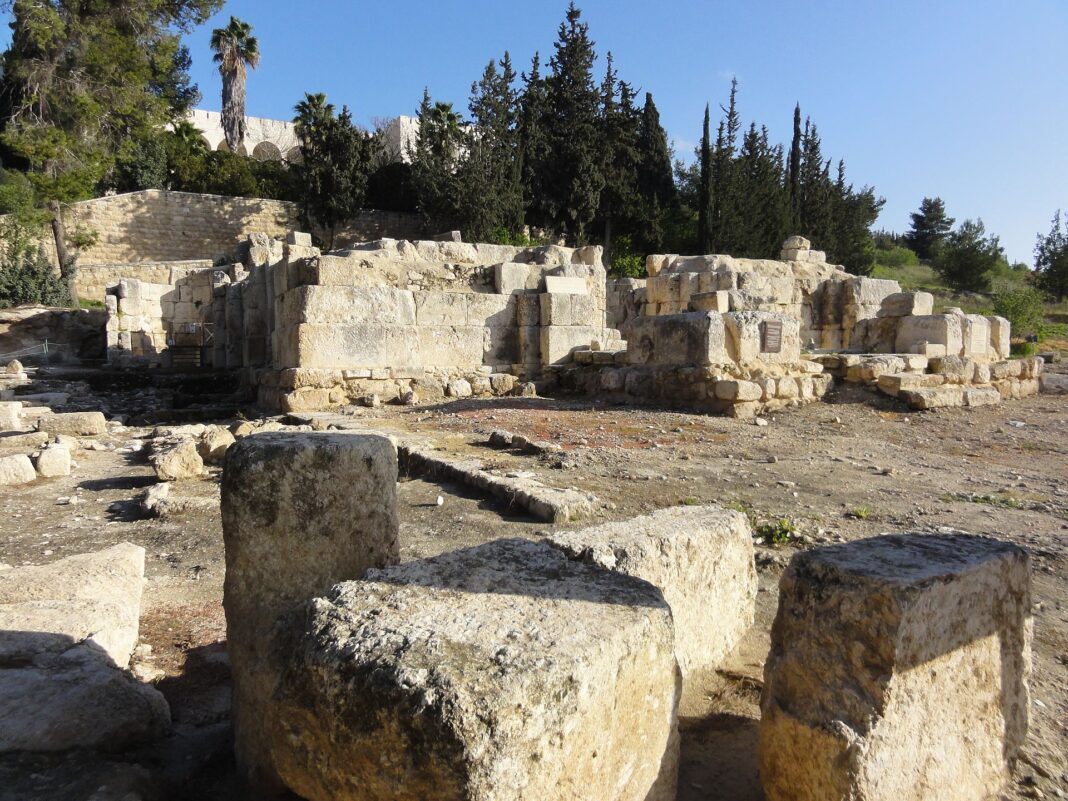
During the time of Khalif Oman Ibn Khattab – 634 to 644 years CE – Muslim armies were engaged in the series of military campaigns in the Levant against Byzantine troops. Soon after the conquest of Syria (634-637 CE), something unpredictable happened in 638/639 CE when the plague broke out in the village of Amwas (Ancient Emmaus), about 20 miles southeast of Jerusalem.
Emmaus is a town mentioned in the Gospel of Luke of the New Testament. Luke reports that Jesus appeared, after his death and resurrection, before two of his disciples while they were walking on the road to Emmaus. It is now located in Israel and around it is the home to a national park called Canada Park.

The Plague of Amwas was one of the series of pandemics called Justinian Plagues that ravished the Eastern Mediterranean for centuries. It began as usual from rats living and traveling on merchant ships in 540 to 541 CE and lasted with recurrences until 750 CE.
The Plague of Amwas was the first major pandemic that hit the early Muslim communities. The event is famous in Islamic tradition for debate between Caliph Omar Ibn Khatab and prominent Muslim commanders who refused Omar’s advice to withdraw to Medina and the outcome of the pandemic that killed between 25,000 to 30,000 people including Companions of the Muslim Prophet Muhammad.
The plague spread to Syria, Iraq, and Egypt, and the pandemic was preceded by a severe famine in the southern Levant.
Upon receiving news that the plague broke out in Syria, Caliph Omar Ibn Khattab left the capital Medina to personally monitor what measures were taken to isolate the pandemic. Leaders of the Sham arrived in Sargh to greet Caliph Omar and among them were Amr Abu Ubeidah Bin Al Jarrah (commander of armies that captured Damascus and Jerusalem), Khalid Bin Al Walid (the commander during Ridda Wars that broke out after Prophet Mohammed’s death), Amr Bin Al Aas (the later governor of Egypt), Yazid Abu Sufyan (the commander in the conquest of Palestine) and Suhail Bin Amr (commander of one of the brigades in the Battle of Yarmouk in 636 CE).
During the meeting, the situation in Syria was discussed and one group supported the return to Medina while others insisted on continuing the campaign despite the plague. After Caliph Omar decided to withdraw to Medina, Abu Ubeidah and his supporters returned to Syria.
In the long run, because of his moral and leadership qualities, Omar Ibn Khattab was planning to appoint Abu Ubeidah as his imminent successor, and to save him from the raging plague, he sent a letter to him urging Abu Ubeidah to immediately come for consultations in the capital Medina. Abu Ubeidah read between lines and refused the order telling the caliph that he can’t forsake his men who were dying from the plague. Soon after this reply to the caliph, Abu Ubeidah perished in the plague and very soon after him the newly appointed governor of Syria Muath Bin Jabal faced the same fate.
Words of Wisdom from Muslim Scholars
The Plague of Amwas depleted Muslim ranks in Syria but also showed what steps should be taken in the times of pandemics.
According to Hadiths, Prophet Muhammad reportedly noted: “When you hear that a plague is in a land, don’t go to it, and if it occurs in a land that you are already in then don’t leave it.” (Al Bukhaari [5739] and Muslim [2219)] narrated from ‘Abd ar-Rahmaan ibn ‘Awf.)
Later on, the episode was used for theological debates on predestination, free will, theodicy, and causality as well as jurisprudence (the permissibility of entering or leaving a plague-infested area), and medicine (the nature of contagion, disease transmission, and treatment of the plague or other contagious diseases). Muslim theologians also hint at another debate: the belief in the transmissibility of the plague and the conviction that dying of the plague while trusting in God results in martyrdom.
What is similar to modern-day measures on COVID-19 is the principle of quarantine: the important element of every pandemic is the human to human contact which should be minimized or completely eliminated during the outbreak. The principle of life protecting in Islam refers to protecting the public and personal health. Therefore Muslims are obliged to follow instructions of experts and in the case of pandemics virologists, epidemiologists, and other specialists.
More stories below that explore Muslim faith and human life:
https://www.greenprophet.com/2018/03/shaving-in-arabia-the-halal-and-the-haram/