

Somewhere halfway between Jerusalem and Ashkelon, there is a place known as Tell es-Safi and it represents a multi-period site – where numerous cultures over time lived and overlapped and built again. It teaches us that history was never black and white, and that interactions between different cultures has never been a smooth ride, but always in motion, as shown unearthed in ancient dig sites.
Although Philistine and Judahite states have been perceived as rivals, recent finds highlighted very complex religious, mundane, linguistic and commercial ties in the Iron Age found at Gath, also believed to be the hometown of the biblical giant Goliath.
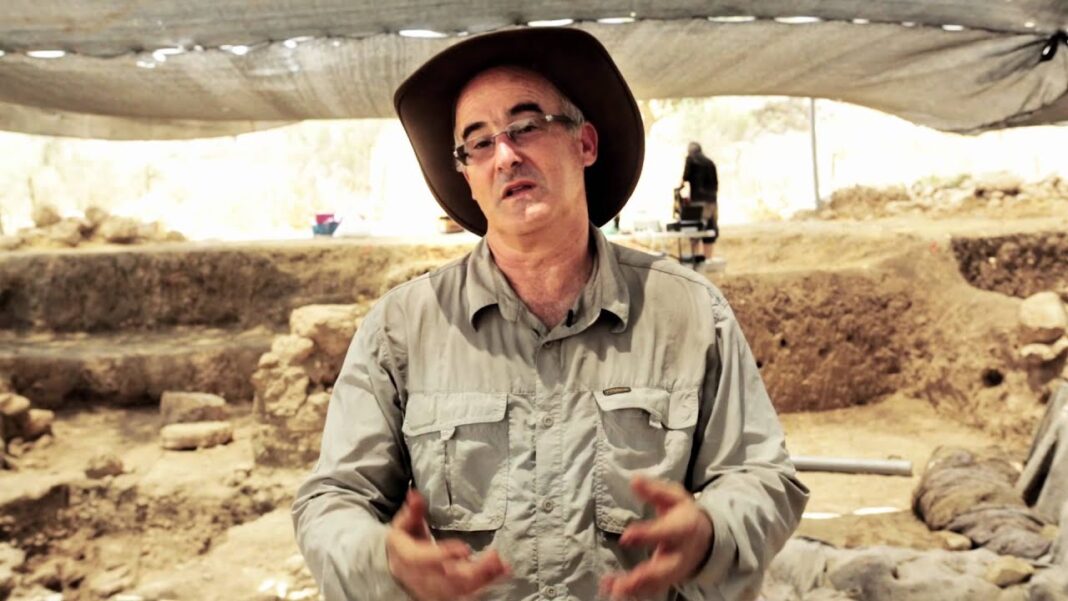
In the Bible the settlement was known as Gath and scholars have reference to the site in various biblical sources as well as in Egypt’s Amarna letters and Assyrian texts, notes Professor Aren Maeir from Bar Ilan University in Ramat Gan, Israel who leads The Tell es-Safi/Gath Archaeological Project.
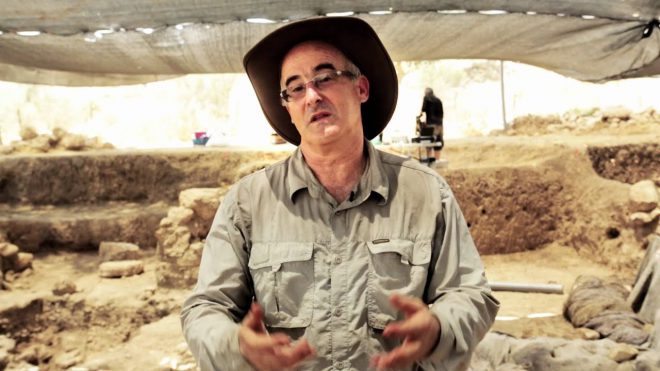
Goliath, the giant who was overtaken by King David’s slingshot, is described in the biblical Book of Samuel as a Philistine giant defeated by the young David in single combat. It is believed that Goliath was originally from Gath.
Tell es-Safi had an extensive population in the Early Bronze Age III (2700 to 2200 BCE), the Late Bronze Age (1550 to 1200 BCE) and the Iron Ages. The site was one of the most significant pre-classical settlements in the southern Levant.
Three notable groups lived there: the Israelites, the Canaanites and the Philistines lived in the area and their relations were complex: “At times friendly, at times less. There were differences between the cultures but also similarities,” Maeir underlined.
As a testimony of turbulent political times, Gath was destroyed in 830 BC by King Hazael of Aram-Damascus, “and this event is mentioned in the Bible – II Kings 12:17/18 – and on the site is evidenced by a massive siege system and a sitewide destruction,” Professor Maeir elaborated, adding that the site was again destroyed in the Iron II B (late 8th century BCE) most probably by the Assyrians.
In Iron Age, Gath was one of five cities of the Philistine “Pentapolis”, and Hazael’s demolition of the site can be interpreted as consolidation of his political power in the southern Levant.
A pentapolis is a geographic and/or institutional grouping of five cities. Like the boroughs of New York. Cities in the ancient world probably formed such groups for political, commercial and military reasons, as happened later with the Cinque Ports in England.
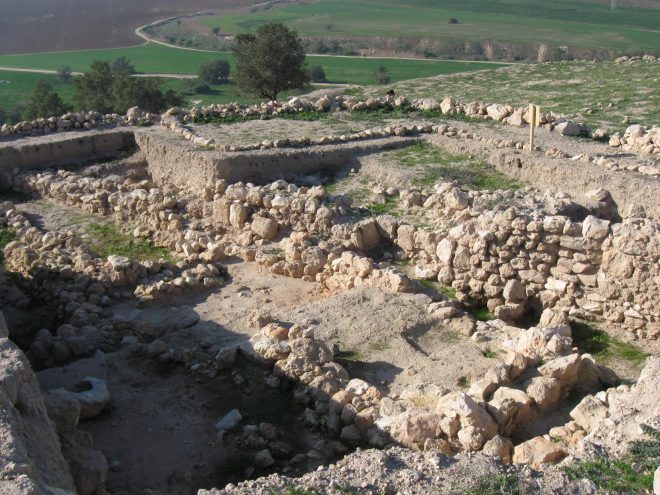
According to Maeir, the evidence of the conquest and destruction of Tell es-Safi by Aramean forces is supplemented by a large siege system that is connected to this campaign.
He expands: “The system included a deep trench and a berm that surround Gath, clear evidence of which was found on the eastern, southern, and western sides of the site. In addition, at least two, and perhaps three, towers that are associated with the trench and berm have been noted, as well as hints to the possible existence of other features, such as camps, in other nearby locations.”
“The trench itself was dug into the bedrock to a depth of about eight meters and a width of up to five meters, and the materials from the trench were consistently piled up on the side away from the city, forming a berm/embankment. All of these elements formed a siege system, similar to a Roman circumvallation, constructed to enclose the besieged city, preventing the defenders from escaping and receiving supplies, and from attacking the besieging forces,” Maeir emphasized.
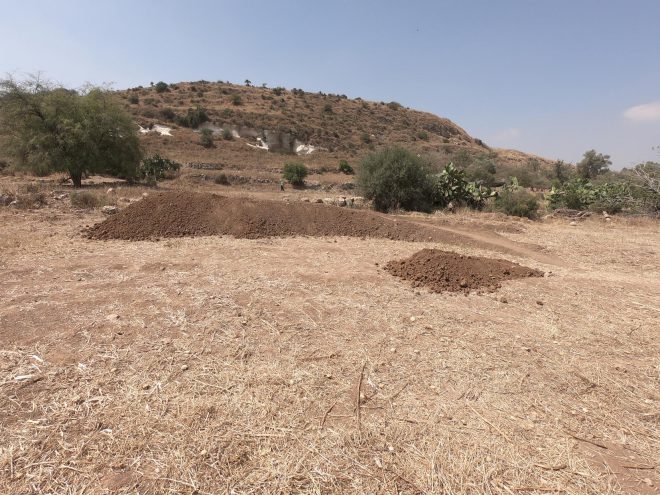
The mention of a similar siege by Bir-Hadad, Hazael’s son, in the Aramaic Zakkur Inscription from northern Syria, strengthens this interpretation, the archaeologist said.
Pottery found at the site is a testimony of the interregional trade and intercultural links between Gath and other states and cities of the region. The socio-economic and geopolitical relations are manifested by trade and cultural influences between the Philistines and other peoples of the area.
While in the past it was often assumed that during the early Iron Age, after the initial appearance of the Philistine culture, there was little foreign connections with Philistia, in recent years, more and more evidence of various types of connections have emerged and the excavations at Tell es-Safi/Gath have provided relevant evidence for these connections from different stages of the Iron I and Iron IIA, Dr.Maeir stressed, adding that this includes exchange of decorated pottery between Gath and other cities in Philistia as well as an ivory bowl similar to bowls found in Megiddo.
On the other hand, the copper found in Tell es-Safi originated from Wadi Faynan in Arabah region on the East Bank while pottery forms had been imported from Judahite-controlled territories.
“These and other finds are an indication of the different levels of inter-regional trade and inter-cultural connections that went on during the Iron I and Iron IIA, including the close connections between Gath and the Judahite region,” Maeir pointed out, noting that Gath was a center of copper trade between Arabah and the coastal area.
Although Philistine and Judahite states have been perceived as rivals, recent finds highlighted very complex religious, mundane, linguistic and commercial ties in the Iron Age. The peak of the copper trade in Wadi Faynan corresponds with the zenith of Gath as the most eastern Philistine city, Maeir underscored.