Middle Eastern vices

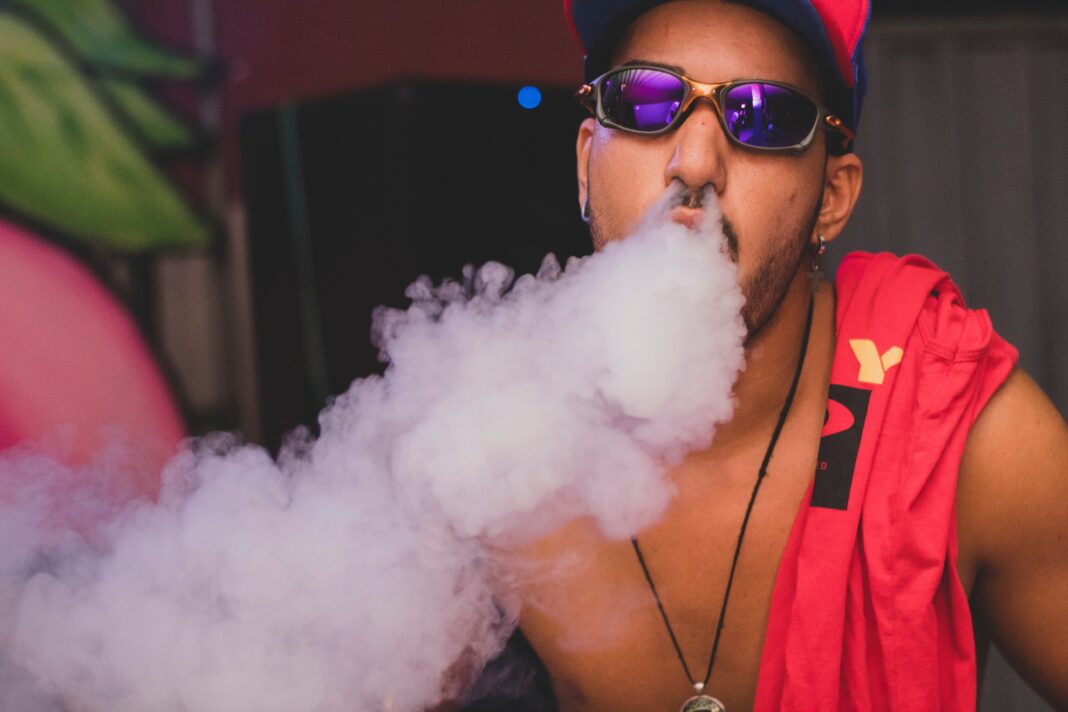
Hookah pipe or shisha pipe, a dangerous middle east vice that can be addictive and make you sick
Addictive shisha pipe smoking.

The Middle East is synonymous with good food and over-zealous smokers. The poorer the town or village and the more you will see chain smoking in younger populations. You see it in the teeth. We know smoking is a vice that is not good to start. 

But what if it’s too late for you? You started and you can’t stop? We know that pretty much any vice except watching kitten videos on the Internet isn’t going to be good for you.

I have friends in Tel Aviv that smoke one cigarette a day –– at the end of the day with a glass of wine –– and have done so for years without leaping to 2 or 3 or half a pack. I think that is a sensible vice. No doubt there are ways to enjoy a vice without it getting out of control. 

Middle Eastern vices are not the same that you find in America or Europe. In the Middle East it’s about hashish. Americans and Canadians love cannabis now, and everywhere in Canada, and in more than half of the US States, you will have no problem with this vice. It is even being given out as medicine to help epilepsy, anxiety, pain from cancer. 

woman smiling smoking cannabis
Woman passing a cannabis joint with CBD and THC.

We know Europeans, especially the french smoke too many cigarettes too, and Americans are busy making a good old healthy THC-less  CBD tincture while out foraging for plants and mushroom chaga tea and living the #vanlife.

Smoking the hookah pipe

One of the most popular Middle East vices are hookah or shisha pipe smoking (nargila in Israel), which are those big Arabian-styled smoking pipes that look like they are from Aladdin’s cave. They get stuffed with a fruit flavored tobacco which is just as, even maybe more dangerous than regular cigarettes if you read some of our past articles. Don’t be fooled by the sweet smelling aroma. 

What is ghat?

Ghat, khat or gat is another vice that started in Yemen, but if you look around the markets around the Middle East you will find ghat leaves for sale – even in Israel. They give a moderate to mild high, and the most addictive part of ghat might be behavioural as it might be the only activity some people in Yemen want to do. It’s been creating some environmental problems in Yemen too

Man chewing gat leaves in Yemen
Hanging out, chewing gat in Yemen.

It is estimated that people in Yemen eat as much as 500 grams of the stuff each day, and seem to be content to enjoy just sitting around and being mildly intoxicated by its effects, which many say are a substitute for the favorite vice of the west –– alcohol –– (officially banned in Muslim Yemen), tobacco, and certain mild narcotics like hashish.

What is Middle Eastern snuff?

A lesser known vice found in the Middle East is naswār or nas. It is a moist, powdered tobacco snuff used in Afghanistan, Pakistan, Iran, Russia and Uzbekistan. Stuff if into the floor of your mouth or the inside of your cheek for 20 minutes and feel the same high effect from snus or dipping tobacco. Naswar was introduced into Western Europe by Ramon Pane, a Spanish monk after Columbus sailed the Americas from 1493-1496.

Years later in 1561, Jean Nicot, a French ambassador in Lisbon, Portugal, sent naswar to Catherine de’ Medici to treat her son’s ongoing migraine headaches. 

Is coffee a vice?

Vices, including coffee, all seem to start from a place where they help us all feel a little bit better. Whether they calm depression after a breakup (I started smoking after a really sad breakup years ago), or take the edge off a headache or a rough time at work, or not having work.

It’s all about moderation, my dear, my mother used to tell me. Although I think she also called cannabis devil’s weed. So take even Mom’s advice with a grain or salt. 

Karin Kloosterman
Karin Kloostermanhttp://www.greenprophet.com
Karin Kloosterman is an award-winning journalist, innovation strategist, and founder of Green Prophet, one of the Middle East’s pioneering sustainability platforms. She has ranked in the Top 10 of Verizon innovation competitions, participated in NASA-linked challenges, and spoken worldwide on climate, food security, and future resilience. With an IoT technology patent, features in Canada’s National Post, and leadership inside teams building next-generation agricultural and planetary systems — including Mars-farming concepts — Karin operates at the intersection of storytelling, science, and systems change. She doesn’t report on the future – she helps design it. Reach out directly to [email protected]
1 COMMENT

Comments are closed.

TRENDING

Stoned and driving? High THC levels might not mean you are impaired

Based on the results from the driving simulation, participants with elevated baseline concentrations of THC did no worse on a driving simulator compared with participants who were below per se cut-off points. Altogether, the results add to a growing body of evidence showing that current per se THC blood limit laws lack scientific credibility as face-value evidence of impairment.

American college trains medical students on how to treat with cannabis

Students also gain hands-on experience in caring for patients using cannabis, as well as any other medications and illicit substances, after they begin their clinical rotations, he added. 

Half of all medical cannabis doses labeled incorrectly

Products were considered “accurately labeled” if they contained within 15% of the THC amount shown on the label—the same threshold the state uses. About 44% percent of flower products failed to meet that standard, with 54 of those products inflating their THC content and 23 containing more THC than the label indicated. Only four concentrate products were labeled inaccurately.

Ayahuasca in 2025: Where the Sacred Vine Still Grows

But with popularity comes complexity. Indigenous leaders and activists have raised concerns about cultural appropriation, overharvesting of ayahuasca vines, and the commercialization of sacred traditions. Some Amazonian communities are pushing back, creating frameworks for reciprocity and ethical sourcing.  Organizations like The Indigenous Medicine Conservation Fund are advocating for fair compensation, intellectual property protection, and cultural sovereignty for the original stewards of the medicine.

Grassland: what happens when you go to jail for growing cannabis and it’s now legal?

The story follows Leo (Cabot-Conyers), a curious and sensitive young boy whose world is turned upside down when he befriends his new neighbors—an inquisitive young white boy and his police officer grandfather (Kober). Unknowingly, Leo’s friendship places his single mother (Maestro), who is secretly running an illegal cannabis business, at risk.

Qatar’s climate hypocrisy rides the London Underground

Qatar remains a master of doublethink—burning gas by the megaton while selling “sustainability” to a world desperate for clean air. Wake up from your slumber people.

How Quality of Hire Shapes Modern Recruitment

A 2024 survey by Deloitte found that 76% of talent leaders now consider long-term retention and workforce contribution among their most important hiring success metrics—far surpassing time-to-fill or cost-per-hire. As the expectations for new hires deepen, companies must also confront the inherent challenges in redefining and accurately measuring hiring quality.

8 Team-Building Exercises to Start the Week Off 

Team building to change the world! The best renewable energy companies are ones that function.

Thank you, LinkedIn — and what your Jobs on the Rise report means for sustainable careers

While “green jobs” aren’t always labeled as such, many of the fastest-growing roles are directly enabling the energy transition, climate resilience, and lower-carbon systems: Number one on their list is Artificial Intelligence engineers. But what does that mean? Vibe coding Claude? 

Somali pirates steal oil tankers

The pirates often stage their heists out of Somalia, a lawless country, with a weak central government that is grappling with a violent Islamist insurgency. Using speedboats that swarm the targets, the machine-gun-toting pirates take control of merchant ships and then hold the vessels, crew and cargo for ransom.

Leopoldo Alejandro Betancourt López Turned Ocean Plastic Into Profitable Sunglasses

Few fashion accessories carry the environmental burden of sunglasses. Most frames are constructed from petroleum-based plastics and acrylic polymers that linger in landfills for centuries, shedding microplastics into soil and waterways long after they've been discarded. Leopoldo Alejandro Betancourt López, president of the Spanish eyewear brand Hawkers, saw this problem differently than most industry executives.

Why Dr. Tony Jacob Sees Texas Business Egos as Warning Signs

Everything's bigger in Texas. Except business egos.  Dr. Tony Jacob figured...

Israel and America Sign Renewable Energy Cooperation Deal

Other announcements made at the conference include the Timna Renewable Energy Park, which will be a center for R&D, and the AORA Solar Thermal Module at Kibbutz Samar, the world's first commercial hybrid solar gas-turbine power plant that is already nearing completion. Solel Solar Systems announced it was beginning construction of a 50 MW solar field in Lebrija, Spain, and Brightsource Energy made a pre-conference announcement that it had inked the world's largest solar deal to date with Southern California Edison (SCE).

Related Articles

Popular Categories