A sliver of farmland to create an eco fertilizer farm

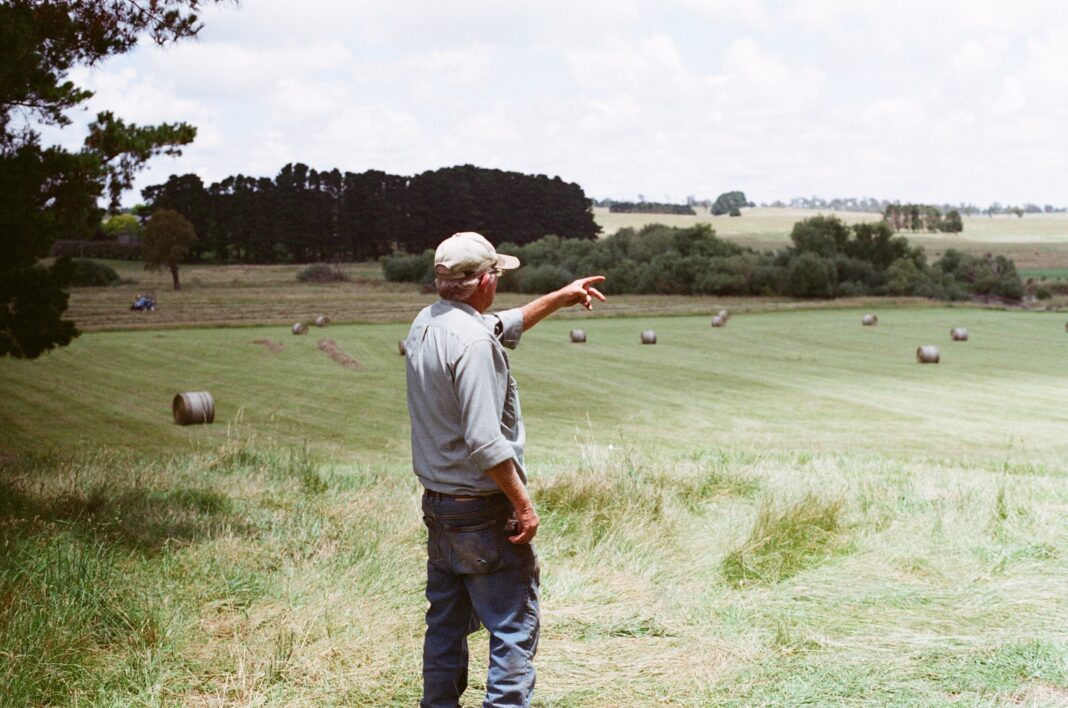
farmer looking over his field
Switchgrass or sweet sorghum could do a regular farm into an eco-er farm. 

Farmers dump nitrogen on nutrient empty soil so we can have tacos, cereal, a fresh salad. High use also devastates nearby rivers, lakes and seas. But by turning a farm of any size into its own fertilizer machine, with only 5% of their land. It’s a great solution for farmers in developing nations who don’t have access to high cost fertilizers.

Purdue University scientists, led by Nick Carpita show that farmers could raise enough bioenergy crops for fertilizer to make nitrogen-based fertilizers more cheaply and reduce the reach of those fertilizers into nearby waterways.

Use of biomass as the source of hydrogen and energy for ammonia fertilizer is competitive with electricity as a replacement for natural gas or other fossil fuels, the authors wrote. Researchers at Purdue estimate that farmers could use 5% or less of their fields to grow enough bioenergy crops, such as sweet sorghum or a perennial grass such as switchgrass, to create the fuel needed to produce nitrogen fertilizers like ammonia.

Not only would using bioenergy be a cleaner environmental choice than natural gas or coal, but the crops could be used on the edges of fields as buffers to limit the amount of nitrogen that washes from those fields into local waters.

“It’s a small amount of a grower’s acreage to make the energy needed to completely satisfy the fertilizer needs for an entire field. You could apply 150 pounds of nitrogen per acre, which is more than enough, and you’d need only 5% of biomass per acre,” Carpita said. “The biomass has a bonus. Where you grow it could improve ecology. Your biomass could create soil-trapping, erosion-breaking rows that improve the local watershed.”

The biomass crops could be gasified directly or turned into H2Bioil for transport to the gasifier, giving a source of hydrogen needed for ammonia and energy to power the production. The study shows that it costs about $54 for enough natural gas to create 150 kilograms of ammonia. Equivalent electricity or biomass costs in developed nations are currently about four times that, meaning production costs would have to drop or natural gas prices rise significantly to make the process cost-effective.

But it could be beneficial still in developing countries where mobile processing plants or smaller chemical plants could bring production close to farms that lack access to nitrogen-based fertilizers. Those smaller facilities don’t yet exist, but Agrawal said his team is working on developing them.

“We chemical engineers are used to building large plants. We have to rethink not only the unit operations, but how we’re going to simplify everything in a plant to make it function at a smaller distributed scale,” Agrawal said. “The good thing is that we have begun to work on it. This could happen within the decade.”

Burniske said the biomass strategy for ammonia production likely would be feasible sooner in sub-Saharan Africa, where soils are low in nitrogen and there is little fertilizer production in the region.

“Africa is the most nitrogen fertilizer-deficient region in the world, and where fertilizer is available, it is expensive, of poor quality and out of the smallholder farmer’s reach,” Burniske said.

An area in East Africa – where countries are smaller and could share a large production facility, and have the transportation infrastructure to deliver – could use the biomass strategy to create affordable nitrogen-based fertilizers.

“The reduction in fertilizer cost and accompanying increase in quality would boost use by smallholder farmers and increase yields in areas where there are large populations of food-insecure people,” Burniske said. “Horticultural crops in particular would benefit because they are more demanding in nitrogen intake, and horticultural crops are high in micronutrients in a region where micronutrient deficiency is rampant. Farmers producing more high-value horticultural crops would see a boost in income and a multiplying effect increasing economic development in rural communities.”


Karin Kloosterman
Karin Kloostermanhttp://www.greenprophet.com
Karin Kloosterman is an award-winning journalist, innovation strategist, and founder of Green Prophet, one of the Middle East’s pioneering sustainability platforms. She has ranked in the Top 10 of Verizon innovation competitions, participated in NASA-linked challenges, and spoken worldwide on climate, food security, and future resilience. With an IoT technology patent, features in Canada’s National Post, and leadership inside teams building next-generation agricultural and planetary systems — including Mars-farming concepts — Karin operates at the intersection of storytelling, science, and systems change. She doesn’t report on the future – she helps design it. Reach out directly to [email protected]

LEAVE A REPLY

Please enter your comment!
Please enter your name here

TRENDING

Can we fly guilt-free with Britain’s new stance on sustainable aviation biofuel?

Virgin Galactic astronauts. Will space travel be sustainable? Sustainable Space Fuels?

Green Polyethylene: The Plant-Based Plastic That’s Replacing Oil

Green PE is produced using ethanol derived from renewable sources—primarily sugarcane in Brazil, but also wheat grain and beet in Europe. It behaves the same as traditional polyethylene: it’s durable, moldable, and recyclable. The difference lies in its feedstock and carbon footprint. While not biodegradable, Green PE is a key player in the circular economy: it sequesters carbon during crop growth and reduces life-cycle emissions when used and recycled responsibly.

Visit the Clore Garden of Science in Rehovot for simple, sustainable outdoor fun

This area features a sustainable village with bridges, composting systems, and a living treehouse, educating visitors about sustainability and climate change.

The Textile Industry’s Dirty Secret: How Algaeing is Revolutionizing Sustainable Fashion

As consumers and brands alike search for sustainable alternatives, one company is leading the charge in transforming the dyeing industry—Algaeing. This innovative company harnesses the power of algae to create eco-friendly, biodegradable dyes, offering a groundbreaking solution to the toxic world of textile coloration.

A new wet-waste to biofuel advance

A new way to use wet waste for biofuel.

Qatar’s climate hypocrisy rides the London Underground

Qatar remains a master of doublethink—burning gas by the megaton while selling “sustainability” to a world desperate for clean air. Wake up from your slumber people.

How Quality of Hire Shapes Modern Recruitment

A 2024 survey by Deloitte found that 76% of talent leaders now consider long-term retention and workforce contribution among their most important hiring success metrics—far surpassing time-to-fill or cost-per-hire. As the expectations for new hires deepen, companies must also confront the inherent challenges in redefining and accurately measuring hiring quality.

8 Team-Building Exercises to Start the Week Off 

Team building to change the world! The best renewable energy companies are ones that function.

Thank you, LinkedIn — and what your Jobs on the Rise report means for sustainable careers

While “green jobs” aren’t always labeled as such, many of the fastest-growing roles are directly enabling the energy transition, climate resilience, and lower-carbon systems: Number one on their list is Artificial Intelligence engineers. But what does that mean? Vibe coding Claude? 

Somali pirates steal oil tankers

The pirates often stage their heists out of Somalia, a lawless country, with a weak central government that is grappling with a violent Islamist insurgency. Using speedboats that swarm the targets, the machine-gun-toting pirates take control of merchant ships and then hold the vessels, crew and cargo for ransom.

Leopoldo Alejandro Betancourt López Turned Ocean Plastic Into Profitable Sunglasses

Few fashion accessories carry the environmental burden of sunglasses. Most frames are constructed from petroleum-based plastics and acrylic polymers that linger in landfills for centuries, shedding microplastics into soil and waterways long after they've been discarded. Leopoldo Alejandro Betancourt López, president of the Spanish eyewear brand Hawkers, saw this problem differently than most industry executives.

Why Dr. Tony Jacob Sees Texas Business Egos as Warning Signs

Everything's bigger in Texas. Except business egos.  Dr. Tony Jacob figured...

Israel and America Sign Renewable Energy Cooperation Deal

Other announcements made at the conference include the Timna Renewable Energy Park, which will be a center for R&D, and the AORA Solar Thermal Module at Kibbutz Samar, the world's first commercial hybrid solar gas-turbine power plant that is already nearing completion. Solel Solar Systems announced it was beginning construction of a 50 MW solar field in Lebrija, Spain, and Brightsource Energy made a pre-conference announcement that it had inked the world's largest solar deal to date with Southern California Edison (SCE).

Related Articles

Popular Categories