
Renewable energy investment matchmaking platform

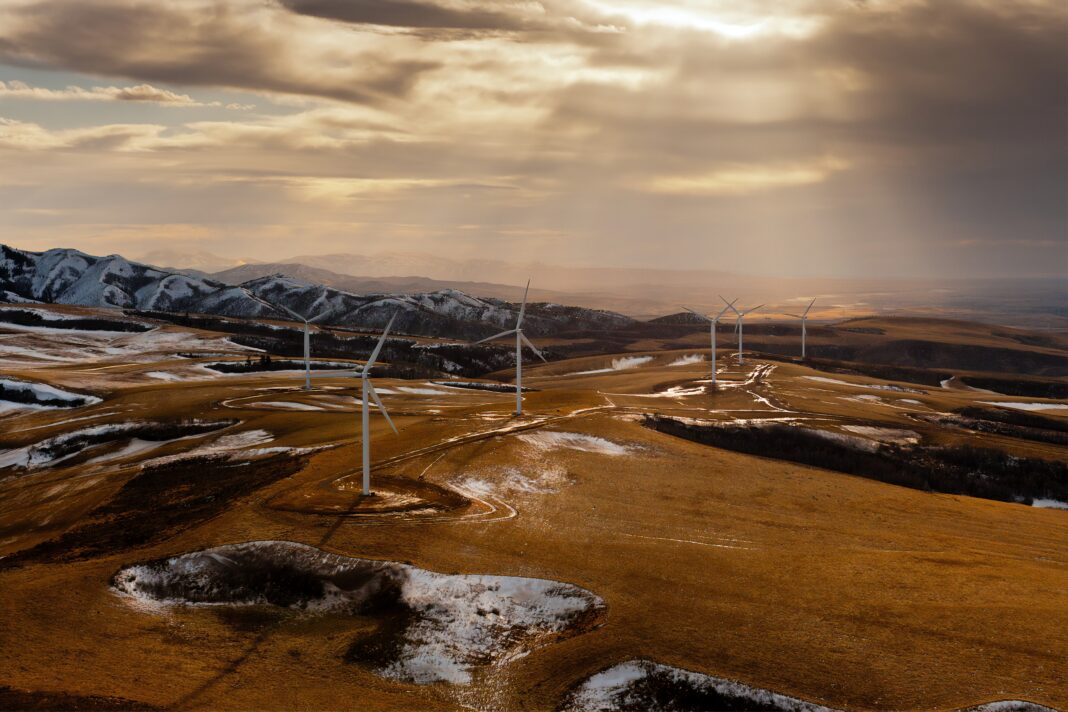
wind turbines
Renewable energy installations can provide round the clock energy in continents like Africa, where more than half of the people are without power. This is important for industries like gold mining, who need to use polluting diesel in offgrid locations.

Advancing the renewables-based energy transformation is an opportunity to meet international climate goals while boosting economic growth, creating millions of jobs and improving human welfare by 2050, finds the first Global Renewables Outlook released by the International Renewable Energy Agency – IRENA. They are like the United Nations for Renewable Energy and are based in Abu Dhabi.

While a pathway to deeper decarbonisation requires total energy investment up to USD 130 trillion, the socio-economic gains of such an investment would be massive, the Outlook reveals. Transforming the energy system could boost cumulative global GDP gains above business-as-usual by USD 98 trillion between now and 2050. It would nearly quadruple renewable energy jobs to 42 million, expand employment in energy efficiency to 21 million and add 15 million in system flexibility.

IRENA’s Director-General Francesco La Camera said: “Governments are facing a difficult task of bringing the health emergency under control while introducing major stimulus and recovery measures. The crisis has exposed deeply embedded vulnerabilities of the current system. IRENA’s Outlook shows the ways to build more sustainable, equitable and resilient economies by aligning short-term recovery efforts with the medium-and long-term objectives of the Paris Agreement and the UN Sustainable Development Agenda.”

“By accelerating renewables and making the energy transition an integral part of the wider recovery, governments can achieve multiple economic and social objectives in the pursuit of a resilient future that leaves nobody behind.”

The Global Renewables Outlook examines building blocks of an energy system along with investment strategies and policy frameworks needed to manage the transition. It explores ways to cut global CO2 emissions by at least 70 per cent by 2050.

Green Hydrogen?

A new perspective on deeper decarbonisation shows a path towards net-zero and zero emissions. Building on five technology pillars, particularly green hydrogen and extended end-use electrification could help replace fossil-fuels and slash emissions in heavy industry and hard-to-decarbonise sectors.

Low-carbon investment would significantly pay off, the Outlook shows, with savings eight times more than costs when accounting for reduced health and environmental externalities. A climate-safe path would require cumulative energy investments of USD 110 trillion by 2050 but achieving full carbon neutrality would add another USD 20 trillion.

The Outlook also looked at energy and socio-economic transition paths in 10 regions worldwide. Despite varied paths, all regions are expected to see higher shares of renewable energy use, with Southeast Asia, Latin America, the European Union and Sub-Saharan Africa poised to reach 70-80 per cent shares in their total energy mixes by 2050.

Similarly, electrification of end uses like heat and transport would rise everywhere, exceeding 50 per cent in East Asia, North America and much of Europe. All regions would also significantly increase their welfare and witness net job gains in the energy sector despite losses in fossil fuels. However, economy-wide, regional job gains are distributed unevenly. While regional GDP growth would show considerable variation, most regions could expect gains.

Raising regional and country-level ambitions will be crucial to meet interlinked energy and climate objectives and harvest socio-economic welfare. Stronger coordination on international, regional and domestic levels will be equally important, the Outlook concludes, with financial support being directed where needed including to the most vulnerable countries and communities.

As partner of the Climate Investment Platform, launched to drive clean energy uptake and mobilise clean investment, IRENA will advance collaborative action targeted to help countries create enabling conditions and unlock renewable investment.


Karin Kloosterman
Karin Kloostermanhttp://www.greenprophet.com
Karin Kloosterman is an award-winning journalist, innovation strategist, and founder of Green Prophet, one of the Middle East’s pioneering sustainability platforms. She has ranked in the Top 10 of Verizon innovation competitions, participated in NASA-linked challenges, and spoken worldwide on climate, food security, and future resilience. With an IoT technology patent, features in Canada’s National Post, and leadership inside teams building next-generation agricultural and planetary systems — including Mars-farming concepts — Karin operates at the intersection of storytelling, science, and systems change. She doesn’t report on the future – she helps design it. Reach out directly to [email protected]

LEAVE A REPLY

Please enter your comment!
Please enter your name here

TRENDING

Astro uses AI to help procure land for renewable energy

For oil-rich, environmentally vigilant Gulf states, Astro isn’t just another startup story. It is a blueprint for accelerating an energy transition that is now existential, not optional.

How Renewable Energy is Revolutionizing the Way We Power Our World

Solar has become the star of the transition thanks to modular hardware and straightforward installation. It fits dense cities and remote towns alike. Many companies are turning to rooftop arrays and carport systems - and exploring commercial solar installation as a practical way to lock in future savings.

Leading Through a Dual-Energy Transition: Balancing Decarbonisation with Energy Security

Experience in one area of the energy industry isn't enough to guarantee readiness across all the others. That's where a structured program like an MBA in energy can come in. Today's advanced curricula explore energy economics, finance, policy, and strategic management alongside the technical subjects. And when pursuing an energy MBA online, professionals can skill up and retrain without having to step out of the labor market -- an important perk at a time when skilled professionals are already in short supply.

M2PV Capital Targets the American Southwest as Its Launchpad for Off-Grid EV Growth

In the American Southwest, electric vehicles face extreme heat, long travel distances, and limited grid access that expose the real infrastructure gaps behind the EV transition. M2PV Capital is building off-grid charging and power systems designed to operate independently in the region’s most demanding conditions.

What Renewable Energy Means for Long-Term Environmental Planning

In the context of American energy policy (setting the stage for the world as oil prices are in USD), the relevance of renewable energy planning is increasingly evident. Federal agencies are preparing final biofuel blending mandates under the Renewable Fuel Standard, with decisions expected early in 2026 after delays that have left investors and producers in limbo.

Qatar’s climate hypocrisy rides the London Underground

Qatar remains a master of doublethink—burning gas by the megaton while selling “sustainability” to a world desperate for clean air. Wake up from your slumber people.

How Quality of Hire Shapes Modern Recruitment

A 2024 survey by Deloitte found that 76% of talent leaders now consider long-term retention and workforce contribution among their most important hiring success metrics—far surpassing time-to-fill or cost-per-hire. As the expectations for new hires deepen, companies must also confront the inherent challenges in redefining and accurately measuring hiring quality.

8 Team-Building Exercises to Start the Week Off 

Team building to change the world! The best renewable energy companies are ones that function.

Thank you, LinkedIn — and what your Jobs on the Rise report means for sustainable careers

While “green jobs” aren’t always labeled as such, many of the fastest-growing roles are directly enabling the energy transition, climate resilience, and lower-carbon systems: Number one on their list is Artificial Intelligence engineers. But what does that mean? Vibe coding Claude? 

Somali pirates steal oil tankers

The pirates often stage their heists out of Somalia, a lawless country, with a weak central government that is grappling with a violent Islamist insurgency. Using speedboats that swarm the targets, the machine-gun-toting pirates take control of merchant ships and then hold the vessels, crew and cargo for ransom.

Leopoldo Alejandro Betancourt López Turned Ocean Plastic Into Profitable Sunglasses

Few fashion accessories carry the environmental burden of sunglasses. Most frames are constructed from petroleum-based plastics and acrylic polymers that linger in landfills for centuries, shedding microplastics into soil and waterways long after they've been discarded. Leopoldo Alejandro Betancourt López, president of the Spanish eyewear brand Hawkers, saw this problem differently than most industry executives.

Why Dr. Tony Jacob Sees Texas Business Egos as Warning Signs

Everything's bigger in Texas. Except business egos.  Dr. Tony Jacob figured...

Israel and America Sign Renewable Energy Cooperation Deal

Other announcements made at the conference include the Timna Renewable Energy Park, which will be a center for R&D, and the AORA Solar Thermal Module at Kibbutz Samar, the world's first commercial hybrid solar gas-turbine power plant that is already nearing completion. Solel Solar Systems announced it was beginning construction of a 50 MW solar field in Lebrija, Spain, and Brightsource Energy made a pre-conference announcement that it had inked the world's largest solar deal to date with Southern California Edison (SCE).

Related Articles

Popular Categories