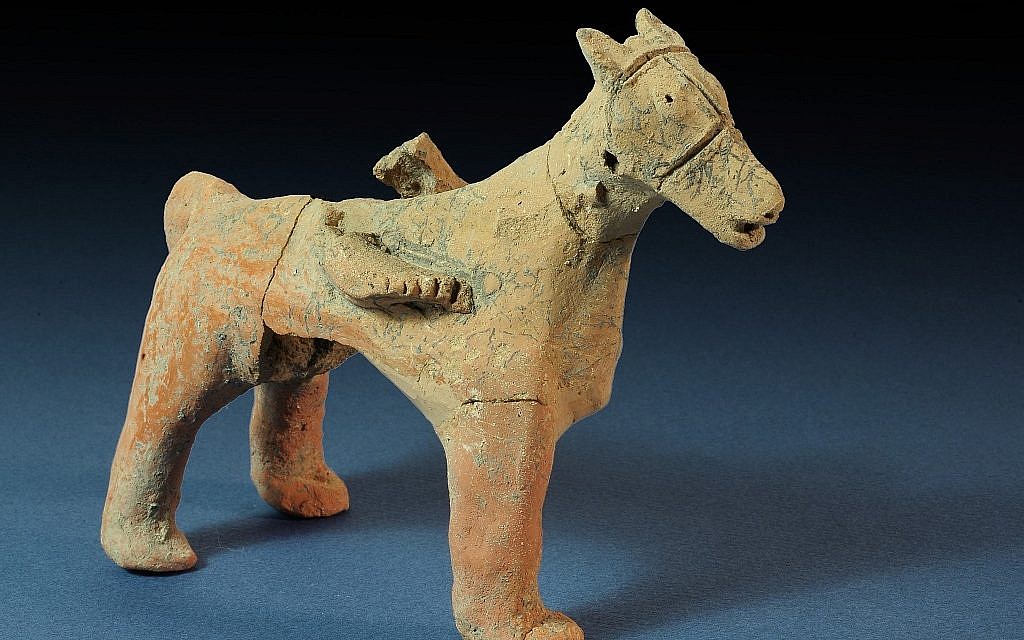
These dinosaurs were warm blooded

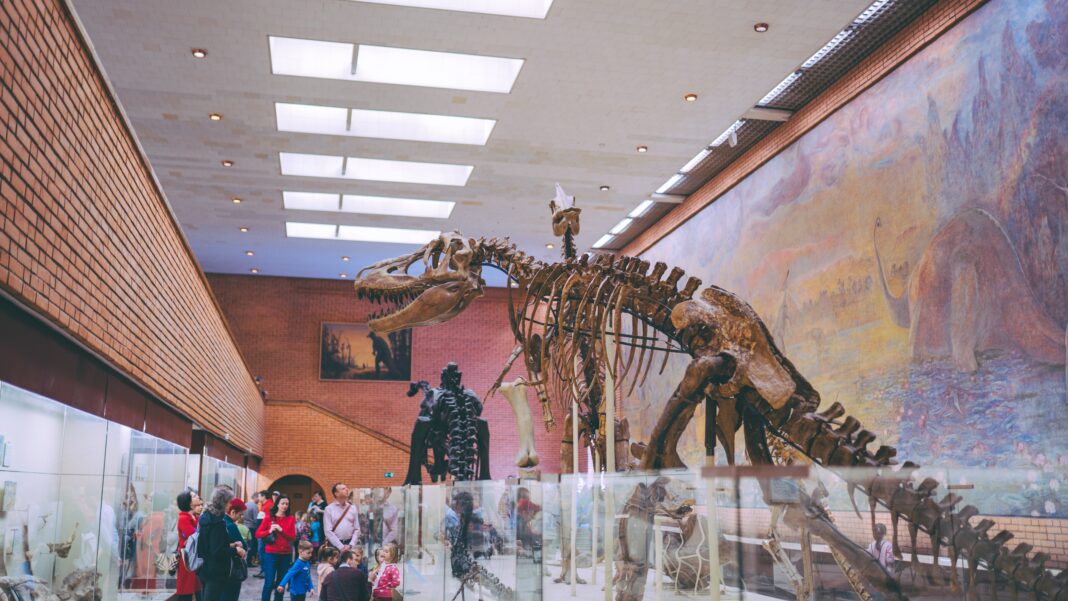
dinosaur egg museum, display of dinosaur bones

How Did Dinosaur Parents Know When Their Kids Had a Fever? Prehistoric egg shells provide clues to dinosaurs’ evolution from cold- to warm-blooded creatures.

From the time that dinosaur fossils were first discovered, these creatures have fascinated scientists and laypeople alike.  In the academic world, their remains provide important clues into the prehistoric world; in popular culture, dinosaurs have inspired blockbuster hits, such as Jurassic Park and King Kong.

Now, a research team headed by Professor Hagit Affek at the Hebrew University of Jerusalem’s Institute of Earth Sciences has unlocked a mystery that has stymied researchers for decades: How did dinosaurs regulate their body temperatures?  Were they warm-blooded or cold-blooded?

Affek’s study, published today in Science Advances, relies on a novel method to measure historical temperatures.  Called clumped isotope geochemistry, this method analyzes chemical bonds among heavy isotopes in calcium carbonate minerals—the main ingredient in egg shells.  This allows scientists to calculate both the temperature at which the minerals formed and the body temperature of the mother that laid the egg.

Should ancient bones be up for sale? Shoppers in Dubai say yes!

Affek and her team applied this method to fossilized eggs from three distinct dinosaur species along the evolutionary path from reptile to bird and found that their body temperature ranged from 35-40 degrees Celsius.  However, this bit of information still did not answer the question as to whether dinosaurs were endothermic or exothermic, meaning, did they generate their own body heat or get warm from the sun and their environment?

“The global climate during the dinosaur era was significantly warmer than it is today. For this reason, measuring only the body temperatures of dinosaurs who lived near the equator wouldn’t tell us whether they were endo- or exothermic because their body temperature may simply have been a cold-blooded response to the hot climates they lived in,” shared Affek.

Should you eat diatomaceous earth (DT) for health?

To address this issue, her team focused on dinosaurs that lived in high latitudes like Alberta, Canada—far enough north to ensure that their warm body temperatures were the result of an internal, metabolic warming process rather than merely reflecting the climate around them.

First Saudi dinosaur bones discovered and they’re 72 million years old

To verify their hypothesis, Affek and her team needed to determine the environmental temperature in Alberta back when dinosaurs lived.  They accomplished this by applying their isotope method to mollusk shells that lived in Alberta alongside the dinosaurs.  Since mollusks are cold-blooded creatures, they reflect the ambient climate of the time.  The mollusks’ body temperature measured 26°C and showed that the dinosaurs living in Alberta were endothermic; otherwise, they could not have maintained a body temperature of 35-40°C.

As dinosaurs evolved, they moved from lizard-like (cold-blooded) characteristics to avian (warm-blooded) ones.  “We believe that this transformation happened very early on in dinosaurs’ evolution since the Mayasaura eggs—a lizard-like dinosaur species that we tested—were already able to self-regulate their body temperature, just like their warm-blooded, bird-like cousins, the Torrdons,” explained Affek.

The fact that both of these species, located at opposite ends of the dinosaur evolutionary tree, had body temperatures higher than those of their environment means that both had the ability to warm themselves.

Either way, Mother of Dragons, if your baby is showing a fever of 41 degrees, it’s time to call the doctor.


Karin Kloosterman
Karin Kloostermanhttp://www.greenprophet.com
Karin Kloosterman is an award-winning journalist, innovation strategist, and founder of Green Prophet, one of the Middle East’s pioneering sustainability platforms. She has ranked in the Top 10 of Verizon innovation competitions, participated in NASA-linked challenges, and spoken worldwide on climate, food security, and future resilience. With an IoT technology patent, features in Canada’s National Post, and leadership inside teams building next-generation agricultural and planetary systems — including Mars-farming concepts — Karin operates at the intersection of storytelling, science, and systems change. She doesn’t report on the future – she helps design it. Reach out directly to [email protected]

Hot this week

Why Health Systems Are Reaching a Turning Point

Health emerges from a continuous energy and material flow from water through food to human physiology. Technical energy systems support this cycle through water treatment, agriculture, and infrastructure.

Sustainability That Sells: How Profit and Purpose Come Together in the Hive

Whether you are a commercial grower, hobbyist beekeeper or retail equipment supplier, this system opens a new income stream with minimal environmental impact.

The Fitness App Revolution: Building the Future of Wellness Through Strategic Development

In an era where smartphones are ubiquitous and health consciousness is at an all-time high, the fitness industry has undergone a radical digital transformation. Fitness applications have moved far beyond simple pedometers, evolving into comprehensive wellness platforms that serve as personal trainers, nutritionists, and community hubs right in our pockets.

A Brief History of Basil From India to Italy

Beloved, fortunate, sweet, and royal; an herb with a long and storied history in Asia and across the world. Called by many names, basil has featured in previous Green Prophet articles, so enjoy another serving, a brief history of basil.

How Renewable Energy is Revolutionizing the Way We Power Our World

Solar has become the star of the transition thanks to modular hardware and straightforward installation. It fits dense cities and remote towns alike. Many companies are turning to rooftop arrays and carport systems - and exploring commercial solar installation as a practical way to lock in future savings.

Topics

Why Health Systems Are Reaching a Turning Point

Health emerges from a continuous energy and material flow from water through food to human physiology. Technical energy systems support this cycle through water treatment, agriculture, and infrastructure.

Sustainability That Sells: How Profit and Purpose Come Together in the Hive

Whether you are a commercial grower, hobbyist beekeeper or retail equipment supplier, this system opens a new income stream with minimal environmental impact.

The Fitness App Revolution: Building the Future of Wellness Through Strategic Development

In an era where smartphones are ubiquitous and health consciousness is at an all-time high, the fitness industry has undergone a radical digital transformation. Fitness applications have moved far beyond simple pedometers, evolving into comprehensive wellness platforms that serve as personal trainers, nutritionists, and community hubs right in our pockets.

A Brief History of Basil From India to Italy

Beloved, fortunate, sweet, and royal; an herb with a long and storied history in Asia and across the world. Called by many names, basil has featured in previous Green Prophet articles, so enjoy another serving, a brief history of basil.

How Renewable Energy is Revolutionizing the Way We Power Our World

Solar has become the star of the transition thanks to modular hardware and straightforward installation. It fits dense cities and remote towns alike. Many companies are turning to rooftop arrays and carport systems - and exploring commercial solar installation as a practical way to lock in future savings.

How does one start prepping?

Faced with an extreme winter storm this year, Americans wonder how to be prepared for catastrophe. Miriam has lived through wars in the Middle East - so she's prepared on giving you a guide to prepping.

Fishermen sue tire manufacturers on behalf of the salmon

A federal trial in San Francisco has brought US tire manufacturers, fishing groups, and environmental scientists into court over a chemical most drivers have never heard of — but which scientists say may be silently reshaping aquatic ecosystems.

Listening to Water: Tarek Atoui’s Next Work for Tate Modern

Born in Beirut, Lebanon in 1980 and now living in Paris, Atoui has spent years building instruments that don’t sit comfortably in concert halls. Many of them involve water, glass, and ceramics — materials that react to sound instead of simply producing it.

Related Articles

Popular Categories