
American irrigation research finds watering sweet spot for agriculture and earth

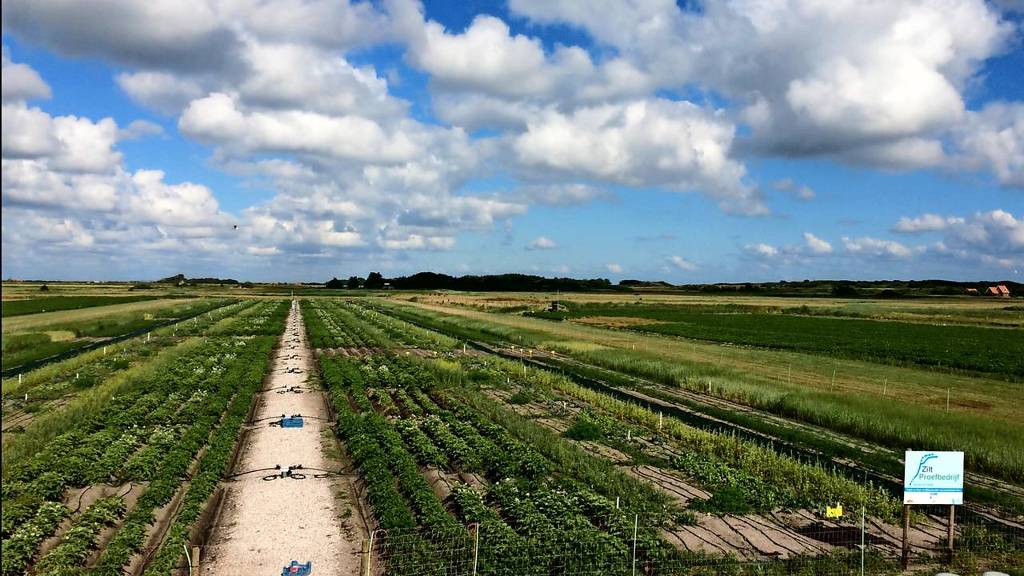
salt farm texel
A healthy lifestyle consists of a mixture of habits. Diet, exercise, sleep and other factors all must be in balance. Similarly, a sustainable farm operates on a balanced plan of soil, crop, and water management techniques.


The western United States is a region with scarce water resources (that’s why tools like Eddy were invented, using hydroponics and AI instead of soil). In this case, water management techniques make up a larger piece of a sustainability plan. There is mounting concern around the globe about water scarcity. This is due to urban sprawl, depleting water supplies in some areas, and predicted water shortages in the future with less snowpack.

Water management techniques that lead to the optimal use of limited resources are not well-identified. Yet. Matt Yost, a researcher at Utah State University, is working to find the best combination of practices to maximize yield, profit, and water efficiency. He has some new results that might be applied to the overly water stressed Middle East.

“Most cropland in Utah and the western United States is irrigated,” explains Yost. “There are areas where groundwater from aquifers is being used faster than it can be replaced. Some of these areas are under intense pressure to conserve water.” 

Water for irrigation comes from aquifers far below the farm’s surface. Aquifers are naturally refilled by water from the surface by precipitation. Increased water use can lower the water table. Eventually wells can go dry. These factors make water optimization crucial for food security.

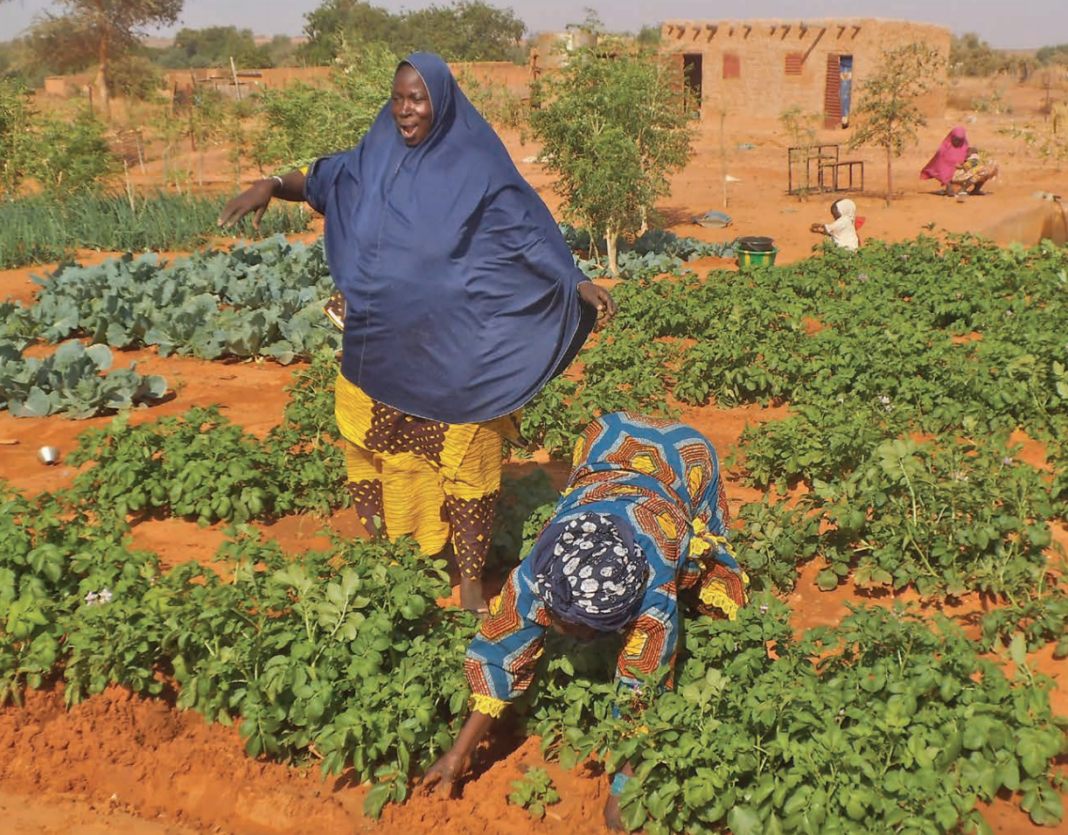
African farmer women
Women in Africa with the back breaking work of watering their farm

Yost researches many water management techniques. These include using irrigation scheduling and advanced pivot irrigation technology. In addition, his team researches crop and soil management practices. They look at rotating in drought-tolerant crops, cover crops, and reduced tillage.

Yost’s team works together with many farmers across Utah to do farm-scale trials.

“Irrigation research is tough and costly on farmer’s fields,” says Yost. “It’s especially true when it comes to irrigation scheduling. Though difficult, this on-farm research and collaboration is crucial for the understanding and adoption of new water optimization techniques.”

So, what is the best combination of management techniques to maximize yield, profit, and water efficiency? The answer isn’t clear, yet. Results and analyses are still pending, but Yost offers some initial recommendations:

  • Advanced pivot irrigation technologies, such as mobile drip and low-energy precision application or spray application, are beneficial. They can usually maintain crop yields with about 20% less applied water.
  • Most farmers may be able to reduce irrigation rates by 10% without affecting crop yields.
  • Biochar applications are showing few short-term crop yield or water saving benefits.

“We are beginning to answer questions about new irrigation techniques and scheduling approaches,” says Yost. “But many still exist for discovery.”

Next, Yost and his team hope to secure funding for long-term irrigation research sites. Water is a limited and vital resource. Strategies to optimize water use will be crucial to the sustainability of irrigated agriculture.

“In irrigated agriculture, agronomy and irrigation go hand-in-hand,” explains Yost. “Nearly everything about one influences the other. Most irrigation programs focus more on engineering than on irrigation science. With my original training in agronomy, I’ve noticed knowledge gaps and have identified opportunities to unite irrigation science and agronomy.” Yost’s unique perspective offers a holistic approach to integrated water, soil, and crop management.

Yost presented his work at the November International Annual Meeting of the American Society of Agronomy, Crop Science Society of America, and Soil Science Society of America in San Antonio.

Funding for this research came from an Innovator Award from the Foundation for Food and Agriculture, Western Sustainable Agriculture Research and Education, and the Utah State University Water Initiative and Extension Service.

Karin Kloosterman
Karin Kloostermanhttp://www.greenprophet.com
Karin Kloosterman is an award-winning journalist, innovation strategist, and founder of Green Prophet, one of the Middle East’s pioneering sustainability platforms. She has ranked in the Top 10 of Verizon innovation competitions, participated in NASA-linked challenges, and spoken worldwide on climate, food security, and future resilience. With an IoT technology patent, features in Canada’s National Post, and leadership inside teams building next-generation agricultural and planetary systems — including Mars-farming concepts — Karin operates at the intersection of storytelling, science, and systems change. She doesn’t report on the future – she helps design it. Reach out directly to [email protected]

LEAVE A REPLY

Please enter your comment!
Please enter your name here

TRENDING

Astro uses AI to help procure land for renewable energy

For oil-rich, environmentally vigilant Gulf states, Astro isn’t just another startup story. It is a blueprint for accelerating an energy transition that is now existential, not optional.

Can biochar reduce ‘Forever Chemicals’ in food if it’s used in farms?

Biochar is produced by heating organic material in a low-oxygen environment so it does not burn. This process, known as pyrolysis, transforms plant matter into a stable, carbon-rich material.

Sink holes from over-watering farmers’ fields

Sinkholes are rapidly appearing in Turkey’s central Anatolian farming region, particularly around Konya and Karapınar. These giant gaping holes in the ground in areas of farmland, known locally as obruk, are not random geological events. They are linked to prolonged drought, climate-driven heat stress, and heavy groundwater extraction for agriculture in one of the country’s most important breadbaskets.

Oil pollution in Basrah’s soil is 1,200% higher than it should be

Soil pollution levels in parts of Basra are 1,200% to 3,300% higher than those typically measured in cities like Toronto or New York, according to new comparative soil data. It's getting into water.

Peace hospital opens between Jordan and Israel

The proposed medical centre, described by Emek HaMaayanot Regional Council head Itamar Matiash as “a centre for cancer treatment, so that people from Jordan or further away could come and receive treatment,” would become the flagship of a wider cluster of medical, academic and innovation-based services planned for the Israeli half of the zone.

Qatar’s climate hypocrisy rides the London Underground

Qatar remains a master of doublethink—burning gas by the megaton while selling “sustainability” to a world desperate for clean air. Wake up from your slumber people.

How Quality of Hire Shapes Modern Recruitment

A 2024 survey by Deloitte found that 76% of talent leaders now consider long-term retention and workforce contribution among their most important hiring success metrics—far surpassing time-to-fill or cost-per-hire. As the expectations for new hires deepen, companies must also confront the inherent challenges in redefining and accurately measuring hiring quality.

8 Team-Building Exercises to Start the Week Off 

Team building to change the world! The best renewable energy companies are ones that function.

Thank you, LinkedIn — and what your Jobs on the Rise report means for sustainable careers

While “green jobs” aren’t always labeled as such, many of the fastest-growing roles are directly enabling the energy transition, climate resilience, and lower-carbon systems: Number one on their list is Artificial Intelligence engineers. But what does that mean? Vibe coding Claude? 

Somali pirates steal oil tankers

The pirates often stage their heists out of Somalia, a lawless country, with a weak central government that is grappling with a violent Islamist insurgency. Using speedboats that swarm the targets, the machine-gun-toting pirates take control of merchant ships and then hold the vessels, crew and cargo for ransom.

Leopoldo Alejandro Betancourt López Turned Ocean Plastic Into Profitable Sunglasses

Few fashion accessories carry the environmental burden of sunglasses. Most frames are constructed from petroleum-based plastics and acrylic polymers that linger in landfills for centuries, shedding microplastics into soil and waterways long after they've been discarded. Leopoldo Alejandro Betancourt López, president of the Spanish eyewear brand Hawkers, saw this problem differently than most industry executives.

Why Dr. Tony Jacob Sees Texas Business Egos as Warning Signs

Everything's bigger in Texas. Except business egos.  Dr. Tony Jacob figured...

Israel and America Sign Renewable Energy Cooperation Deal

Other announcements made at the conference include the Timna Renewable Energy Park, which will be a center for R&D, and the AORA Solar Thermal Module at Kibbutz Samar, the world's first commercial hybrid solar gas-turbine power plant that is already nearing completion. Solel Solar Systems announced it was beginning construction of a 50 MW solar field in Lebrija, Spain, and Brightsource Energy made a pre-conference announcement that it had inked the world's largest solar deal to date with Southern California Edison (SCE).

Related Articles

Popular Categories