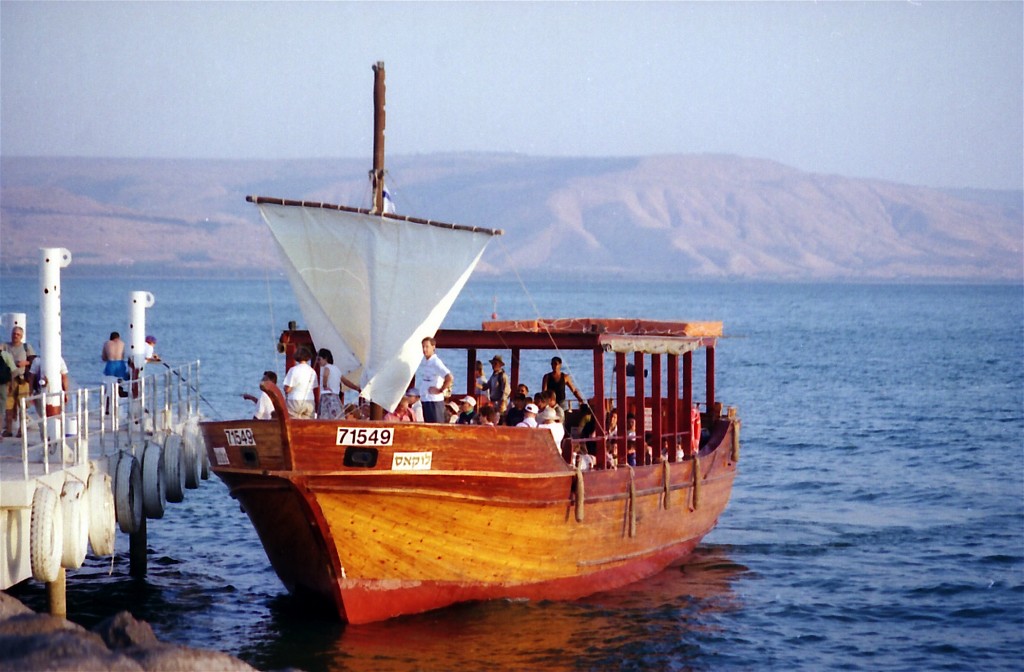

Nearly nine years have passed since since Green Prophet joined a media tour sponsored by Eco Peace head Gideon Bromberg to see what has happened to the lower Jordan River. At that time, Bromberg showed us the current situation of a once free-flowing stream that had now become nothing more than a trickle of brackish and diverted sewage water by the time it reached its final destination: the Dead Sea. The Sea of Galilee, the natural water source for the lower Jordan, is itself in dire circumstances due to years of extreme drought and water usage by Israel, the Palestinians and neighboring countries who all lay claim to the lake’s dwindling water supplies.
Historically, the Sea of Galilee, known as the Kinneret by Israel, and the Jordan River are so much a part of biblical history that they are often mentioned in biblical writings.
This is particularly so in Christianity’s New Testament, where Jesus often referred to the Sea of Galilee as being holy and recruited fishermen from the lake to “throw away thy nets and become fishers of men”. With lake levels near the catastrophic “black line” despite recent winter rains the former “holy waters” of the lake are still at levels not seen in well over 100 years, according to Yoav Barkay-Arbel, an engineer for Mekorot, Israel’s national water company.
In a recent article in the UK news site, The Guardian, the state of the lake’s water crises was dramatized by wondering how Jesus would have regarded the lake had it been in such a sad condition at the time he preached on its shores and allegedly walked upon its waters.
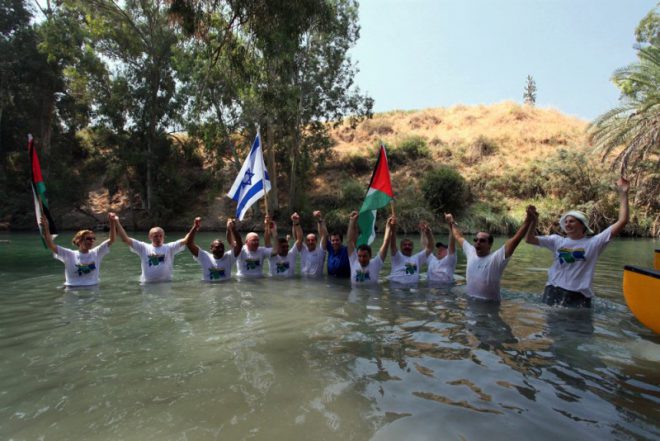
The Guardian article pointed out that Christian pilgrims who visit the Baptismal sites on the Jordan, particularly at the traditional biblical baptismal site at Kasir al Yahud (photo below), run the risk of contracting severe health problems due the extreme pollution of the water there. Due to this problem, most baptism rituals now take place at a Jordan River site near the lake’s southern shore, the Yardanit Baptismal Site.
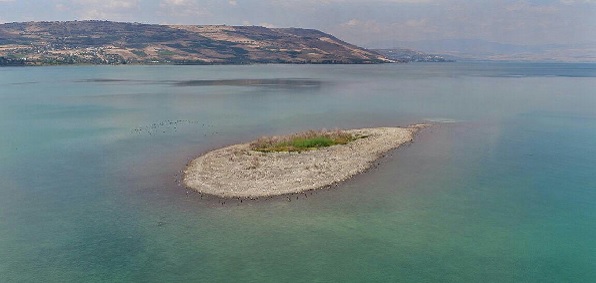
Despite water levels rising more than a meter during the recent rains, the lake’s current water levels are now between the “lower red line”, where the water is still considered as being safe; and the dire “black line” where underground saline springs could make the lake’s water too saline to use.
Israel already gets more than 85% of its fresh drinking water from 5 desalination plants along its Mediterranean sea coast. Although environmentally non-friendly and very expensive to operate, desalination has become so widely used that there are now plans to actually divert some of this desalinated water into the Kinneret to help raise the lake’s fresh water levels as well as diverting a small portion of lake water back into the lower Jordan.
Eco Peace’s Gideon Bromberg has been involved for many years in trying to enable better distribution of the Sea of Galilee’s water to all of the inhabitants of the region. including Jordan and the Palestinians. Bromberg says that letting the lake level reach the dreaded “black line” “would be an ecological disaster.”
Bromberg had previously told us during the river tour 9 years earlier that this situation had already happened to the Lower Jordan River, largely due to most of the Kinneret’s water being diverted by Israel for drinking and agricultural use. The present situation in February, 2019 has definitely not improved and has even deteriorated further. Mekorot’s Barkay-Arbel says that a so-called wet winter only gives a temporary respite to the lake’s critical water shortage and that summer water evaporation will return the lake to former critical water levels.
Israel’s 1994 peace agreement with Jordan included diverting part of the Kinneret’s water to the Kingdom to help alleviate its dire water shortage. Joint desalination projects between Israel and Jordan have been discussed for a number of years; but so far, no joint projects have actually been implemented. Israel continues to be in a state of war with Syria; and as such, no water agreements have been officially been reached between them. This is especially so, since Syria has demanded that its border actually reaches part of the lake; which up to now has been unacceptable to Israel.
More about the water issues of the Sea of Galilee and Lower Jordan River:
Sea of Galilee still critical water levels despite winter rain