Sustainable plastics that emerge from the sea

red algae, agar-agar, agar, veganism, Morocco

A new Tel Aviv University study describes a process to make bioplastic polymers that don’t require land or fresh water — resources that are scarce in much of the world. The polymer is derived from microorganisms that feed on seaweed. It is biodegradable, produces zero toxic waste and recycles into organic waste.

The invention was the fruit of a multidisciplinary collaboration between Dr. Alexander Golberg of TAU’s Porter School of Environmental and Earth Sciences and Prof. Michael Gozin of TAU’s School of Chemistry. Their research was recently published in the journal Bioresource Technology.

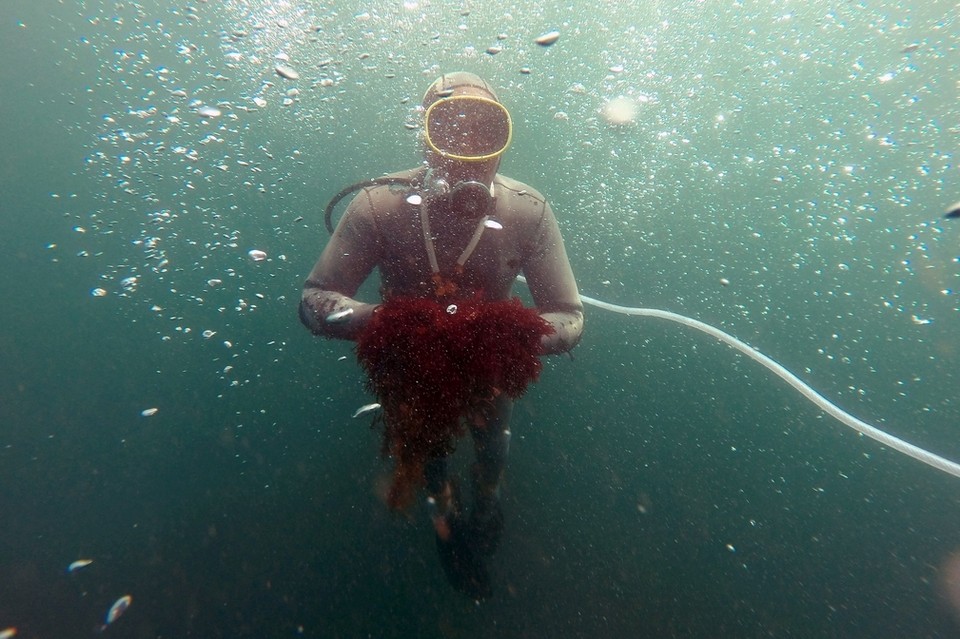
Red gold seaweed harvest Morocco

According to the United Nations, plastic accounts for up to 90 percent of all the pollutants in our oceans, yet there are few comparable, environmentally friendly alternatives to the material.

“Plastics take hundreds of years to decay. So bottles, packaging and bags create plastic ‘continents’ in the oceans, endanger animals and pollute the environment,” says Dr. Golberg. “Plastic is also produced from petroleum products, which has an industrial process that releases chemical contaminants as a byproduct.

“A partial solution to the plastic epidemic is bioplastics, which don’t use petroleum and degrade quickly. But bioplastics also have an environmental price: To grow the plants or the bacteria to make the plastic requires fertile soil and fresh water, which many countries, including Israel, don’t have.

red algae seaweed morocco

“Our new process produces ‘plastic’ from marine microorganisms that completely recycle into organic waste.”

The researchers harnessed microorganisms that feed on seaweed to produce a bioplastic polymer called polyhydroxyalkanoate (PHA). “Our raw material was multicellular seaweed, cultivated in the sea,” Dr. Golberg says. “These algae were eaten by single-celled microorganisms, which also grow in very salty water and produce a polymer that can be used to make bioplastic.

“There are already factories that produce this type of bioplastic in commercial quantities, but they use plants that require agricultural land and fresh water. The process we propose will enable countries with a shortage of fresh water, such as Israel, China and India, to switch from petroleum-derived plastics to biodegradable plastics.”

According to Dr. Golberg, the new study could revolutionize the world’s efforts to clean the oceans, without affecting arable land and without using fresh water. “Plastic from fossil sources is one of the most polluting factors in the oceans,” he says. “We have proved it is possible to produce bioplastic completely based on marine resources in a process that is friendly both to the environment and to its residents.

“We are now conducting basic research to find the best bacteria and algae that would be most suitable for producing polymers for bioplastics with different properties,” he concludes.

The research was partially funded by the TAU-Triangle Regional R&D Center in Kfar Kara under the academic auspices of Tel Aviv University, and by the Israeli Ministry of Energy and Infrastructures.

Bhok Thompson
Bhok Thompsonhttp://www.greenprophet.com
Bhok Thompson is an “eco-tinkerer” who thrives at the intersection of sustainability, business, and cutting-edge technology. With a background in mechanical engineering and a deep fascination with renewable energy, Bhok has dedicated his career to developing innovative solutions that bridge environmental consciousness with profitability. A frequent contributor to Green Prophet, Bhok writes about futuristic green tech, urban sustainability, and the latest trends in eco-friendly startups. His passion for engineering meets his love for business as he mentors young entrepreneurs looking to create scalable, impact-driven companies. Beyond his work, Bhok is an avid collector of vintage mechanical watches, believing they represent an era of precision and craftsmanship that modern technology often overlooks. Reach out: [email protected]

LEAVE A REPLY

Please enter your comment!
Please enter your name here

TRENDING

Astro uses AI to help procure land for renewable energy

For oil-rich, environmentally vigilant Gulf states, Astro isn’t just another startup story. It is a blueprint for accelerating an energy transition that is now existential, not optional.

The Science Behind How Elite Marathon Runners Train

Discover the science behind elite marathon training. Explore techniques, nutrition, and mental strategies that propel top runners to success.

Earth building with Dead Sea salt bricks

Researchers develop a brick made largely from recycled Dead Sea salt—offering a potential alternative to carbon-intensive cement.

The Christ’s thorn (sidr tree) is also a well-known folk medicine

Christ’s thorn jujube (Ziziphus spina-christi) also known as the sidr tree is a real, identifiable tree native to the Middle East, and it appears—directly or indirectly—in Islam, Judaism, and later Christian tradition. The connections between the three faiths are not theological agreements but overlapping uses, names, and symbolic associations rooted in the same landscape.

Farm To Table Israel Connects People To The Land

Farm To Table Israel is transforming the traditional dining experience into a hands-on journey.

Qatar’s climate hypocrisy rides the London Underground

Qatar remains a master of doublethink—burning gas by the megaton while selling “sustainability” to a world desperate for clean air. Wake up from your slumber people.

How Quality of Hire Shapes Modern Recruitment

A 2024 survey by Deloitte found that 76% of talent leaders now consider long-term retention and workforce contribution among their most important hiring success metrics—far surpassing time-to-fill or cost-per-hire. As the expectations for new hires deepen, companies must also confront the inherent challenges in redefining and accurately measuring hiring quality.

8 Team-Building Exercises to Start the Week Off 

Team building to change the world! The best renewable energy companies are ones that function.

Thank you, LinkedIn — and what your Jobs on the Rise report means for sustainable careers

While “green jobs” aren’t always labeled as such, many of the fastest-growing roles are directly enabling the energy transition, climate resilience, and lower-carbon systems: Number one on their list is Artificial Intelligence engineers. But what does that mean? Vibe coding Claude? 

Somali pirates steal oil tankers

The pirates often stage their heists out of Somalia, a lawless country, with a weak central government that is grappling with a violent Islamist insurgency. Using speedboats that swarm the targets, the machine-gun-toting pirates take control of merchant ships and then hold the vessels, crew and cargo for ransom.

Leopoldo Alejandro Betancourt López Turned Ocean Plastic Into Profitable Sunglasses

Few fashion accessories carry the environmental burden of sunglasses. Most frames are constructed from petroleum-based plastics and acrylic polymers that linger in landfills for centuries, shedding microplastics into soil and waterways long after they've been discarded. Leopoldo Alejandro Betancourt López, president of the Spanish eyewear brand Hawkers, saw this problem differently than most industry executives.

Why Dr. Tony Jacob Sees Texas Business Egos as Warning Signs

Everything's bigger in Texas. Except business egos.  Dr. Tony Jacob figured...

Israel and America Sign Renewable Energy Cooperation Deal

Other announcements made at the conference include the Timna Renewable Energy Park, which will be a center for R&D, and the AORA Solar Thermal Module at Kibbutz Samar, the world's first commercial hybrid solar gas-turbine power plant that is already nearing completion. Solel Solar Systems announced it was beginning construction of a 50 MW solar field in Lebrija, Spain, and Brightsource Energy made a pre-conference announcement that it had inked the world's largest solar deal to date with Southern California Edison (SCE).

Related Articles

Popular Categories