
Environmental Arson From Gaza Still Blazes In Southern Israel

burned nature reserve israel
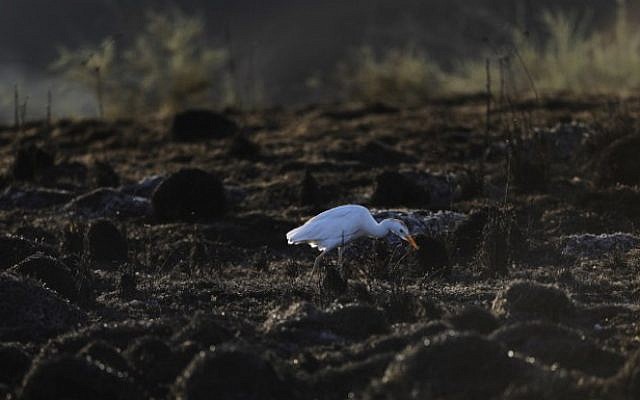
Cattle egret searches for food in burned Be’eri nature reserve. Credit: APF Menahem Kahana

Our previous post about this under-reported eco-disaster made some ripples in the media, but it’s a mistake to assume that the flames have already died out. Three months of daily attacks have caused staggering environmental damage to Israel’s southern communities and nature reserves. Every day brings fresh news of fires and damage.

It started with a couple of teenagers who thought it would be fun to attach burning rags to kite tails and set some Israeli fields on fire. Hamas quickly realized that the cheaply-produced kites are an effective tactic for harassing people across the border fence and damaging Israeli fields. They took over, expanding operations to fire-bearing balloons and helium-filled condoms, some with Molotov cocktails tied to their strings.

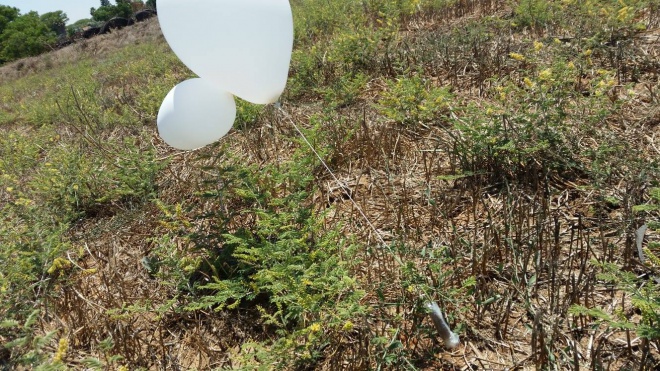
Summer winds carry the fiery weapons over the fence. Some have landed in playgrounds and home gardens, where children already know not to touch stray kites and balloons. Here’s one balloon with an explosive that drifted as far as 20 kilometers into Israel.
balloon with molotov cocktail
Balloon with explosive attrached. Credit: Matan Tzuri.

It’s estimated that incinerated farmland and nature reserves amount to about 17,500 dunams (4,300 acres, or 7 square miles). While the arson continues, those numbers will only go up. The Israel Nature and Parks Authority reports that some of the reserves have suffered irreparable damage.

What kind of damage are we talking about? Let’s start with the flora. According to the Jewish National Fund, in the reserves grew fig, pine, agave and carob groves. A rare wild garlic. Flowering quills that covered the lands with white every spring. Spur flax, brushwood, rockrose, pink sun-rose, thorny saltwort, and Egyptian sage. The Palestine iris, the anemone, the scarlet crowfoot and the Carmel bee orchid.
Anemones Be'eri Nature Reserve
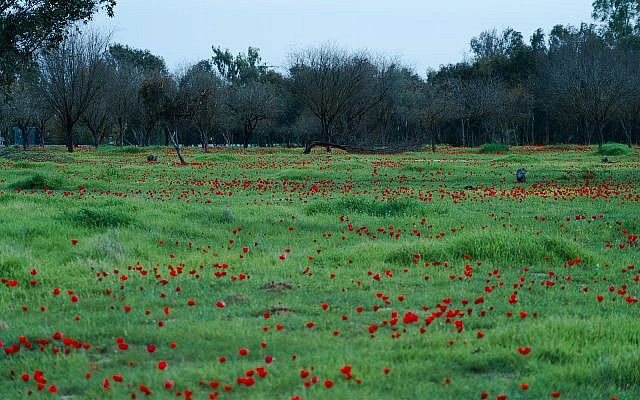
Be’eri Nature Reserve covered with anemones in springtime. Credit: Luke Tress

That’s just for starters. Hundreds of wild and man-sown species that supplied wildlife with food and shade – and delight in nature to people hiking through the reserve – are but black ashes now.
Be'eri Nature Reserve after kite fires
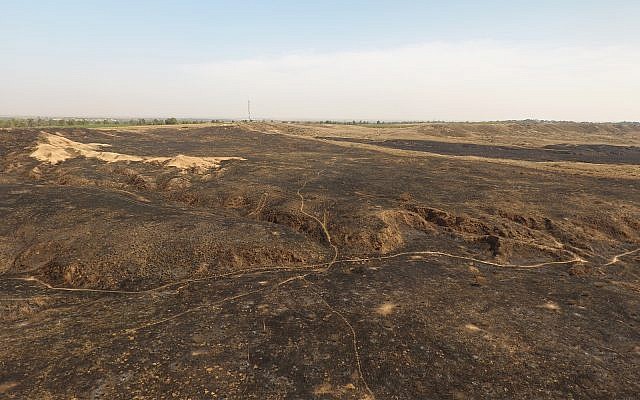
Be’eri Nature Reserve after kite fires via DRONEIMAGEBANK.

The Be’eri and Karmia reserves were host to gazelles, snakes, Indian porcupines, turtles and desert monitor lizards, which are so rare as to be monitored with hidden cameras; as well as hyenas, cranes and swamp cats, among others.

Koby Sofer, KKL ranger at Israel’s southern coastal plain, notes, “Swamp cats, cranes, hyenas and their cubs populate the reserve during this time of year. I assume the hyenas knew how to lead their cubs out of areas inflicted by the fire, although not always. Most of the damage done is to the reptile population and ground-incubating animals such as partridges and their chicks. There are birds that are still nesting.”

Nesting birds, which include the Eurasian hobby falcon, would have abandoned their nests and the eggs or fledglings to escape the flames.

Sofer, who holds a count of mammals crossing the Bee’ri reserve every spring, continues, “We’re talking about a bushy area that houses many animals who felt protected here. Our tortoises obviously didn’t have a chance to escape the fire, as well as the snakes that didn’t take cover. I assume that animals deep inside holes in the ground are protected,” he concluded.

Rafi Bavian, security officer of the Sdot Negev Regional Council, said in a interview with Ynet news, “We’re sure that time will do its part. When the rains return, plants will flower again. But to see the crater area burned like this, and to think of all the animals burned to death, is heartbreaking.”

sheep flee fire Israeli nature reserve
Sheep flee fires on nature reserve. Credit: Barel Efraim.

We noted that people on both sides of the border are suffering from smoke and tear gas inhalation in our previous posts. While we can only report on health damage from the Israeli side, these are known facts: the rate of asthma attacks in children who live in the southern Negev is soaring.
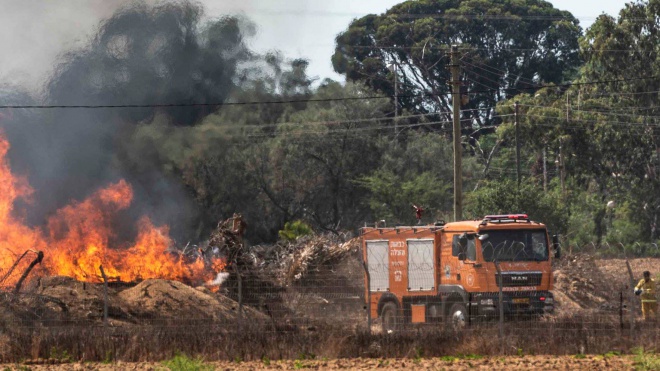
Gaza arson burns forests
Devastation of forests near Moshav Sde Avraham. Credit: Sara Lischinsky.

Sara Lischinsky of Moshav Sde Avraham observed a bulldozer tracing a swath around her home, cutting dry vegetation down – just in case fire approaches. Fire has already come close to several houses on her moshav.
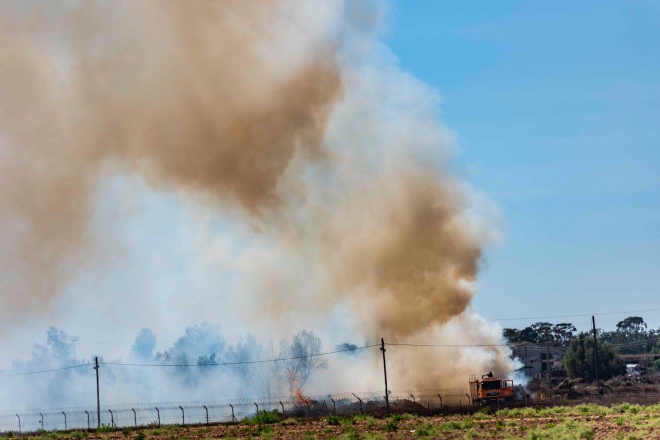
Gaza arson fires in Israel
Kite fires near homes. Credit Sara Lischinsky.

No wonder that stress is so prevalent that classes in mental resiliency have opened in the area. Those are only two long-lasting effects on the southern population of Israel. But then – those who care nothing about precious natural reserves don’t care about human lives, either.


Miriam Kresh
Miriam Kreshhttps://www.greenprophet.com/
Miriam Kresh is an American ex-pat living in Israel. Her love of Middle Eastern food evolved from close friendships with enthusiastic Moroccan, Tunisian and Turkish home cooks. She owns too many cookbooks and is always planning the next meal. Miriam can be reached at miriam (at) greenprophet (dot) com.

LEAVE A REPLY

Please enter your comment!
Please enter your name here

TRENDING

Astro uses AI to help procure land for renewable energy

For oil-rich, environmentally vigilant Gulf states, Astro isn’t just another startup story. It is a blueprint for accelerating an energy transition that is now existential, not optional.

The Science Behind How Elite Marathon Runners Train

Discover the science behind elite marathon training. Explore techniques, nutrition, and mental strategies that propel top runners to success.

Earth building with Dead Sea salt bricks

Researchers develop a brick made largely from recycled Dead Sea salt—offering a potential alternative to carbon-intensive cement.

The Christ’s thorn (sidr tree) is also a well-known folk medicine

Christ’s thorn jujube (Ziziphus spina-christi) also known as the sidr tree is a real, identifiable tree native to the Middle East, and it appears—directly or indirectly—in Islam, Judaism, and later Christian tradition. The connections between the three faiths are not theological agreements but overlapping uses, names, and symbolic associations rooted in the same landscape.

Farm To Table Israel Connects People To The Land

Farm To Table Israel is transforming the traditional dining experience into a hands-on journey.

Qatar’s climate hypocrisy rides the London Underground

Qatar remains a master of doublethink—burning gas by the megaton while selling “sustainability” to a world desperate for clean air. Wake up from your slumber people.

How Quality of Hire Shapes Modern Recruitment

A 2024 survey by Deloitte found that 76% of talent leaders now consider long-term retention and workforce contribution among their most important hiring success metrics—far surpassing time-to-fill or cost-per-hire. As the expectations for new hires deepen, companies must also confront the inherent challenges in redefining and accurately measuring hiring quality.

8 Team-Building Exercises to Start the Week Off 

Team building to change the world! The best renewable energy companies are ones that function.

Thank you, LinkedIn — and what your Jobs on the Rise report means for sustainable careers

While “green jobs” aren’t always labeled as such, many of the fastest-growing roles are directly enabling the energy transition, climate resilience, and lower-carbon systems: Number one on their list is Artificial Intelligence engineers. But what does that mean? Vibe coding Claude? 

Somali pirates steal oil tankers

The pirates often stage their heists out of Somalia, a lawless country, with a weak central government that is grappling with a violent Islamist insurgency. Using speedboats that swarm the targets, the machine-gun-toting pirates take control of merchant ships and then hold the vessels, crew and cargo for ransom.

Leopoldo Alejandro Betancourt López Turned Ocean Plastic Into Profitable Sunglasses

Few fashion accessories carry the environmental burden of sunglasses. Most frames are constructed from petroleum-based plastics and acrylic polymers that linger in landfills for centuries, shedding microplastics into soil and waterways long after they've been discarded. Leopoldo Alejandro Betancourt López, president of the Spanish eyewear brand Hawkers, saw this problem differently than most industry executives.

Why Dr. Tony Jacob Sees Texas Business Egos as Warning Signs

Everything's bigger in Texas. Except business egos.  Dr. Tony Jacob figured...

Israel and America Sign Renewable Energy Cooperation Deal

Other announcements made at the conference include the Timna Renewable Energy Park, which will be a center for R&D, and the AORA Solar Thermal Module at Kibbutz Samar, the world's first commercial hybrid solar gas-turbine power plant that is already nearing completion. Solel Solar Systems announced it was beginning construction of a 50 MW solar field in Lebrija, Spain, and Brightsource Energy made a pre-conference announcement that it had inked the world's largest solar deal to date with Southern California Edison (SCE).

Related Articles

Popular Categories