
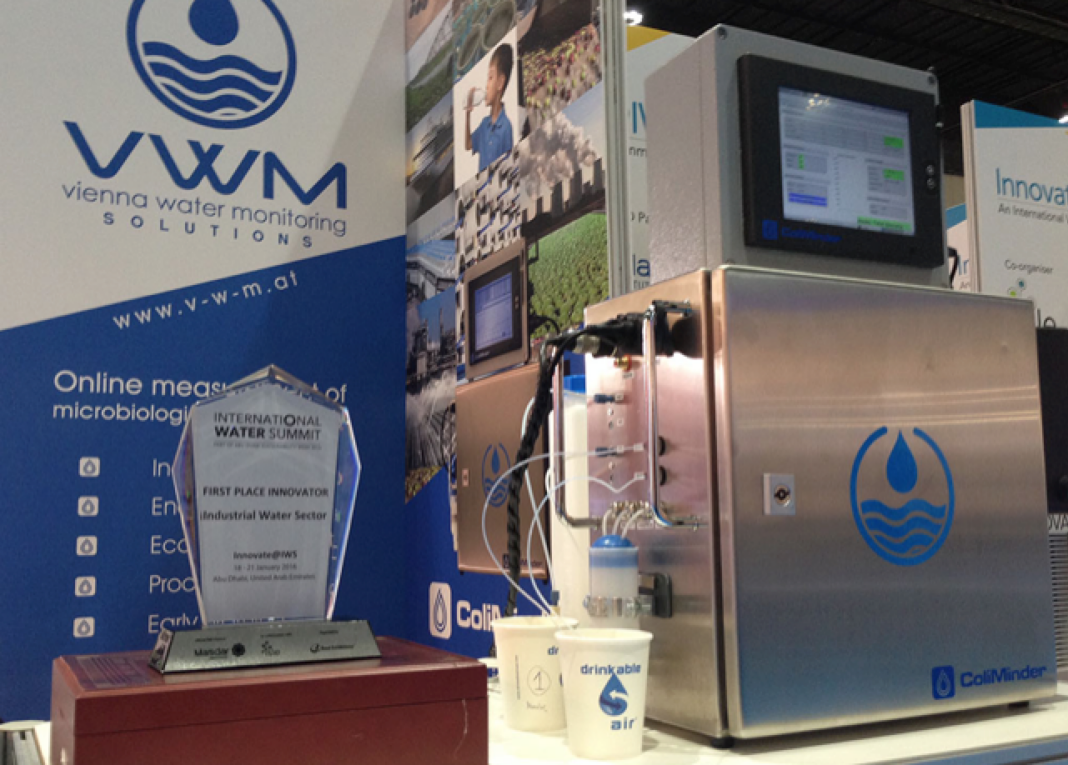


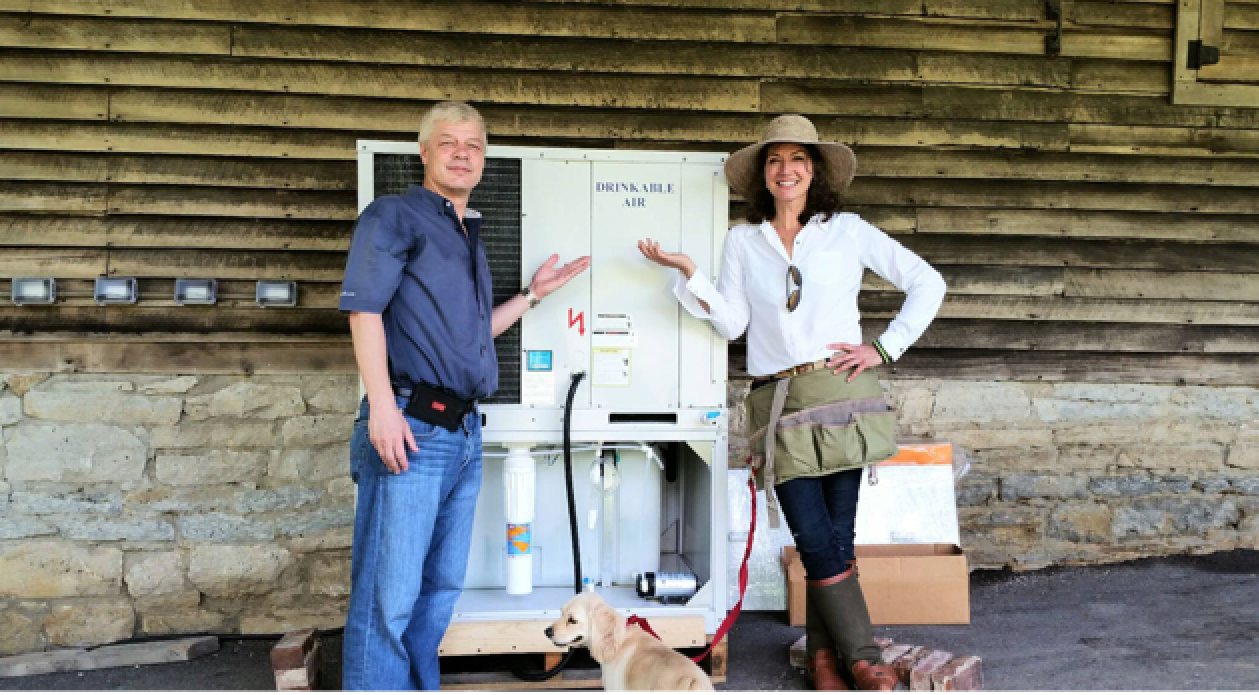
If you can provide the energy required to light one 100-watt light bulb for a day, you can generate 3 litres of water from the air in most locales around the world: that’s the promise of Drinkable Air, Inc. Based in South Florida, the company builds a series of scalable water-from-air machines that take air anywhere and convert it into drinkable water.
This is a much-needed alternative to massive energy- and capital-intensive desalination systems that require access to the sea. Drinkable Air is welcomed in communities in the Middle East where water is scarce, by rural music festival organizers with water needs for specific events, and even by regional utility companies looking to shift power demand to off-peak hours.
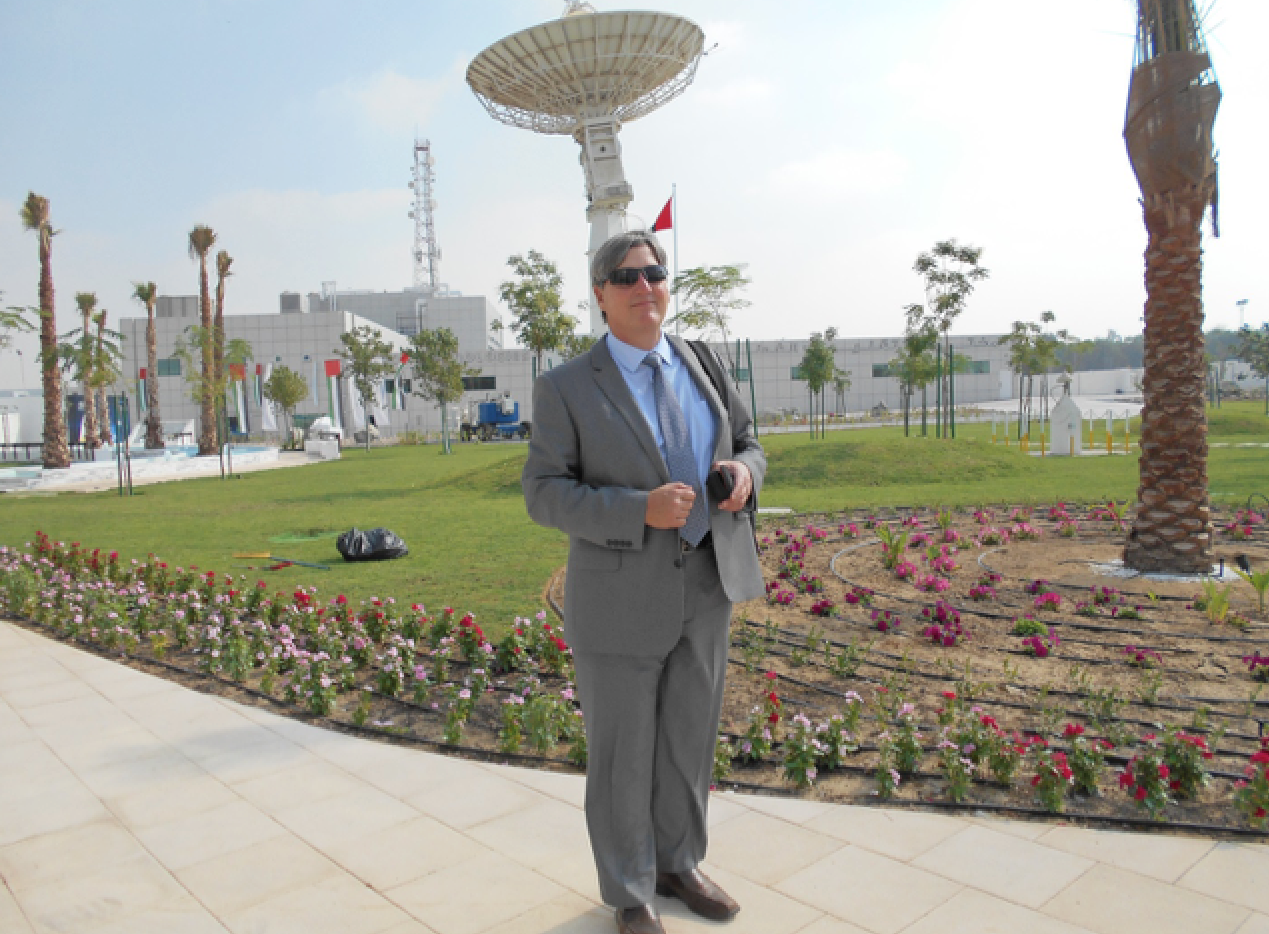
There is water everywhere waiting to be harvested, says Michael Bourgon of Drinkable Air, based in Toronto. “Do you know that there are quadrillions of litres of water sitting in the air at any one time? Water is a gas. There is always humidity and there is always some water in the air. Our trick is to turn that gas into a liquid,” Michael explains. “We need to cool it, which is just what happens when it rains.
How it works
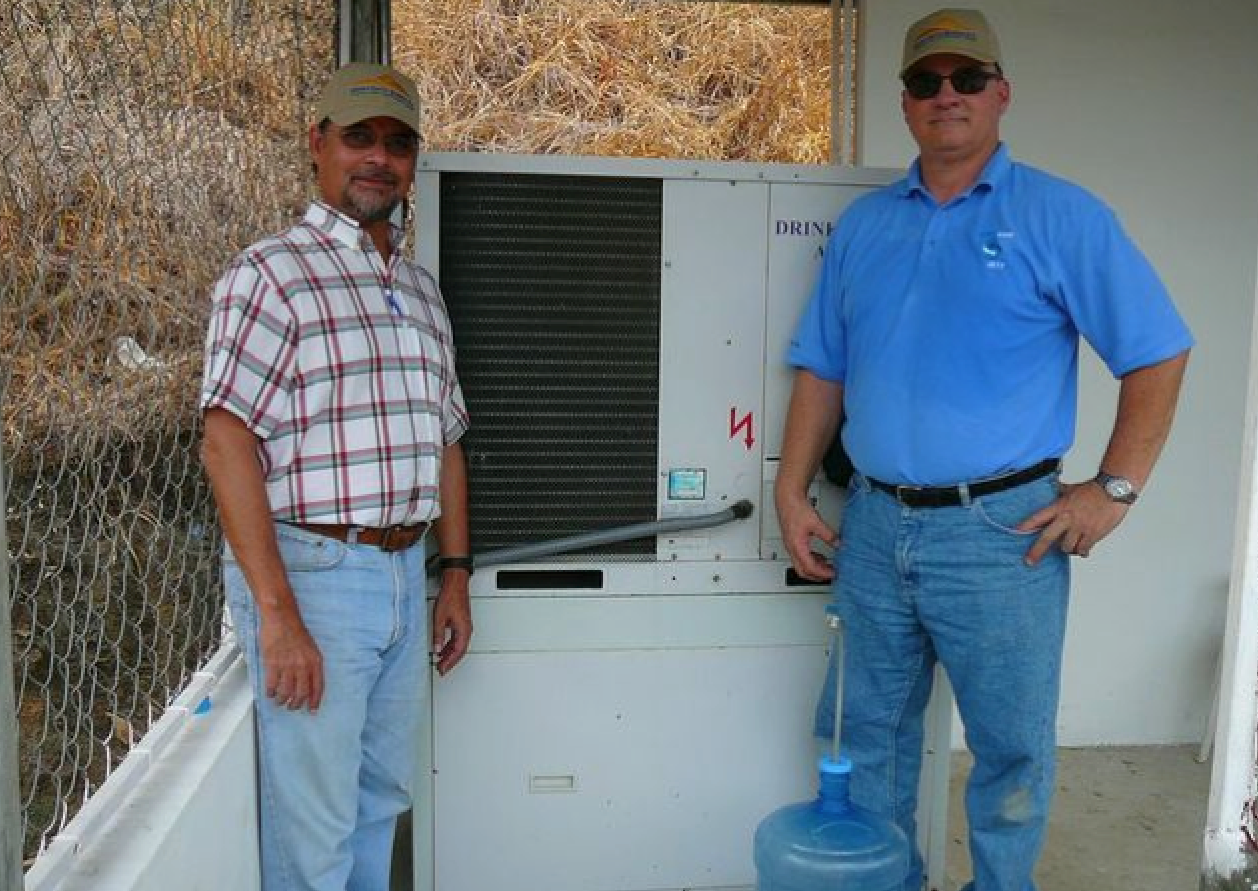
In the same way rain is made, Drinkable Air’s water generators pump air onto a cold surface called a condenser, which then turns it into liquid droplets inside the machine, the way a dehumidifier works. Next, Drinkable Air machines clean the water and enrich it with needed minerals for human consumption. And voila – fresh water.
Water, like oxygen, is a basic necessity we hardly consider in most regions in the United States and Canada, but when you live in the Middle East, North Africa, or Asia, it can be more precious than oil. Lack of water is why there are currently four major ongoing famines on the African continent. It is also the reason why conflict areas like Syria and Iraq are so hostile.
Of course, fossil-fuel rich countries like Saudi Arabia, Qatar and the United Arab Emirates can turn energy into water through desalination. But when desalination is not feasible, Drinkable Air can fill the void.
“Our main goal is to quench thirst,” says Michael. “We are also motivated to provide a commercial product that will solve big issues in the world.”
Drinkable Air products are currently installed in 38 countries around the globe, including the Middle East, Gulf Cooperating Countries (GCC), Africa, and Asia.

With Sky News Arabia WETEX, Dubai, October 2016Custom sizes for any needs
The Drinkable Air systems are designed to produce as little as 10 litres a day (hotel room use) to ones that can generate thousands of litres of water a day – suitable for a village or industrial plant.
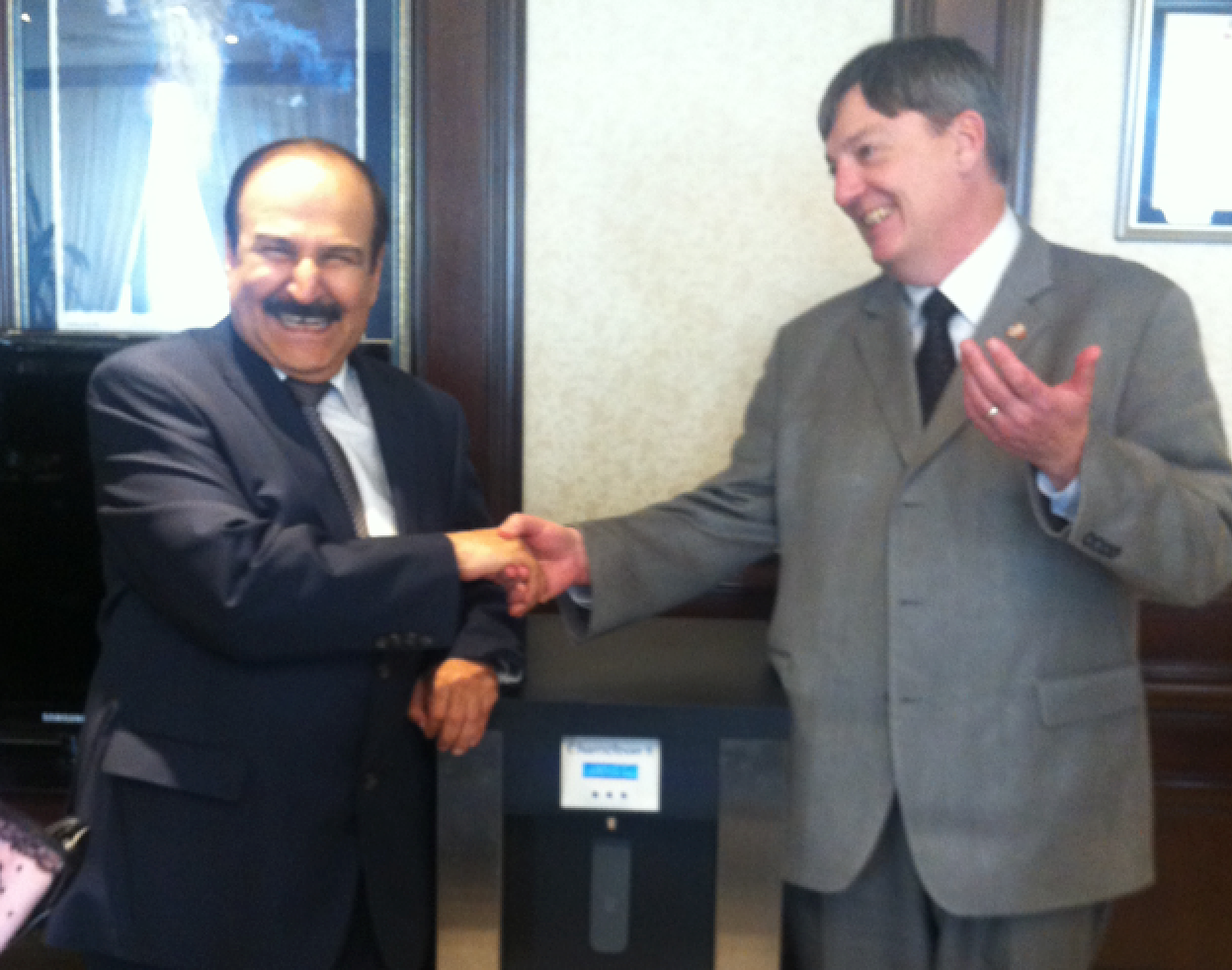
The smallest size unit the Chameleon 4 was first commissioned by the director of the Rotana Hotels in Abu Dhabi who wanted a solution that would cut down on plastic consumption. The same type of system is getting a lot of attention in India, where municipal water will never be clean in some people’s lifetimes, says Michael.
Money Savings
To do the basic math, in most cases it costs but 1/8 of a kilowatt-hour for every liter of water produced. In a first world country that’s about 3 cents per litre of drinkable water.
“Apart from the money saved on the water itself,” the reduction in packaging is a significant savings as well – about three liters of water are used to make a half liter bottle,” says Michael.
He notes, that money saved on water is equal to the cost per liter, CAPEX, spare parts and power is about thirteen cents US a litre; which compares that to a 250 ml bottle of Dasani water at $2 US, the cost per litre is $8 US.
One Satisfied Customer
Amy Lee Grant, the American singer married to country singer-songwriter Vince Gill, is a happy customer. Every summer Grant invites dozens of campers, summer staff, and volunteers to come together at Barefoot Republic Camp, representing 40 different ethnicities to her 450-acre farm in Nashville. The natural well water is contaminated with sulphur and one and all rely on Drinkable Air produced water to meet their needs.
Green Key
Drinkable Air recently announced the corporate partnership of Green Key Global and Drinkable Air, Inc. Green Key participants in the hospitality industry are present in more than 50 countries around the world, with 2,600 establishments in Europe, Middle East, Africa, Indian Ocean Islands, East Asia, Mexico and the Caribbean. The numbers continue to grow each year. Significant partners include the Starwood and Carlson hotel groups.
Green Key is awarded based on a standard set of international minimum criteria, and based on a standardised application and award process. The new Green Key criteria 2016-2020 are recognised by the Global Sustainable Tourism Council.
Demand Response for Power
Drinkable Air is also working on water production programs with major US power utilities using demand response processes.
Many jurisdictions around the world are utilizing demand response programs. Demand response (DR) essentially encourages a consumer to use power when it is most available (weekends, nights) and rewards the consumer for their co-operation in voluntary rationing (reduced tariffs, rebates, optimized product offerings).
Drinkable Air’s products produce the most water between dusk and dawn. They use the most power when making water (compressor and condenser operational) and little power when cooling, purifying and dispensing water.
The plan is simple: deploy units in an urban environment and remotely control (via the internet) the water making function, turning it ‘on’ when power is most abundant and cheapest and the machine is most efficient.
Consumer benefits include being able to drink the best water in the world, enjoying a reduction in cost for that potable water in the home, the convenience of not having to lug around jugs or bottles of water, no more need for expensive water purifier applications, and contributing to the environment by reducing the use of plastic and municipal resources.
“The end-user enjoys a better tasting and higher quality product, with no need to waste plastic bottles,” says Michael.
But we can’t help wondering – with all that water coming out of the air, can the local climate be changed near a Drinkable Air system?
Nope: “Nature abhors a vacuum,” says Michael. “The amount of water you are removing, even if you multiply by thousands, nature will take care of, and fill in the vacuum right away. Nothing to worry about.”
We can all drink to that.
Be in touch with Michael to do business: [email protected]
FACTOIDS ON WATER!
- Nearly 1 billion people live without accessible drinkable water
- 5 billion live without adequate sanitation
- 440 million school days lost due to no water
- 220 million hours each day are spent collecting water
- 7 miles walked each day by women and children to gather water
- 4,100 children under five die each day from preventable water-related illness
- 4 million people die each year from preventable water-related disease



[…] Source link […]