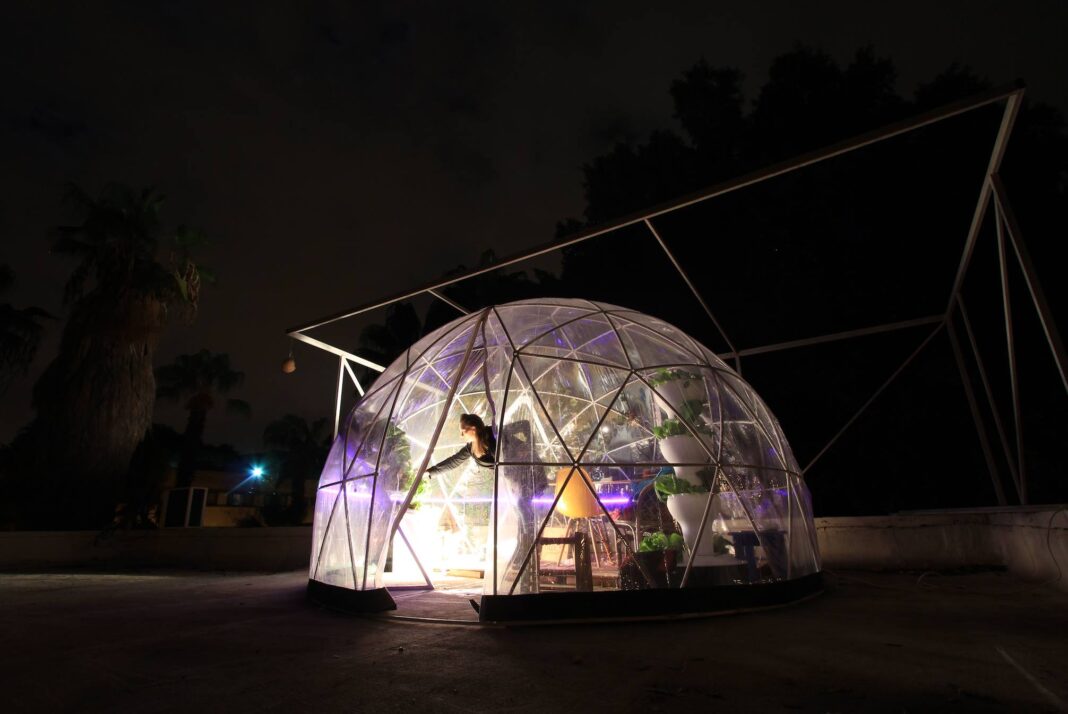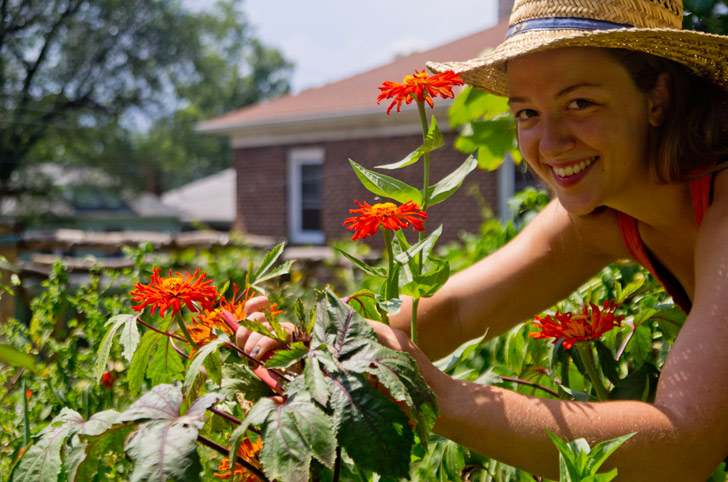
Hydroponics is new way of growing plants

Urban Farm School teaches you how to grow food in your city

As urban sprawl continues, we are seeing less and less green space. Farmland is sprouting with subdivisions, city parks are being crowded out, and ever-smaller residential lots feature more residence and less lot. People are becoming less and less familiar with the wonders of nature, and they are craving access to it.

Of course, from this necessity has come lots of creativity. Plants are remarkable things. They aren’t too picky about the particulars of their environment. As long as they have nutrients, water, light, and carbon dioxide, they are in pretty good shape.

It’s for this reason that even the most urban of dwellers can find a way to get a patch of Kentucky bluegrass or a strawberry vine (see our strawberry jam recipe here) to grow at their home. And they’re doing it in some interesting ways.

New Techniques
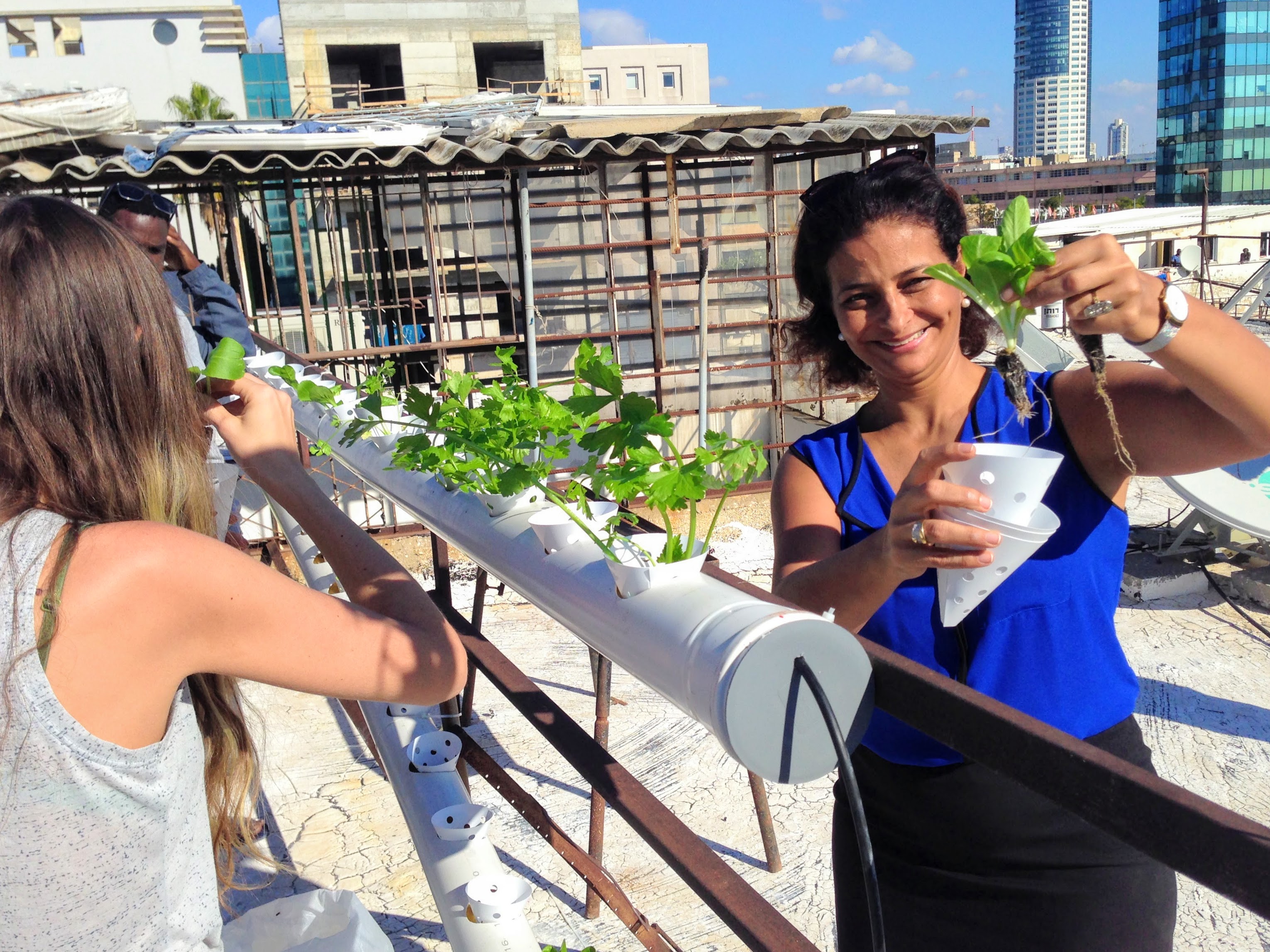
When you don’t have soil, how do you grow plants? This question would have once been considered ridiculous, but innovations in agriculture have made it a very legitimate query that has been answered in a number of ways.

Many people are familiar with hydroponics, the process of growing plants in some type of non-soil based arrangement. Many farms now incorporate hydroponics as an efficient and effective means of growing transplants for vegetables and other crops. Others utilize a dual arrangement between fish production, in which the waste water from fish is used to fertilize the plants, which cleans the water to return to the fish.

Alternative Locations

When an aerial view of a development shows more roof than turf, it’s time for turf to fight back–along with trees, shrubs, and flowers, and even fruits and vegetables.

Properly managed, rooftop gardens can produce an ideal location for city dwellers to escape the concrete and asphalt and to socialize with friends and neighbors. Thanks to their altitude, they provide a view that in many ways beats a natural setting, and they can even provide food.

Apartment buildings, offices, hospitals, and countless other structures are now integrating rooftop gardens as a way to help give back to the environment what was lost with construction. Parking lots also feature more green space, with grass strips and some trees mixed in among the curbs and culverts.

Tweaking The Traditional
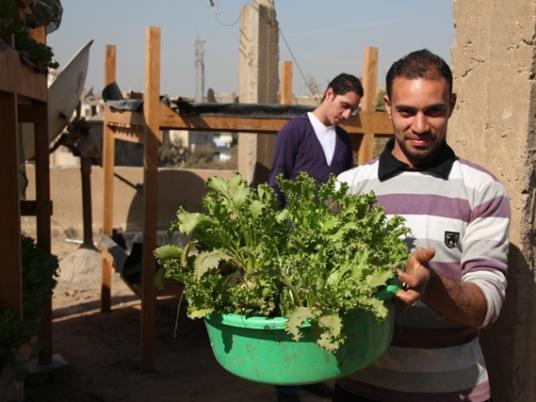
rooftop farming, egypt, maadi, hydroponic farms, soilless farming, agriculture, aquaculture, urban farming, organic farming

There was a time when people thought they had to have a large piece of ground to grow a garden. While it’s true that space-hungry crops like watermelons and corn require a lot of square footage, other food crops aren’t quite so demanding.

People with limited space or just limited mobility are growing tomatoes in buckets, strawberries in hanging flower pots, and cabbage in their landscaping as a way to make use of what Mother Nature offers. Others are finding ways to construct raised beds that use more traditional methods but utilize space more efficiently.

Even grass can be done the same way. Why not grow a little patch of it on your high-rise balcony? It could be the perfect place to rest your feet on a sunny day.

As the world has always done, it has adapted to changing conditions. There’s not as much open land as there once was, but that doesn’t mean plants and their natural beauty have been squeezed completely out of our lives. Creative techniques for growing plants will always show up to keep the world growing.

Karin Kloosterman
Karin Kloostermanhttp://www.greenprophet.com
Karin Kloosterman is an award-winning journalist, innovation strategist, and founder of Green Prophet, one of the Middle East’s pioneering sustainability platforms. She has ranked in the Top 10 of Verizon innovation competitions, participated in NASA-linked challenges, and spoken worldwide on climate, food security, and future resilience. With an IoT technology patent, features in Canada’s National Post, and leadership inside teams building next-generation agricultural and planetary systems — including Mars-farming concepts — Karin operates at the intersection of storytelling, science, and systems change. She doesn’t report on the future – she helps design it. Reach out directly to [email protected]

LEAVE A REPLY

Please enter your comment!
Please enter your name here

TRENDING

EU’s CAP reform continues trend of supporting small farmers in hour of need

Despite mounting political opposition, growing scientific criticism and even the retreat of many former industrial supporters like Nestlé and Danone, certain member-states and supermarket chains continue to prop up Nutri-Score. The Commission must therefore remain vigilant to ensure these attempts do not undermine farmers, distort fair competition or compromise the integrity of the single market – particularly as other pressing threats loom on the horizon.

How to grow an olive tree in a container

Don't have a garden? You can still own a fruiting olive tree, grown in a container. A sunny balcony and the right climate are the essential things; that, and time.

New advances on making aquaponics a valid business

Researchers from a desert country, where food growing is limited due to lack of water, offer a new proof of concept for a new closed loop system called aquaponics that produces more fish and vegetables while using less energy than conventional systems.

Make moss graffiti

Express your green views for all to see - right on the walls of your house, restaurant or office. Moss grafitti is the hottest trend in urban agriculture, after hydroponics and vertical farming.

Going green with Saint Patrick’s Day iconography

? BEER:  Spirulina, a blue-green algae superfood packed with protein, copper, and B vitamins, is growing in popularity among international brewers. RedDot Brewhouse, located next to the Singapore Botanical Gardens, offers a spirulina-infused lager.

Qatar’s climate hypocrisy rides the London Underground

Qatar remains a master of doublethink—burning gas by the megaton while selling “sustainability” to a world desperate for clean air. Wake up from your slumber people.

How Quality of Hire Shapes Modern Recruitment

A 2024 survey by Deloitte found that 76% of talent leaders now consider long-term retention and workforce contribution among their most important hiring success metrics—far surpassing time-to-fill or cost-per-hire. As the expectations for new hires deepen, companies must also confront the inherent challenges in redefining and accurately measuring hiring quality.

8 Team-Building Exercises to Start the Week Off 

Team building to change the world! The best renewable energy companies are ones that function.

Thank you, LinkedIn — and what your Jobs on the Rise report means for sustainable careers

While “green jobs” aren’t always labeled as such, many of the fastest-growing roles are directly enabling the energy transition, climate resilience, and lower-carbon systems: Number one on their list is Artificial Intelligence engineers. But what does that mean? Vibe coding Claude? 

Somali pirates steal oil tankers

The pirates often stage their heists out of Somalia, a lawless country, with a weak central government that is grappling with a violent Islamist insurgency. Using speedboats that swarm the targets, the machine-gun-toting pirates take control of merchant ships and then hold the vessels, crew and cargo for ransom.

Leopoldo Alejandro Betancourt López Turned Ocean Plastic Into Profitable Sunglasses

Few fashion accessories carry the environmental burden of sunglasses. Most frames are constructed from petroleum-based plastics and acrylic polymers that linger in landfills for centuries, shedding microplastics into soil and waterways long after they've been discarded. Leopoldo Alejandro Betancourt López, president of the Spanish eyewear brand Hawkers, saw this problem differently than most industry executives.

Why Dr. Tony Jacob Sees Texas Business Egos as Warning Signs

Everything's bigger in Texas. Except business egos.  Dr. Tony Jacob figured...

Israel and America Sign Renewable Energy Cooperation Deal

Other announcements made at the conference include the Timna Renewable Energy Park, which will be a center for R&D, and the AORA Solar Thermal Module at Kibbutz Samar, the world's first commercial hybrid solar gas-turbine power plant that is already nearing completion. Solel Solar Systems announced it was beginning construction of a 50 MW solar field in Lebrija, Spain, and Brightsource Energy made a pre-conference announcement that it had inked the world's largest solar deal to date with Southern California Edison (SCE).

Related Articles

Popular Categories