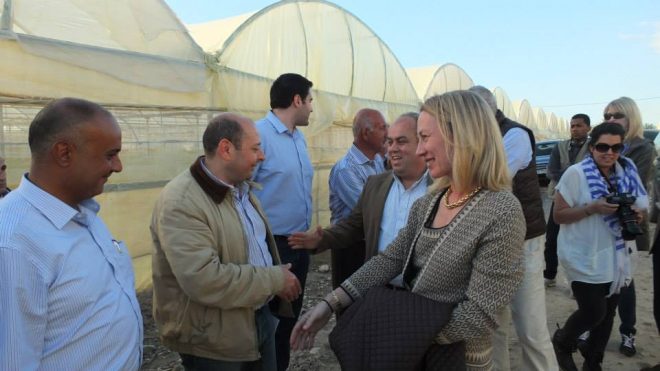
Jordan hydroponics supported by USAID

Visit to an hydroponic bell pepper farm

Growing crops without soil, otherwise known as hydroponic agriculture, is not a recent innovation. In fact, it can be traced back to ancient times and kingdoms like Babylonia, whose Hanging Gardens were said to have been created and nurtured by use of hydroponics.

The modern day Middle East, especially water-deprived countries like Jordan and Syria, has had on-going problems in that local agriculture cannot provide sufficient amounts of local food due to lack of sufficient water and arable land to grow crops. Other resource-rich countries such as Saudi Arabia, Qatar and the United Arab Emirates see hydroponics as the only solution for providing hyper local, fresh, nutritious food.

Jordan-hydroponics-eco-consult-a

As a result of this water scarcity problem, Jordan sees potential in hydroponic agricultural projects, which are said to use as much as 90 percent less water over conventional soil-based agriculture.

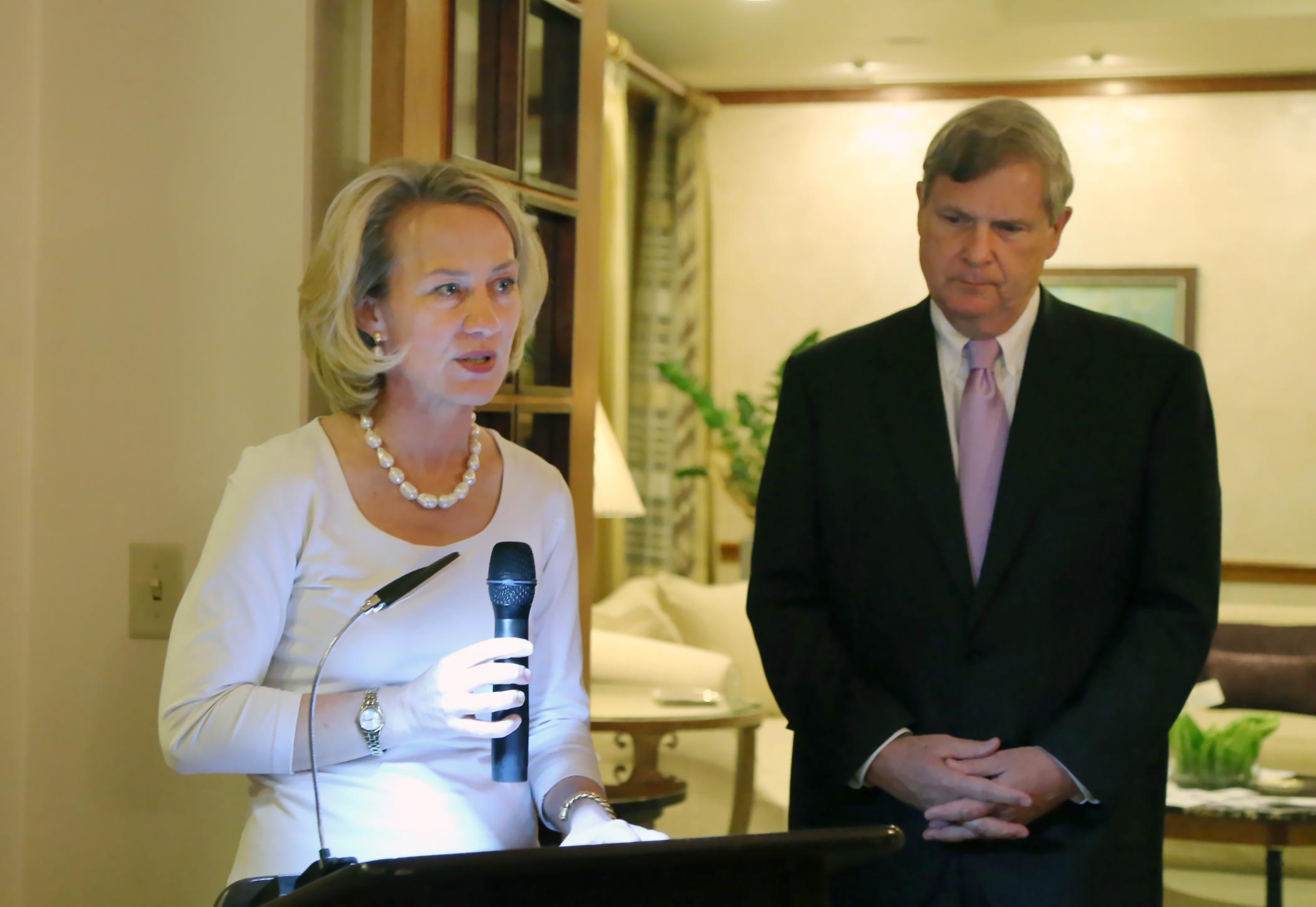
The Kingdom of Jordan is seeing commercial opportunities for local hydroponic farming and is getting some help from the USAID Hydroponic Green Farming Initiative (HGFI). Hydroponic agricultural projects growing vegetables by both hydroponic and organic methods were the subject of an event held in May 2015, where US Ambassador to Jordan Alice Wells featured these vegetables in an event with Jordanian governmental officials and local producers.

The event was aimed at showing how use of hydroponic growing techniques not only saves water resources but produces high quality yields as well. Ambassador Wells told the participants:

“The future of hydroponic farming techniques is bright in Jordan. Hydroponic farming techniques are well-suited toward maximizing Jordan’s scarce supply of water. From my visits to hydroponic farms in the Jordan Valley, I’ve seen that the potential to grow more produce through hydroponic techniques is significant, given the minimal additional investment required to implement them.”
vilsack-wells-jordan-2015-may_0

She added that hydroponic agriculture maximizes Jordan’s scarce water supplies. Her visits to hydroponic projects in the Jordan Valley indicate a good potential for this type of agriculture, with just a minimal additional investment required.

Chefs who attended the event were able to see the quality of the hydroponically-grown produce, which often uses no pesticides. Um Ali, who heads a woman’s agricultural cooperative in the north of Jordan, told the gathering that production of herbs like thyme is much better using hydroponic agriculture than by traditional soil methods:

“Our thyme production from hydroponic farming is far better than traditional soil farming. It uses much less water, which is scarce in Jordan. Our production is clean from soil diseases,” she said.

[youtube]https://www.youtube.com/watch?v=J4gIkPSah6c[/youtube]

Building reliable markets for hydroponically-grown produce is equally important. The USAID program is designed to build greater awareness of the advantages of hydroponically-grown produce, and the chefs in attendance at the reception were able to experience first-hand the quality of produce from hydroponic fields. Developing strong domestic markets for produce will assist farmers in balancing the cyclical nature of produce grown for export.

Developing tools and an industry for hydroponics in the Middle East is just as important. Consider this super cool American company flux from New York powering up the entire industry by providing powerful monitors and controls for hydroponic farms, in the same way that Mobileye enables self-driving Tesla cars. The global market flux is tapping into will grow from about $19 billion today to $27 billion in 4 years. It’s a massive opportunity since there are few global players with no dominant, affordable solution for new businesses.

Jordan can and should be a part of that.

https://www.youtube.com/watch?v=UHkYcgcRyFk

More about hydroponic agriculture in the Middle East:
Hydroponics in Qatar
Saudi Arabia’s OAXIS hydroponic food belt
Khalifa hydroponic farms paying off
Grow fresh food in the middle of Manhattan?
Hanging gardens of Babylon inspire water farming called hydroponics


Maurice Picow
Maurice Picowhttps://www.greenprophet.com/
Maurice Picow grew up in Oklahoma City, U.S.A., where he received a B.S. Degree in Business Administration. Following graduation, Maurice embarked on a career as a real estate broker before making the decision to move to Israel. After arriving in Israel, he came involved in the insurance agency business and later in the moving and international relocation fields. Maurice became interested in writing news and commentary articles in the late 1990’s, and now writes feature articles for the The Jerusalem Post as well as being a regular contributor to Green Prophet. He has also written a non-fiction study on Islam, a two volume adventure novel, and is completing a romance novel about a forbidden love affair. Writing topics of particular interest for Green Prophet are those dealing with global warming and climate change, as well as clean technology - particularly electric cars.

TRENDING

RedSea farms grows from Saudi Arabia to Egypt

RedSea, a climate controlled hydroponics greenhouse business that started in Saudi Arabia, has announced that its business is expanding. They have hired Bruno De Oliveira as VP East Africa and Egypt to help grow the business into East Africa and Egypt.

Infarm raises $170 million to add “farm” to cities

Infarm, a company that grows fresh produce inside supermarkets, has recently announced a $170 million USD funding round to help the company expand across Europe. Their environment-controlled and automated growing chambers grow food such as leafy greens inside the supermarket, so it's fresh, without your food accumulating food miles.  

Sundrop Farms grows tomatoes with seawater

Saltwater greenhouses can save the Middle East and humanity from...

Chicago’s urban farming produces fresh veggies all year, 24/7

Hydroponics and new, high-tech urban agricultural techniques are now growing...

Japan rents out hydroponic gardens to busy city workers

What do you do if you live in a...

Turning Your Energy Consultancy into an LLC: 4 Legal Steps for Founders in Texas

If you are starting a renewable energy business in Texas, learn how to start an LLC by the books.

Tracking the Impacts of a Hydroelectric Dam Along the Tigris River

For the next two months, I'll be taking a break from my usual Green Prophet posts to report on a transnational environmental issue: the Ilısu Dam currently under construction in Turkey, and the ways it will transform life along the Tigris River.

6 Payment Processors With the Fastest Onboarding for SMBs

Get your SMB up and running fast with these 6 payment processors. Compare the quickest onboarding options to start accepting customer payments without delay.

Qatar’s climate hypocrisy rides the London Underground

Qatar remains a master of doublethink—burning gas by the megaton while selling “sustainability” to a world desperate for clean air. Wake up from your slumber people.

How Quality of Hire Shapes Modern Recruitment

A 2024 survey by Deloitte found that 76% of talent leaders now consider long-term retention and workforce contribution among their most important hiring success metrics—far surpassing time-to-fill or cost-per-hire. As the expectations for new hires deepen, companies must also confront the inherent challenges in redefining and accurately measuring hiring quality.

8 Team-Building Exercises to Start the Week Off 

Team building to change the world! The best renewable energy companies are ones that function.

Thank you, LinkedIn — and what your Jobs on the Rise report means for sustainable careers

While “green jobs” aren’t always labeled as such, many of the fastest-growing roles are directly enabling the energy transition, climate resilience, and lower-carbon systems: Number one on their list is Artificial Intelligence engineers. But what does that mean? Vibe coding Claude? 

Somali pirates steal oil tankers

The pirates often stage their heists out of Somalia, a lawless country, with a weak central government that is grappling with a violent Islamist insurgency. Using speedboats that swarm the targets, the machine-gun-toting pirates take control of merchant ships and then hold the vessels, crew and cargo for ransom.

Related Articles

Popular Categories