

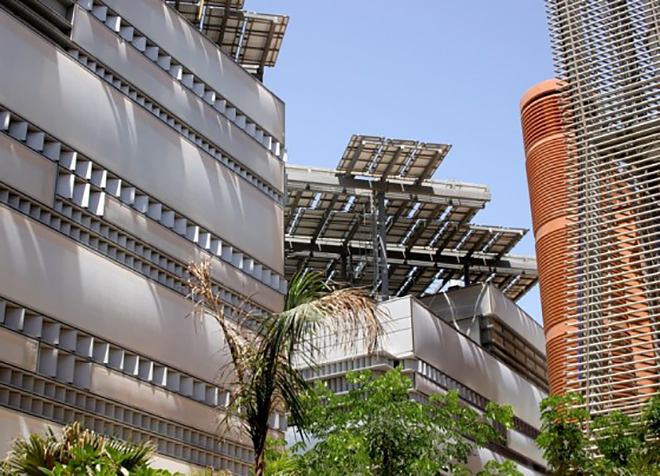
The unveiling of Dubai’s rooftop solar project during March 2015 is one of many steps the emirate is
taking in order to grow a domestic market regarding solar technology and usage. It is clear from these actions that the emirate is setting out to be greener and cleaner. At the same time, it is obvious they are aiming to be at the forefront of many different sectors, including trading, tourism, leisure and finance.
The Future of Energy Supply
This project is not the first of its kind within the country, which has shown a genuine desire to explore renewable options. The year 2013 saw the launch of Shams 1 in Abu Dhabi, a large concentrated solar power plant. It was developed by a subsidiary company of Masdar (specialists in renewable energy), which focuses on creating clean and green energy solutions for both Abu Dhabi as well as for the rest of the world.
Masdar City is another program developed to showcase the feasibility of creating carbon-neutral cities.
Shams 1 and Masdar City are both supplemented by the recent launches of renewable technology incentives. The UAE are far ahead of the game compared to their neighbours.
The Rise of Renewable Energy
With oil and natural gases forming the basis of the Middle East’s energy power requirements, renewable energy has only recently gained some momentum in this part of the world. The GCC (Gulf Cooperation Council) particularly depends on the usage of fossil fuel. Fossil fuels are seen as being plentiful and unlikely to run out, and they are also an inexpensive option for supplying power locally.
As such, gas and oil are responsible for almost all of the energy used in the United Arab Emirates and
the GCC.
There were two main factors that piqued interest in utilising renewable energy within the Middle East. First was the reduction in cost of certain technologies that are involved in producing renewable energy (such as PV), especially in the previous decade. The second reason is the simple fact of demand; the region wants and needs renewable energy.
Due to the immense economic growth within the UAE – especially the rapid development that occurred in the past 40 years – energy demand has escalated extremely quickly. The UAE is one of the largest consumers of energy in the world, when looked at per capita.The region’s low-cost market for energy also contributes to the population’s consumption of renewables, as it reduces the attractiveness of choosing a greener lifestyle in favour of utilising traditional power sources.
A Smart Move
The UAE and several surrounding nations are opening the doors in regard to energy supply options
and also creating policies that will keep the demand for energy in check.The decision to move away from hydrocarbons and move towards alternative energy systems is based in part on the fact that the UAE will become the first country in the GCC to introduce civilian nuclear power. Renewables play a huge part in this strategy as the region enjoys sunshine all year, lending itself to an integration of solar power.
Solar may not be as cost-effective as traditional energy sources at this stage, but the future does
look bright. With technology progressing continuously, the cost factor will most certainly be reduced,
making the value of solar power more evident. This won’t only assist the Middle East and the UAE though; even countries with less favourable climates, such as Germany and the UK, will be able to
benefit from these developments.
Fossil Fuels – Costly from Many Angles
There are other reasons for the UAE to look at domestic markets regarding new energy sources as
well. Heavy dependence on hydrocarbon sources means that the UAE makes use of huge amounts of gas and oil. Due to the money it makes from exporting this resource, every barrel that is not exported is lost revenue for the UAE.
The cost of such heavy reliance on fossil fuels for its domestic energy needs has negative impacts in the long term as well; it could almost take over the initial cost of developing and installing renewable technologies like utility-scale PV solar power.
Benefits of expanding on renewable energy within the region include decreasing their swiftly increasing carbon footprint and opening the path for the development of green energy solutions.
Looking to the Future
The next point on their agenda should be to streamline various policies within the UAE in order to create more emirate-level initiatives. When focused together, these aims will be a testament to how
serious the UAE is about renewable energy while also aiding with manageable and balanced usage of
their treasured finite resources.
Solar is the future of energy power demand in the long run. The Middle East is clearly catching on
to that fact, along with many other countries worldwide. For more information on solar, visit Australian Solar Quotes.


Australia and the middle east both have one thing in common – huge amounts of sunshine. Solar leads to money and environmental savings that cant be passed up.