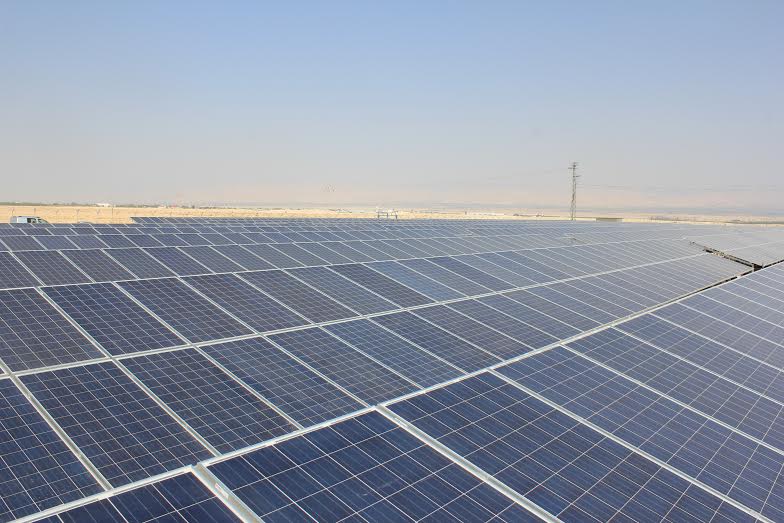
Solar project brings affordable energy to Palestinian homes

Solar panels at Dead Sea PV Generating PlantWe don’t often hear good news coming from Palestine, but solar energy advances for Palestinian households are something to celebrate. The Dead Sea Photovoltaic Generating Plant offers drastically reduced prices for Palestinians struggling to pay their energy bills and its first phase is now open and underway.

Traditionally Palestinians have had to rely on Israel for their electricity. They do import some electricity from Jordan and Egypt, but it’s done little to reduce their dependence on Israeli energy suppliers. It’s estimated that around 80 percent of Palestinian electricity is imported.

The electricity tariff in the Palestinian authorities is also about 15 percent higher than in Israel, even though the GDP for Palestine is much lower. Palestine is a territory poor in wealth, but also in natural energy resources such as natural gas and fossil fuels which can be generated into electricity. Energy security is a controversial topic.

The opening of the 710 kW first phase of the planned 1.5 MW Dead Sea Photovoltaic Generating Plant has gone some way in improving the situation, offering drastically lowered energy prices for Palestinian homes in East Jerusalem. The plant uses solar cells, also known as photovoltaic cells, and turns sunlight into electricity and is the biggest photovoltaic (PV) installation producing electricity in Palestine.  It’s based near Jericho and is 258 meters (846 ft) below sea level.

The organization, Future for Palestine, is funding the $1 million solar project. It’s headed by Salam Fayyad, the former prime minister of the Palestinian National Authority. Future for Palestine has already been subsidizing electricity bills for 5,000 families suffering from poverty in East Jerusalem which amounts to $14 per family and reduces their bills by an average of 25%. To ensure this support for Palestinian families would be sustainable in the future, the organization decided to fund the new solar project.
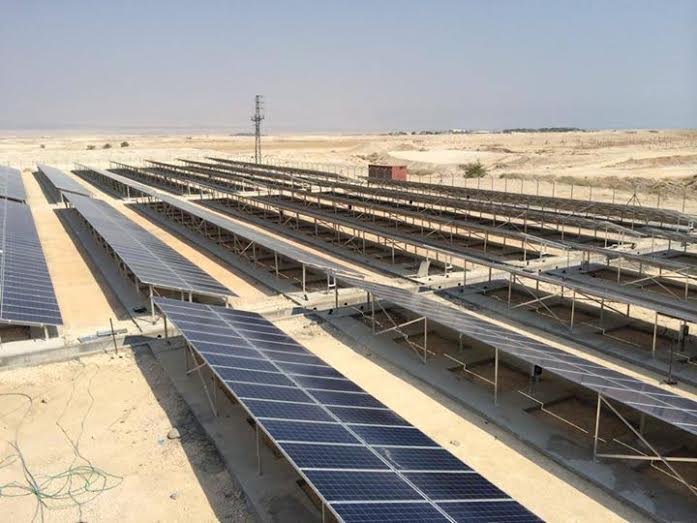
Solar panels at Dead Sea PV Generating Plant

Msader for Energy systems, the Palestinian company who built the plant, wanted to build and design and a solar energy system that would give long-term, reliable energy output in desert climate conditions with very hot and dry weather. Abelnaser Dwaikat, the managing director of the firm told Green Prophet that there was a need to promote and develop a resilient and sustainable energy supply for Palestinians. He said: “ It is crucial to focus on reducing dependence on energy imports and increasing the utilization of renewable energy sources available in Palestine.”

Given the high number of sunny days in Palestine, increased reliance on solar energy is very feasible. Yet Abdelnasser noted that there were challenges with the introduction of this type of green energy. “Solar PV and photovoltaic systems are yet to fully take off in Palestinian areas due to high initial costs associated with such systems,” he said.

Yet he believes that in the future these systems will be a leading source of clean and independent energy for the Palestinian people. “It’s a very potential market for solar energy as already the Palestinians are using 80% of solar thermal heating and the photovoltaic system should be the same percentage in the coming year, Mr Dwaikat said.”

The second phase of the Dead Sea Photovoltaic Generating plant will start in mid-2015 and should be delivered by end of this year.


 

Catherine Ellis
Catherine Ellishttp://www.greenprophet.com
Catherine moved to the Middle East from England to try and pick up some Arabic, get to know the culture and explore the wonderful sights the region has to offer. She’s currently living in Jordan but before this was working as a journalist for the BBC in London. She has a BA in Politics with International Studies and it was during her studies that she really grew a passion for the Middle East. She went on to do an MA in Near and Middle Eastern Studies and since then has visited many countries in the area. Finally, after a few years of living a hectic lifestyle in the UK’s busy capital, and longing to spend more time in the Middle East, she decided to up sticks and come and live here for a while.

TRENDING

Should You Invest in the Private Market?

startustartup Unlike public stock exchanges, which offer daily trading, strict...

Eco organization offices destroyed by Iran missile

Tel Aviv's eco organization, the Heschel Center, was impacted by an Iranian missile.

What are AWG air-water generators, and why they aren’t a golden-bullet solution (yet)

Atmospheric water generators (AWGs) sound like magic: machines that can pull drinking water out of air. The idea is mentioned in the Bible, where the elders would pray for water collected as dew on plants and the catch on turning this into a machine is in the physics. To turn invisible vapor into liquid, you must remove heat, especially the latent heat of condensation.

Jordan’s $6 Billion Aqaba–Amman Desalination Project from the Red Sea Moves Forward

In 2025, the Jordanian government signed agreements with a consortium led by Meridiam and SUEZ, alongside VINCI Construction and Orascom Construction. Under a 30-year concession agreement, the consortium will design, build, finance, operate, and maintain the system before transferring it back to the Jordanian government. The total investment is estimated at approximately $6 billion USD.

The Saudi Startup Turning Desalination’s Toxic Waste Into Its Own Disinfectant

For millennia, the Middle East's water crisis seemed an immutable fact of geography — a region defined as much by what it lacked as by what lay beneath its sands. Today, a convergence of plummeting solar costs, advancing membrane technology, and hard-won engineering expertise is rewriting that story.

Should You Invest in the Private Market?

startustartup Unlike public stock exchanges, which offer daily trading, strict...

How to build a 100-year-company

Kongō Gumi is a Japanese construction company, purportedly founded in 578 A.D., making it the world's oldest documented company. What can we learn about building sustainable businesses from them?

From Pilot Plant to Global Stage: How Aduro Clean Technologies’ 2026 Expansion Signals a Turning Point for Chemical Recycling Investors Like Yazan Al Homsi

The company's Next Generation Process (NGP) Pilot Plant in London, Ontario, has officially moved into initial operating campaigns, generating the kind of structured, repeatable data that separates laboratory promise from commercial viability.

How AI Helps SaaS Companies Reduce Repetitive Customer Support Work

SaaS products are designed for large numbers of users with different levels of experience, and also in renewable energy.

Pulling Water from the Air

Faced with water shortage in Amman, Laurie digs up...

Turning Your Energy Consultancy into an LLC: 4 Legal Steps for Founders in Texas

If you are starting a renewable energy business in Texas, learn how to start an LLC by the books.

Tracking the Impacts of a Hydroelectric Dam Along the Tigris River

For the next two months, I'll be taking a break from my usual Green Prophet posts to report on a transnational environmental issue: the Ilısu Dam currently under construction in Turkey, and the ways it will transform life along the Tigris River.

6 Payment Processors With the Fastest Onboarding for SMBs

Get your SMB up and running fast with these 6 payment processors. Compare the quickest onboarding options to start accepting customer payments without delay.

Related Articles

Popular Categories